

[Please scroll down for the english version]
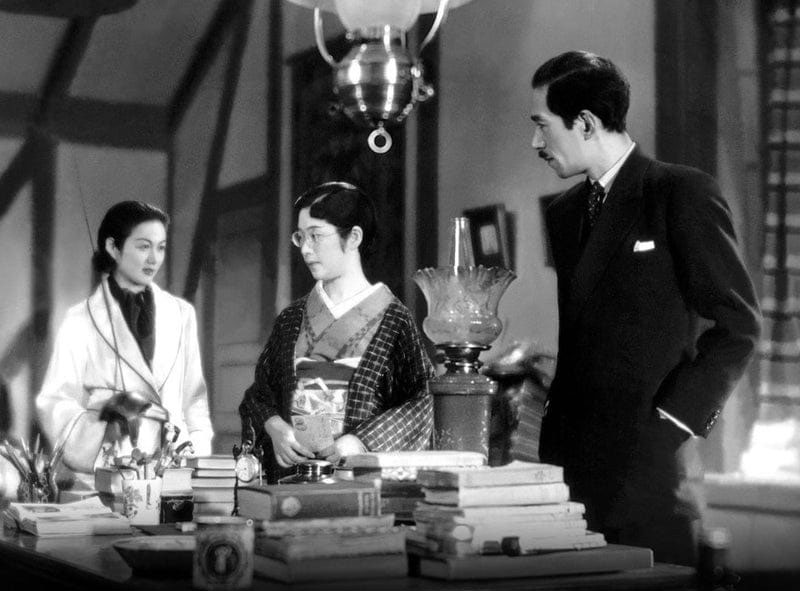
Sunako (Michiko Oikawa) e Dora (Yukiko Inoue) sono due adolescenti inseparabili. Un giorno il giovane e spregiudicato Henry entra nella loro vita turbando gli equilibri. Il ragazzo inizia a uscire con Sunako, ma i suoi sentimenti sono instabili; in breve tempo passa alla disinibita Yôko (Ranko Sawa), spingendo Sunako, pazza di gelosia, a commettere un crimine. Per la ragazza ne consegue una fuga dalla natia Yokohama e una caduta verso i margini della società.
Ma fu davvero Godard a inventare gli jump cuts, come molti testi divulgativi oggi sembrano affermare? In realtà basterebbe guardare Japanese Girls the Harbor per comprendere la superficialità di tale affermazione. Il film di Shimizu non solo precede di più di dieci anni temi e stili del neorealismo, ma sembra anche anticipare, per tecniche e sguardo, le teorizzazioni della Nouvelle Vague. Regista di punta degli anni ’30 e forza trainante del sofisticato modernismo della Shōchiku, Hiroshi Shimizu fu un maestro delle riprese in esterni e un libero sperimentatore, desideroso di cogliere una realtà priva di artifici.
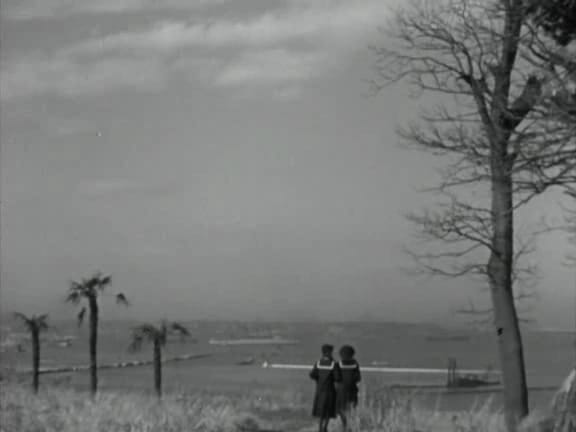
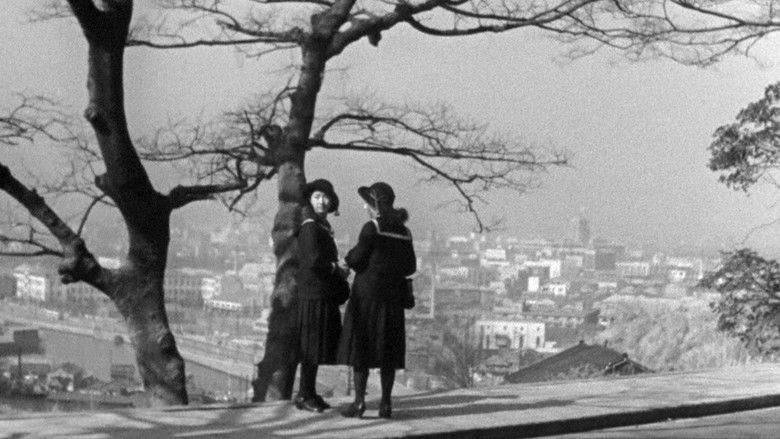
Japanese Girls at the Harbor guarda alla gioventù di Yokohama, alla sua vita in movimento – le protagoniste Dora e Sunako sono costrette a continui spostamenti attraverso un incrocio di strade, ponti, salite – ed è tra i più intensi film sulla transitorietà del vivere e l’evanescenza degli esseri umani. L’apertura, bellissima, ci mostra una nave in procinto di salpare: un’umanità festosa e transitoria, uno stato di “passaggio” che Shimizu cattura con una composizione ricorrente nel suo cinema, ovvero l’inquadratura in campo lungo, con le figure umane di spalle. Le due ragazze sono poste a confronto con qualcosa di “più grande di loro”, metafora delle innumerevoli trasformazioni della vita: “tutte le ragazze di Yokohama si sentono tristi guardando una nave che se ne va”, osserva Sunako. La visione lontana della nave che si perde nel mare è un lirico e nostalgico correlativo oggettivo delle loro emozioni.
Shimizu ci rende partecipi della profonda amicizia tra le due studentesse con poche, rapide inquadrature: la lunga passeggiata insieme, ripresa mediante carrelli estremamente liberi e naturali; la scelta di seguirle di spalle per evidenziarne la similarità; le pose parallele, la mano nella mano; e infine lo stacco frontale sui due volti che guardano nella stessa direzione.
Il regista ha un fortissimo senso compositivo che si riscontra non solo nelle riprese in movimento ma anche nelle inquadrature statiche: è un autore devoto all’idea di immagine-sentimento, in cui i rapporti spaziali, la presenza della natura, la posizione gerarchica degli elementi assumono una forza espressiva tali da evocare nello spettatore un’emozione o un sentimento profondo. Il suo è un cinema poetico, fatto di immagini ricorsive, in cui la narrazione è costellata da rimandi, parallelismi visivi e assonanze. Sebbene Shimizu e Yasujirō Ozu lavorassero in modo differente (Ozu reputava l’amico “un genio” per la sua abilità e naturalezza in esterni), entrambi amavano inserire “rime interne”, composizioni e sequenze ripetute, o movimenti all’unisono.
Il raffinato tecnicismo della regia di Shimizu, tutt’altro che virtuosistico, è volto a enfatizzare l’aspetto emotivo della narrazione e a renderne visibile la finissima introspezione psicologica, che eleva la vicenda da melodramma di suggestione hollywoodiana a opera moderna e analitica. Il regista è un acuto osservatore delle figure femminili e della loro condizione in un Giappone sedotto dalle mode e dalla disinvoltura etica occidentale.
Nello spazio severo di una chiesa, ripresa da Shimizu con una pulizia e nitidezza di linee e una suggestiva alternanza di pieni e vuoti – la croce, le panche, la severità degli ambienti – Sunako si consuma al pensiero di Henry e del suo tradimento con Yoko, la tipica moga (modern girl americanizzata) del periodo, dal taglio a caschetto e dal fare sprezzante. Dora la invita ad abbandonare la rigida morale tradizionale: “devi essere generosa, l’amore o è generoso o non è amore affatto”. Il regista condensa, tra geometrie astratte e spirituali, la tensione di sentimenti in lotta.
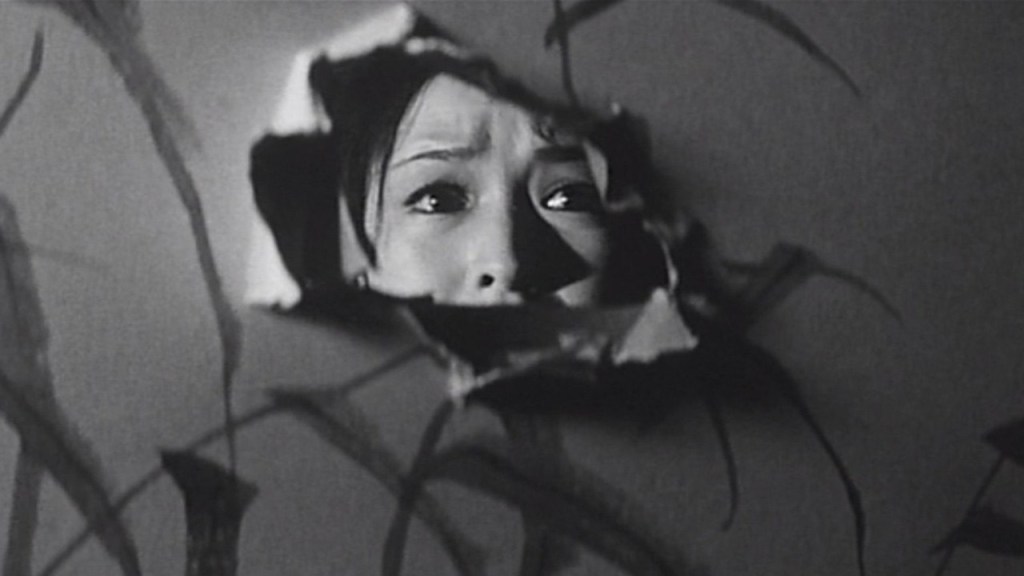
Le emozioni prendono il sopravvento su Sunako, che Shimizu rende protagonista di un momento di puro cinema “pulsionale”: attraverso dei rapidi jump cuts, un movimento di “staccati” sussultanti, il regista traduce in immagine la violenza rotta e afasica dei suoi sentimenti. I tagli di montaggio sono immediati e inaspettati come colpi: Sunako spara a Yoko, e ritroviamo ancora Godard e la memoria del suo famoso motto: “tutto ciò che serve per fare un film è una ragazza e una pistola”
Sunako si trasferisce a Kobe, dove diventa una prostituta. Shimizu interlaccia universalità e particolarità, movimento individuale e movimento collettivo. I carrelli laterali del regista sono splendidi e si potrebbero definire “carrelli filosofici” per la naturalezza con cui spostano l’attenzione da un personaggio all’altro e da un destino a un altro; la macchina da presa è la penna per “scrivere” la transitorietà delle vite umane e l’insignificanza del singolo nell’insieme – un concetto espresso anche da Miura (Tatsuo Saito), figura di artista bohemien che si lega a Sunako e ne fa la propria musa. “C’è troppa gente nel mondo, ce n’è veramente troppa” afferma il pittore, mentre Shimizu inquadra i piedi veloci dei passanti.
L’idea dell’essere umano come “già fantasma”, evanescente, pronto a sparire è rappresentata anche da singolari dissolvenze: il regista risolve spesso l’uscita di scena con la sparizione; i personaggi svaniscono diventando “nulla”, quel mu cui aspirava Ozu.
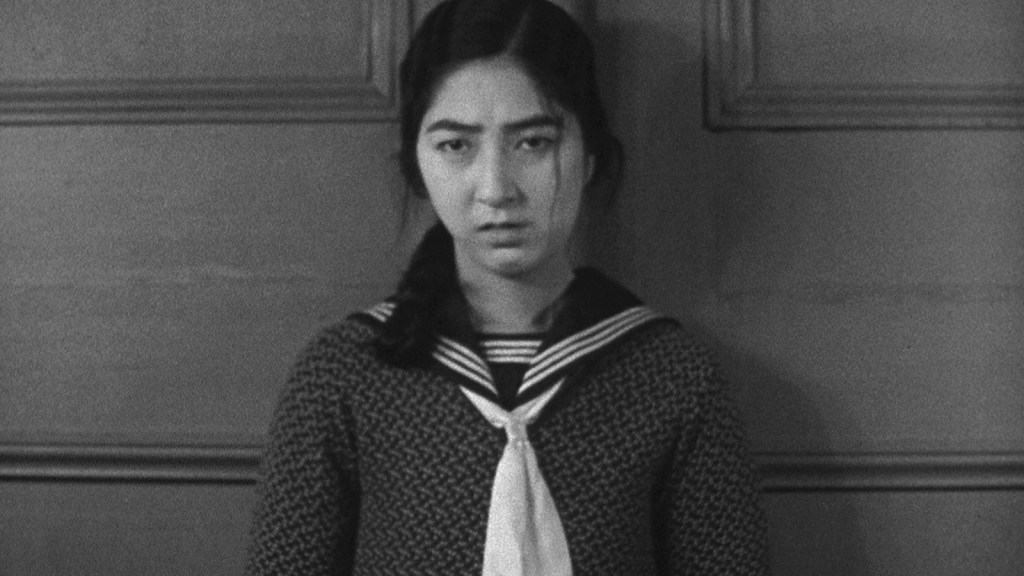
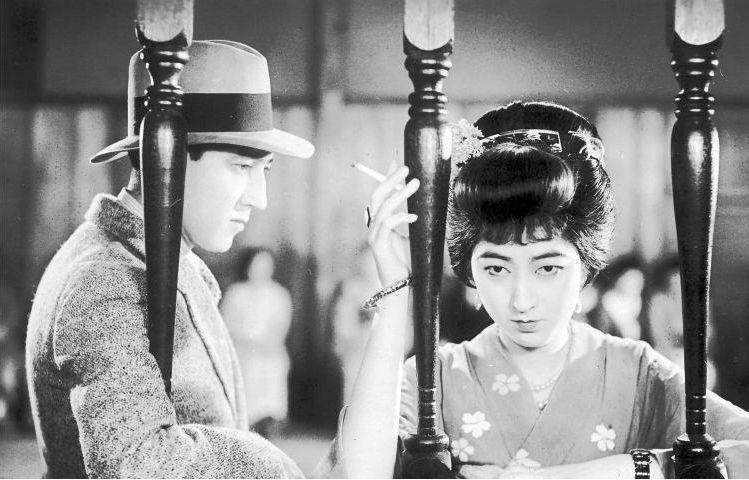
Teso a ritrarre un reale privo di falsità e sofisticazioni, Shimizu dà grande importanza ai corpi e volti del suo cinema, spesso in contrasto con lo star-system dell’epoca. La protagonista Michiko Oikawa (che purtroppo muore giovanissima, a soli 26 anni) ha difatti un aspetto molto vero e popolare. Di grande talento e forza espressiva, Oikawa ha quasi un volto neorealista, e questa caratteristica è evidente nelle scene che la vedono assieme alle altre interpreti del film, in particolare Yumeko Aizome (nel ruolo di un’amica prostituta) diva per Yasujirō Shimazu ed emblema di un glamour femminile del tutto distante dalla forza naturalista di Michiko Oikawa.
Il regista chiude il film con una nota di malinconia che lo avvicina, ancora una volta, all’amico Ozu: la fine di un film è il suo inizio. Il finale chiude l’opera in maniera perfettamente circolare, con la sequenza di una nave che salpa dal porto di Yokohama in un clima festoso. Sunako e Miura, in ellissi, si sono imbarcati alla ricerca di una redenzione. La scena è pervasa da una sensazione indefinita e nostalgica, che Shimizu prolunga mediante immagini-sentimento: le onde del mare, le stelle filanti sulla banchina ormai vuota, e infine il quadro di Sunako che svanisce nell’acqua.
English Version
Sunako (Michiko Oikawa) and Dora (Yukiko Inoue) are two inseparable teenagers. One day the young and reckless Henry enters their lives, disrupting their balance. He begins dating Sunako, but his feelings are unstable; before long he shifts his attention to the uninhibited Yôko (played by Ranko Sawa), driving Sunako — mad with jealousy — to commit a crime. For the girl this means fleeing her native Yokohama and descending toward the margins of society.
But was it really Godard who invented the jump cuts, as many popular texts today seem to claim? In truth, one need only watch Japanese Girls at the Harbor to grasp the superficiality of such a statement. Shimizu’s film not only anticipates by more than a decade the themes and styles of neorealism, but also seems to foreshadow, through techniques and sensibility, the theoretical foundations of the Nouvelle Vague. A leading director of the 1930s and a driving force behind the refined modernism of the Shochiku, Hiroshi Shimizu was a master of location shooting and a free-spirited experimenter, eager to capture an unembellished reality.
Japanese Girls at the Harbor looks at the youth of Yokohama, at their life in motion — Dora and Sunako are constantly forced to move through a web of streets, bridges, hills — and it stands among the most poignant films about life’s transience and the evanescence of human beings. The beautiful opening shows a ship about to depart: a festive, transient humanity, a state of “passage” that Shimizu captures through one of his recurring compositional strategies — the long shot with human figures seen from behind. The two girls are confronted with something “bigger than themselves,” a metaphor for the countless transformations of life: “all the girls in Yokohama feel sad watching a ship leave,” observes Sunako. The distant ship vanishing into the sea becomes a lyrical, nostalgic objective correlative of their emotions.
Shimizu conveys the deep friendship between the two students through a few swift shots: their long walk together, filmed with extremely free and natural tracking shots; the choice to follow them from behind to highlight their similarity; the parallel poses, the hand in hand; and finally the frontal cut on their two faces looking in the same direction.
The director possesses a powerful sense of composition evident not only in moving shots but also in static ones: he is devoted to the idea of an “image-feeling,” in which spatial relationships, the presence of nature, and the hierarchical placement of elements acquire such expressive force as to evoke deep emotion in the viewer. His is a poetic cinema, built on recurring images, where narration is studded with echoes, visual parallels, and resonances. Although Shimizu and Yasujiro Ozu worked differently (Ozu considered his friend “a genius” for his skill and naturalness in shooting outdoors), both loved to insert “internal rhymes,” repeated compositions and sequences, or movements in unison.
The refined technical craftsmanship of Shimizu’s direction, far from showy, aims to heighten the emotional dimension of the narrative and to make its subtle psychological introspection visible, elevating the story from Hollywood-inflected melodrama to a modern, analytical work. He is an acute observer of female figures and their condition in a Japan seduced by Western fashions and moral nonchalance.
Within the severe space of a church — filmed by Shimizu with clean, sharp lines and a striking alternation of solids and voids: the cross, the pews, the austere environment — Sunako is consumed by thoughts of Henry and his betrayal with Yôko, the archetypal moga of the period, with her bobbed hair and defiant attitude. Dora urges her to abandon rigid traditional morality: “you must be generous; love is either generous or it is not love at all.” Within these abstract, spiritual geometries, the director condenses the tension of conflicting emotions.
Emotion overwhelms Sunako, whom Shimizu turns into the protagonist of a moment of pure “pulsional cinema”: through rapid jump cuts, a series of jolting, fractured edits, he translates into images the broken, aphasic violence of her feelings. The cuts are as sudden and unexpected as blows: Sunako shoots Yôko, and once again we are reminded of Godard and his famous motto, “all you need to make a movie is a girl and a gun.”
Sunako moves to Kobe, where she becomes a prostitute. Shimizu interlaces universality and particularity, individual movement and collective movement. His lateral tracking shots are splendid — one might even call them “philosophical tracking shots,” for the natural way they shift attention from one character to another and from one destiny to the next. The camera becomes a pen that “writes” the transience of human lives and the insignificance of the individual within the whole — an idea voiced by Miura (played by Tatsuo Saito), a bohemian painter who becomes attached to Sunako and makes her his muse. “There are too many people in the world, far too many,” he says, as Shimizu films the swift feet of passersby.
The notion of the human being as “already a ghost,” evanescent and ready to disappear, is also represented through peculiar dissolves: characters often exit the scene by vanishing; they fade away into “nothing,” that mu so essential to Ozu.
Committed to depicting a reality free of falseness and artifice, Shimizu gives great importance to the bodies and faces of his cinema, often in contrast with the star-system of the time. The protagonist Michiko Oikawa (who sadly died very young, at just 26) has a remarkably authentic, popular appearance. Gifted and expressive, Oikawa’s face is almost neorealist, and this quality is evident in the scenes with the other actresses, in particular Yumeko Aizome (playing a fellow prostitute), a star for Yasujirō Shimazu and an emblem of a feminine glamour far removed from Oikawa’s naturalistic strength.
The director closes the film with a note of melancholy that once again brings him close to his friend Ozu: the end of a film is its beginning. The final sequence completes the work in perfect circularity, with a ship departing from Yokohama harbor in a festive atmosphere. Sunako and Miura, in ellipsis, have boarded in search of redemption. The scene is suffused with an indefinite, nostalgic feeling, which Shimizu prolongs through image-feelings: the waves, the streamers on the now-empty pier, and finally Sunako’s painting dissolving into the water.







 Nubi Fluttuanti
Lascia un commento