

[Please scroll down for the english version]
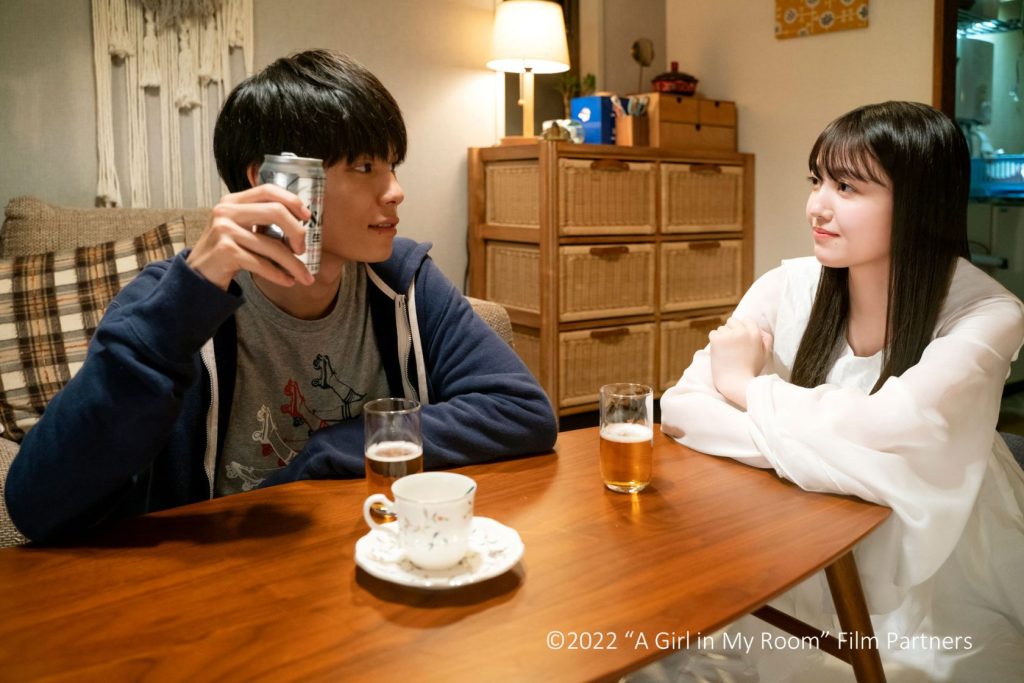
La storia segue Yohei, un giovane dal cuore spezzato che viene lasciato dalla sua compagna. Una sera, all’improvviso, una ragazza fantasma appare nella sua stanza. Timida e gentile, la ragazza non ha mai sperimentato l’amore e si intromette nella vita di Yohei con le sue domande e la sua curiosità. Inizialmente impaurito, Yohei tenta di esorcizzarla; ma lentamente si affeziona a lei e la aiuta a ricordare il suo nome: la giovane si chiama Aisuke. I due trascorrono sempre più tempo insieme, come se Aisuke fosse viva, e tra loro nasce un sentimento.
“Ogni storia d’amore è una storia di fantasmi”. A Girl in My Room mette in scena un evanescente romance, un sogno vivido in cui discorsi intimi si accendono del timido bagliore della giovinezza. A soli 25 anni, ispirandosi al manga di Chugaku Yamamoto, la regista Natsuki Takahashi realizza un lavoro appassionato e personale, un crocevia di mito e realtà, in cui il passato e il futuro respirano all’unisono.
A Girl in My Room è una piccola opera fantastica che guarda, con ironia, al mito giapponese degli yūrei realizzandone una versione delicata, da commedia sofisticata (più volte, guardando il film ho pensato all’intimità e pudore di un film come Il fantasma e la signora Muir, 1947, di Joseph L. Mankiewicz); ma è anche una lettera d’amore alla città costiera di Onomichi, in parte anch’essa fantasmatica, e alla gioventù che la abita, in un fragile equilibrio tra tradizione e modernità. I due ragazzi, corpi “estranei” nella dolcezza sonnolenta dei quartieri, corrono per la strada, discendono a perdifiato in bicicletta tra le piccole case, frequentano i bar e vanno al cinema (luogo dell’infanzia della protagonista). Il luccichio del mare sembra cullare il paesaggio e i suoi segreti, in una visione di eternità: l’affetto della regista per questi luoghi (immortalati da Ozu in Viaggio a Tokyo, 1953) la rende capace di estrarre una luminosità, una presenza spirituale che cogliamo in filigrana.
C’è tanta vita in un film come questo, che pure si interroga sull’essere e il morire, sulla giovinezza come stato di incertezza e disagio. In fondo Yohei e Aisuke provano gli stessi sentimenti – “per me è come se fosse viva”, dice Yohei – e abitano l’appartamento facendone lo spazio della propria sensibilità e un luogo di riscoperta delle emozioni. Se Aisuke non si è mai innamorata e non ha mai toccato il corpo di un ragazzo, Yohei sembra aver perso il senso del sacro nei confronti dell’amore. La registaTakahashi è attenta a creare cornici interne all’immagine, affinché i corpi dei due giovani siano al sicuro, protetti dalle linee di una porta, da una parete, dal disegno geometrico di una finestra. Inoltre, la stanza è disseminata di piante e fiori: un profilmico posizionato ai margini dell’inquadratura, quasi a suggerire un’imminente rinascita e fioritura.
Tanta attenzione ai “luoghi del vivere” – la città/bozzolo accogliente, la camera/spazio interiore – denota la cura della regista nei confronti dei propri protagonisti, la sua responsabilità di custode della loro condizione spirituale. Takahashi corteggia la possibilità del dramma, ci lascia intuire la sofferenza dei suoi giovani ma sceglie di alleggerirla con tocchi di commedia, dimostrandosi particolarmente abile nel mescolare i generi. Tra scambi di battute, equivoci e gags che giocano con i tópoi dell’horror – Aisuke è una goffa versione della celebre Sadako, dai lunghi capelli neri e l’abito bianco – A Girl in My Room è un piccolo e misterioso racconto di formazione, e allo stesso tempo una dichiarazione d’amore per la sala cinematografica, dove i protagonisti tornano, nel finale, a sognare lo stesso sogno.


English version
“Every love story is a ghost story.” A Girl in My Room stages an evanescent romance, a vivid dream in which intimate conversations glow with the shy radiance of youth. At only twenty-five, and drawing inspiration from the manga by Yamamoto Chugaku, director Takahashi Natsuki crafts a passionate, personal work — a crossroads of myth and reality where past and future breathe in unison.
The story follows Yohei, a young man with a broken heart who has just been left by his girlfriend. One evening, suddenly, a ghost girl appears in his room. Shy and gentle, she has never experienced love, and she slips into Yohei’s life with her questions and curiosity. Frightened at first, Yohei tries to exorcize her; yet gradually he grows fond of her and helps her remember her name: the young woman is called Aisuke. The two begin to spend more and more time together, as though Aisuke were alive, and a bond forms between them.
*A Girl in My Room* is a small, fantastic film that looks with irony to the Japanese myth of the yūrei, offering a delicate, almost sophisticated-comedy reinterpretation — more than once, while watching it, I thought of the intimacy and modesty of The Ghost and Mrs. Muir (1947), directed by Joseph L. Mankiewicz. But it is also a love letter to the coastal city of Onomichi, partly ghostlike itself, and to the youth who inhabit it in a fragile balance between tradition and modernity. The two characters, “foreign” bodies within the town’s drowsy sweetness, run through the streets, fly downhill on bicycles between small houses, frequent bars, and go to the cinema — the place of the protagonist’s childhood. The shimmer of the sea seems to cradle the landscape and its secrets in a vision of eternity: the director’s affection for these places (immortalized by Ozu Yasujirō in Tokyo Story, 1953) allows her to draw out a luminosity, a spiritual presence visible in filigree.
There is so much life in a film like this, even as it reflects on being and dying, and on youth as a state of uncertainty and unease. In the end, Yohei and Aisuke experience the same feelings — “to me, it’s as if she were alive,” Yohei says — and inhabit the apartment as the space of their own sensitivity, a place where emotions can be rediscovered. If Aisuke has never fallen in love and has never touched a boy’s body, Yohei seems to have lost any sense of the sacred in love. Takahashi carefully composes internal frames within the image, so that the bodies of the two young people are kept safe, protected by the lines of a door, a wall, the geometric pattern of a window. The room, moreover, is scattered with plants and flowers: a profilmic arrangement placed at the margins of the frame, as if to suggest an imminent blooming and rebirth.
This attention to the “places of living” — the welcoming cocoon of the city, the room as inner space — reveals the director’s care for her protagonists, her sense of responsibility as custodian of their spiritual condition. Takahashi teases the possibility of drama, lets us glimpse the suffering of her young characters, yet chooses to lighten it with touches of comedy, proving particularly adept at blending genres. Through exchanges of dialogue, misunderstandings, and gags that play with horror tropes — Aisuke is an awkward version of the famous Sadako from Ring, with her long black hair and white dress — A Girl in My Room becomes a small and mysterious coming-of-age tale, and at the same time a declaration of love for the movie theatre, where the protagonists return, in the final scene, to dream the same dream once more.

















 Nubi Fluttuanti
Lascia un commento