
[Please scroll down for the english version]
Concepito come un’esperienza da vivere assieme ai protagonisti, Eureka è uno di quei rari film che interagiscono e si confondono con la vita stessa: nella sua percepibile durata (3 ore e 37 minuti) dona allo spettatore sentimenti e sensazioni sfuggenti e in trasformazione. Si tratta di un’opera che vive e muta, rifiutando astratti ritmi a favore di un dilatato tempo interiore. Aoyama, scomparso a soli 57 anni, ci lascia nella sua intensa carriera (fu regista, musicista, sceneggiatore e critico cinematografico) la testimonianza di un cinema non conforme e coraggiosamente instabile, aderente al vero ma anche sottilmente al lavoro sulla realtà, per estrarre una comune radice di esperienza umana, in forme personali ed artisticamente originali.
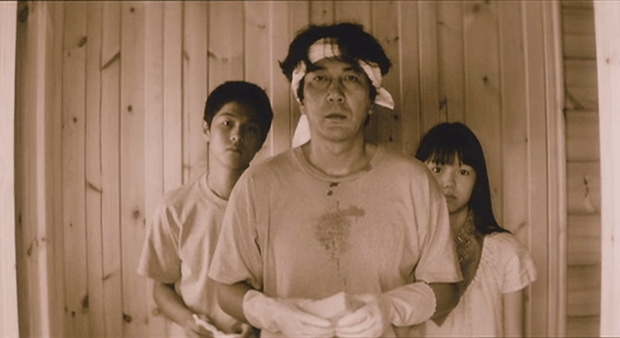
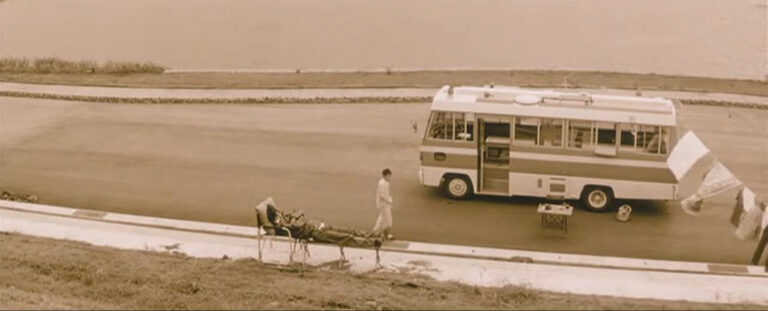
La vita di Makoto, conducente di autobus nella prefettura di Kyūshū, viene sconvolta dopo che uno psicopatico stermina tutti i passeggeri durante il suo turno. Gli unici superstiti, oltre lui, sono i giovanissimi Naoki e Kozue, fratello e sorella. Il trauma per l’esperienza porta i tre a separarsi dalle rispettive comunità e a vivere da emarginati, dapprima in una casa in periferia e poi su un autobus; a loro si aggiunge Akhiko, cugino dei ragazzi. Nel frattempo, una serie di delitti a opera di un serial killer induce un detective a sospettare di Makoto.
Il film si compone di sequenze divise da ellissi e contraddistinte da silenzi eletti a cifra stilistica: ciò che conta, per Aoyama, è nell’immagine e nello stato d’animo che essa contiene; e similmente, tutto ciò che c’è da sapere sugli esseri umani traspare negli sguardi, nei gesti, nell’eloquenza di corpi messi alla prova dal vivere (1).
Da vero autore fuori norma, Aoyama inizia il suo film con un incipit folgorante condotto secondo il linguaggio di genere (molto caro all’autore): puro thrilling sussultorio, in un’alternanza di inquadrature ravvicinate e campi lunghissimi. La bellissima sequenza della strage nasce dall’intransigenza di un Aoyama cinefilo e teorico, che sfrutta i codici del cinema – con un ritmo e una gestione dello spazio vertiginosi e dinamici – per prepararci al vuoto spazio-temporale e percettivo del trauma. L’incontro faccia a faccia con la morte ha conseguenze che corrodono la percezione del tempo e intessono le maglie della trama visiva: lo stile si fa dimesso e privo di un “passo” interiore; la ricerca di una “forma” si affianca all’erranza dei protagonisti.
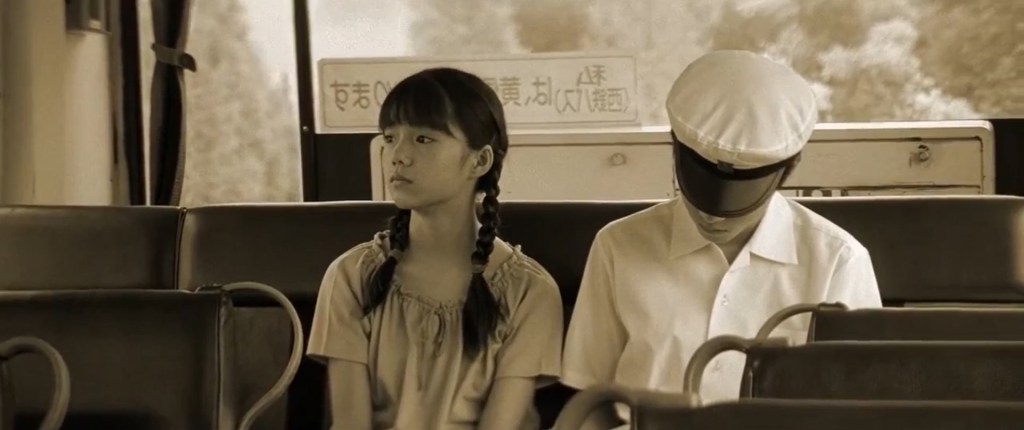
Nei giorni seguenti allo shock, Makoto crolla emotivamente e trattiene nel corpo (che si ammala) la corrosione dell’anima. Il suo sguardo cova una luce cupa, la parola si fa balbettìo, incerta. L’uomo interrompe consapevolmente il suo dialogo razionale col mondo. Questa rottura è ancor più radicale nei piccoli Naoko e Azumi, che si isolano in una completa afasia verbale ed emotiva. Aoyama si assume la responsabilità morale di condividere, assieme ai protagonisti, la strada verso una guarigione possibile. E forse la ragione della particolarità cromatica – un tono seppia che attenua le emozioni e toglie violenza al rosso del sangue – è proprio la percezione di una convalescenza, uno stato di confine tra la vita e la morte, in cui sentirsi viaggiatori o alieni in una terra sconosciuta. (La splendida fotografia, spirituale e disincarnata, è di Tamura Masaki, 2).
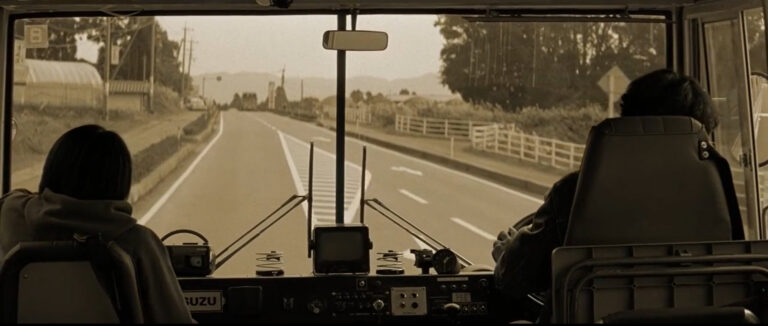
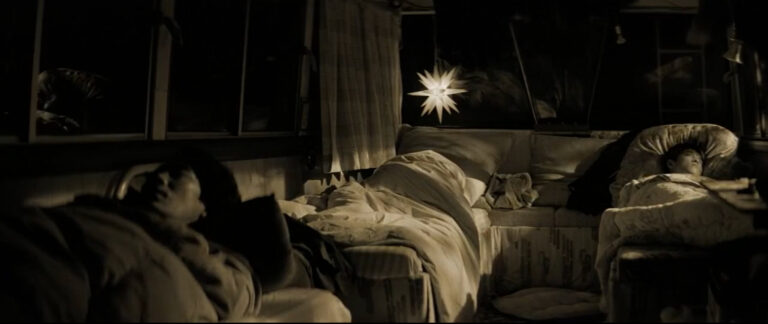
Il regista fa delle scelte ben precise per accentuare il senso di estraneità – ad esempio, le inquadrature della cabina del bus “imitano” l’interno di una navicella spaziale (3 e 4); umoristicamente, Aoyama fa del viaggio la metafora di una fantascienza del vivere.
La ricerca di una trascendenza che informi le cose, illuminandole di senso, non impedisce al regista di abbandonarsi, lungo il drammatico tragitto, a momenti di leggerezza. Non solo assistiamo a impercettibili tenerezze tra Makoto e i giovani Naoki e Kozue, inselvatichiti e resi quasi emotivamente sterili dal trauma; ma la struttura da road movie, di stampo wendersiano, consente pause ludiche, momenti di serenità familiare, rapidi squarci d’amore. Eureka ha il dono di restituirci la fuggevolezza dell’esperienza umana, ma anche la sua dolcezza. Nonostante la minaccia incombente della morte, attraverso l’ombra di quel killer che esiste dentro e fuori, nel mondo e nell’inconscio, c’è sempre spazio per la bellezza della vita.
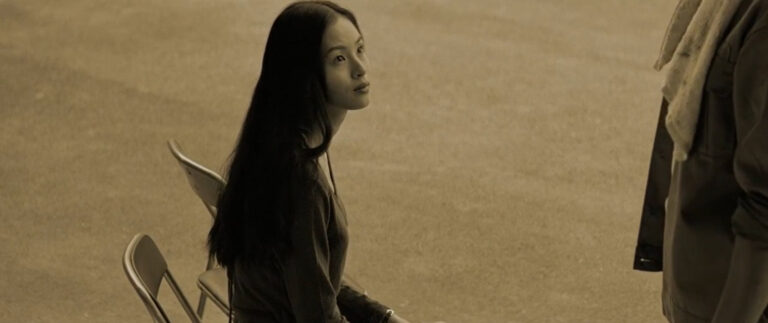
Aoyama semina la nostra visione di dubbi: non solo sull’identità del killer, ma in particolare nei confronti delle figure femminili: a partire dalle lacrime della moglie di Makoto, che racchiude un rimpianto e un non-detto di struggente dolore, fino all’innocenza impassibile e pura di Kozue, che sembra non uscire mai dallo stato infantile. Soprattutto, il regista ci lascia colmi di stupore di fronte a Keiko (5), collega di Makoto, amore inespresso e di ineffabile sensualità (le basta sfilare un sandalo per riempirci di brividi erotici), che diviene fantasma o doppio misterioso.
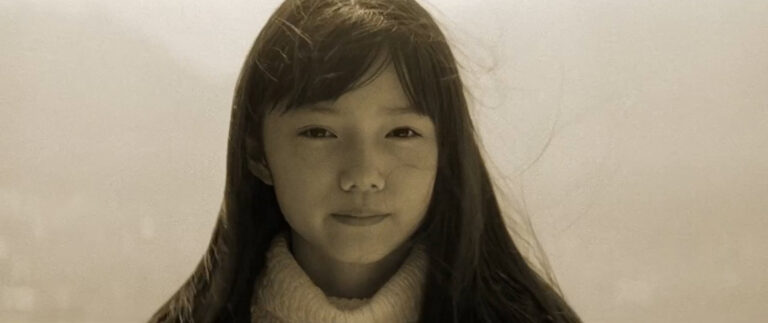
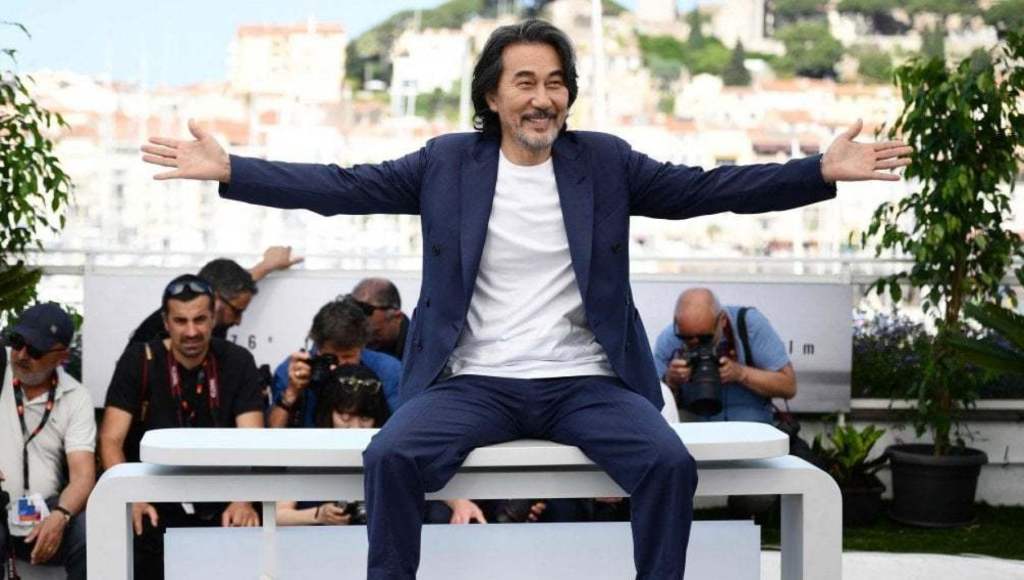
Come Makoto, lo spettatore prova turbamenti, coltiva malesseri o felicità, soffre per coloro che ama. Aoyama guida la sua macchina-cinema e continua a smarrirci nel campi lunghissimi, nei quadri immobili ma frementi, nei primi piani con sguardo in macchina dei suoi protagonisti (6); e mentre ci domandiamo se quegli occhi sullo schermo stessero davvero guardando noi, l’immagine (come l’amore) fugge. Il miracolo di Eureka è il suo rubarci la vita e restituircela intensificata. Arrivati alla sequenza finale, crediamo quasi di respirare la stessa aria di Kōji Yakusho, questo attore raro, in grado di offrire la sostanza più incandescente dell’essere. Il film si chiude, i toni seppia tornano al colore: è tempo di vivere.
English Version
Conceived as an experience to be lived alongside its protagonists, Eureka is one of those rare films that interact with—and almost merge into—life itself. In its perceptible duration (3 hours and 37 minutes), it offers the viewer fleeting, ever-shifting emotions and sensations. It is a work that lives and transforms, rejecting abstract rhythms in favor of a dilated inner time. Shinji Aoyama, who passed away at just 57, leaves us—through his intense career (as director, musician, screenwriter, and film critic)—the legacy of a non-conformist and courageously unstable cinema, one that adheres to reality while also subtly working upon it, in order to extract a shared root of human experience in deeply personal and artistically original forms.
The life of Makoto, a bus driver in the Kyūshū prefecture, is shattered when a psychopath massacres all the passengers during his shift. The only survivors, besides him, are the very young siblings Naoki and Kozue. The trauma of the experience leads the three to detach themselves from their respective communities and live as outcasts—first in a suburban house, then on a bus; they are later joined by Akihiko, the children’s cousin. Meanwhile, a series of murders committed by a serial killer leads a detective to suspect Makoto.
The film is composed of sequences divided by ellipses and marked by silences elevated to a stylistic signature: for Aoyama, what matters lies in the image and in the emotional state it contains. Likewise, everything there is to know about human beings emerges through gazes, gestures, and the eloquence of bodies tested by life.
As a truly unconventional auteur, Aoyama opens his film with a striking incipit shaped through the language of genre (which he deeply cherished): pure, jolting thrill, alternating between close shots and extreme long takes. The beautiful massacre sequence stems from Aoyama’s rigor as both cinephile and theorist, using cinematic codes—with a vertiginous and dynamic handling of rhythm and space—to prepare us for the perceptual and spatio-temporal void of trauma. The face-to-face encounter with death has consequences that erode the perception of time and weave themselves into the fabric of the film’s visual texture: the style becomes subdued, deprived of an inner “pulse”; the search for a “form” accompanies the wandering of the protagonists.
In the days following the shock, Makoto collapses emotionally, holding within his body (which falls ill) the corrosion of the soul. His gaze harbors a dark light, his speech becomes hesitant, stammering. He consciously interrupts his rational dialogue with the world. This rupture is even more radical in young Naoki and Kozue, who retreat into complete verbal and emotional aphasia. Aoyama assumes the moral responsibility of sharing, alongside his characters, the path toward a possible healing. Perhaps the reason for the film’s distinctive chromatic choice—a sepia tone that softens emotions and removes the violence from the redness of blood—is precisely this perception of convalescence, a liminal state between life and death, in which one feels like a traveler—or an alien—on unknown ground. (The extraordinary, spiritual, almost disembodied cinematography is by Masaki Tamura.)
The director makes precise stylistic choices to heighten the sense of estrangement—for instance, the shots inside the bus cabin “imitate” the interior of a spaceship; humorously, Aoyama turns the journey into a metaphor for a science fiction of living. His search for a transcendence capable of imbuing things with meaning does not prevent him, along this dramatic path, from surrendering to moments of lightness. We witness not only subtle tenderness between Makoto and the young Naoki and Kozue—made almost emotionally barren by trauma—but also, thanks to the road movie structure (with echoes of Wim Wenders), playful pauses, moments of familial serenity, and brief openings of love. Eureka has the gift of restoring both the fleeting nature of human experience and its sweetness. Despite the looming threat of death—through the shadow of a killer who exists both inside and outside, in the world and in the unconscious—there is always space for the beauty of life.
Aoyama sows our vision with doubts: not only about the identity of the killer, but especially regarding the female figures. From the tears of Makoto’s wife—holding within them regret and an unspoken, aching sorrow—to the impassive, almost pure innocence of Kozue, who seems never to leave her childhood state. Above all, the director leaves us in awe before Keiko, Makoto’s colleague—an unspoken love of ineffable sensuality (it is enough for her to slip off a sandal to send a shiver through us)—who becomes a ghost, or a mysterious double.
Like Makoto, the viewer experiences disturbances, nurtures unease or happiness, suffers for those they love. Aoyama guides his cinematic machine, continually disorienting us in vast long shots, in still yet trembling compositions, in close-ups where his protagonists gaze directly into the camera; and as we wonder whether those eyes on the screen were truly looking at us, the image—like love—escapes.
The miracle of Eureka lies in its ability to steal life from us and return it intensified. By the final sequence, we almost believe we are breathing the same air as Kōji Yakusho, this rare actor capable of offering the most incandescent substance of being. The film comes to an end, the sepia tones return to color: it is time to live.





 Nubi Fluttuanti
Lascia un commento