

[English version below]
The Land of Hope viene realizzato all’indomani della tragedia di Fukushima, un tema doloroso e ricorrente nella filmografia del regista (dal precedente Himizu, 2011, fino a The Whispering Star, 2015). Ma il film è talmente intenso, lirico e universale da trascendere l’occasione – che pure viene trattata con dettagli di grande realismo, non solo nelle procedure di allontanamento dalla zona ma soprattutto nella rappresentazione dello stato d’animo sbigottito, addolorato dei personaggi. The Land of Hope è un film sulla morte, sull’erosione della vita verso il nulla. I suoi protagonisti svaniscono lentamente, abbandonandosi a un paesaggio di straziante bellezza naturale mentre i segni della presenza umana (case, strade, edifici) si sgretolano in forme rovinose ed astratte.
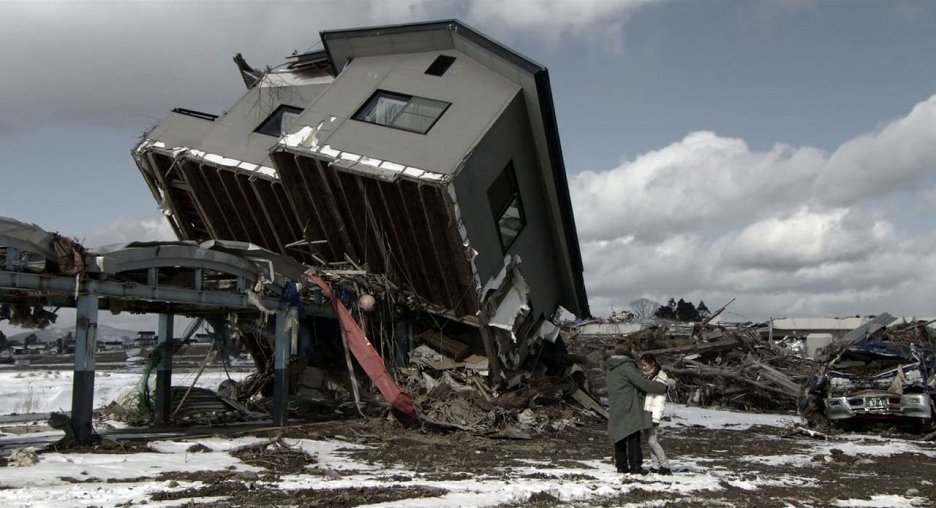
Nella fittizia prefettura di Nagashima un terremoto causa l’esplosione della centrale nucleare e la vita del tranquillo villaggio di Oba viene sconvolta. I piccoli negozi, le fattorie familiari, le abitazioni tradizionali – dove il tempo sembrava essersi fermato – si tramutano in vuoti spettrali, edifici cavi e squarciati, attraversati dal vento e dalla neve. Sono osserva la devastazione attraverso campi lunghissimi che attenuano la ferita e la rendono metafisica e distante; inoltre i frequenti piani sequenza e i carrelli laterali ci conducono in una passeggiata tra le rovine crepuscolare e struggente. L’avvicinarsi incessante della fine viene segnalato attraverso apparecchi elettronici che registrano l’intensità delle radiazioni: eppure in questa Terra di Speranza c’è chi scopre di aspettare un figlio, come Yōichi e Izumi; o chi decide di sposarsi, come i giovanissimi Mitsuru e Yoko. Il ragazzo abbraccia la sua giovane amata ai piedi di una casa sventrata e rovesciata su un fianco, quasi un animale reificato nell’atto della morte. L’immagine, potentissima nella sua frontale evidenza, è quella di un romanticismo che nasce sull’abisso.
L’attenzione del regista si sofferma in particolare su Yasuhiko e Chieko Ono, una coppia di anziani – un uomo forte e protettivo, una donna di grande dolcezza ma affetta da Alzheimer – che decide di disobbedire all’ordine di lasciare la zona e restare nella propria abitazione: un mondo a parte, uno spazio atemporale e identitario in cui la vita scorre secondo modi e abitudini passate. Sono inquadra gli interni in forme classiche, secondo quell’arte grafica portata a perfezione da Ozu: simmetrie, pattern, equilibri geometrici; il senso di rassicurante stasi si sprigiona dall’armonia matematica di linee e prospettive. Ma è qui, nel perimetro della casa e della sua aiuola fiorita, che trova vita l’amore infinito tra i due coniugi. The Land of Hope non è solo un film su un presente di agonia, dove strade e macerie paiono sospirare sofferenti assieme ai fantasmi, ma è anche un’opera sull’infinità dell’amore che vince la tragedia e le sue irrazionali conseguenze. Il film sembra memore di Black Rain (1989) di Imamura e del suo finale dai colori saturi e commoventi, in cui gli affetti consolano la vita e la morte stessa.
Trattenendo l’impulso per il grottesco in una reticenza che mette ancor più in risalto la mancanza di senso delle decisioni delle autorità, Sono descrive l’assurdo di cui, improvvisamente, gli Ono si trovano circondati. Un nastro adesivo taglia in modo netto la zona radioattiva da quella legalmente “sicura”: la divisione attraversa la proprietà dei due anziani, separandoli dai propri alberi e dalla cuccia della cagnolina Peggy. “Non si può impedire all’aria di muoversi”, ma i poliziotti seguono le istruzioni in modo ottuso. La coppia rifiuta di abbandonare la casa e si ritaglia gli ultimi mesi di vita sovversiva, luminosa, colma di tenerezza e amore; un ritrovamento della giovinezza, un’amnesia salvifica dagli orrori del presente.
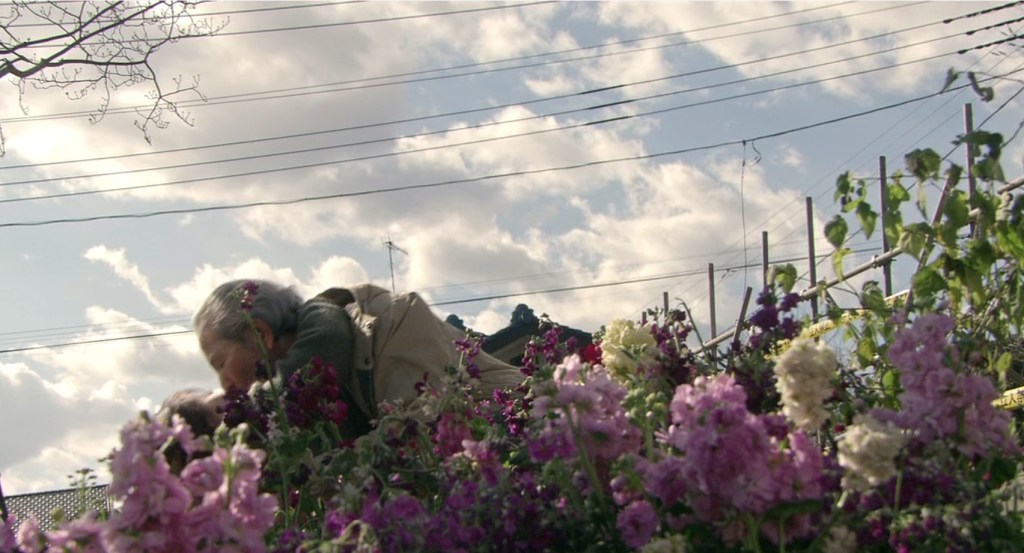
Sono, autore tanto turbolento quanto dotato d’una sensibilità estrema e sofferta, contrappone immagini di fiori alla morte ineluttabile e incolore. Il mondo umano si appressa a svanire, ma il cielo è di un delicato azzurro, e i fiori che Chieko cura giornalmente sono ancora trionfanti e bellissimi, di un rosa e rosso vivido, splendenti nel sole appassito. Chieko e Yasuhiko (interpretati in modo struggente dai grandi Isao Natsuyagi e Naoko Ōtani) si baciano in questo giardino impressionista, puri e innocenti come bambini, forti di un sentimento che vince il dolore e il tempo.
Con sincera commozione, il regista ci mostra Chieko vagare ignara nella città vuota, tra i muggiti sordi delle mucche abbandonate lungo la strada. La donna danza nella neve, vestita d’un kimono azzurro, immagine di vita candida e ludica che lascia un’impressione di profondo turbamento nello spettatore. L’Adagio dalla Sinfonia 10 di Mahler, con il quale Sono accompagna il deragliamento sensoriale ed elegiaco della scena, travolge i sentimenti e li sublima nella nota più acuta. Dopo averla cercata a lungo, Yasuhiko raggiunge la donna e la carica sulle spalle, in un’ultima corsa di desiderio e libertà. I petali tremano al vento mentre la coppia sceglie una propria forma di eternità (“saremo insieme per sempre”) per mescolarsi a fiori e cielo, piangendo lacrime d’amore sul suolo attonito della Terra della Speranza.
Tutti gli articoli sono protetti da copyright: © Marcella Leonardi. Tutti i diritti riservati.
English Version
The Land of Hope was made in the immediate aftermath of the Fukushima disaster, a painful and recurring theme in Sono’s filmography, from the earlier Himizu (2011) to The Whispering Star (2015). Yet the film is so intense, lyrical and universal that it transcends the event itself – though the disaster is portrayed with remarkable realism, not only in the procedures for leaving the affected area, but above all in the bewilderment and grief of the characters. The Land of Hope is a film about death, about the erosion of life into nothingness. Its protagonists slowly fade away, surrendering themselves to a landscape of harrowing natural beauty, while the traces of human presence – houses, roads, buildings – crumble into ruined, abstract forms.
In the fictional prefecture of Nagashima, an earthquake causes an explosion at a nuclear power plant, shattering life in the peaceful village of Oba. Small shops, family farms and traditional homes – places where time seemed to have stood still – become spectral voids: hollow, torn-open buildings swept by wind and snow. Sono observes the devastation through extreme long shots that soften the wound, making it metaphysical and remote; frequent long takes and lateral tracking shots also lead us on a twilight walk among the ruins, poignant and haunting. The relentless approach of the end is signalled by electronic devices measuring radiation levels; and yet, in this Land of Hope, some discover they are expecting a child, like Yōichi and Izumi, while others decide to marry, like the very young Mitsuru and Yoko. The boy embraces his young beloved at the foot of a gutted house lying overturned on its side, almost like an animal reified at the moment of death. The image, extraordinarily powerful in its frontal immediacy, embodies a romanticism born on the edge of the abyss.
Sono’s attention lingers in particular on Yasuhiko and Chieko Ono, an elderly couple – a strong, protective man and a deeply gentle woman suffering from Alzheimer’s disease – who decide to disobey the order to leave the area and remain in their home: a world apart, an atemporal space of identity where life still follows the rhythms and habits of the past. Sono frames the interiors in classical compositions, drawing on the graphic art brought to perfection by Ozu: symmetries, patterns, geometric balances; a reassuring sense of stillness emerges from the mathematical harmony of lines and perspectives. Yet it is here, within the boundaries of the house and its flower garden, that the infinite love between husband and wife comes fully alive. The Land of Hope is not merely a film about an agonising present, in which roads and rubble seem to sigh in pain alongside ghosts; it is also a work about the boundlessness of love, capable of overcoming tragedy and its irrational consequences. The film seems to remember Imamura’s Black Rain (1989), and its moving, richly saturated ending, in which human bonds offer consolation in the face of life and death itself.
Holding back his impulse towards the grotesque in a restraint that makes the senselessness of the authorities’ decisions even more striking, Sono describes the absurdity that suddenly surrounds the Onos. A strip of tape sharply divides the radioactive zone from the legally “safe” one: the line runs across the elderly couple’s property, separating them from their own trees and from the kennel of their dog, Peggy. “You can’t stop the air from moving,” yet the police follow their instructions with mindless obedience. The couple refuse to abandon their home and carve out for themselves the final months of a life that is subversive, luminous, filled with tenderness and love: a rediscovery of youth, a saving amnesia from the horrors of the present.
Sono, a filmmaker as turbulent as he is endowed with an extreme and wounded sensitivity, sets images of flowers against inevitable, colourless death. The human world is approaching disappearance, yet the sky remains a delicate blue, and the flowers Chieko tends every day are still triumphant and beautiful, vivid pink and red, glowing beneath the fading sun. Chieko and Yasuhiko – played with heartbreaking intensity by the great Isao Natsuyagi and Naoko Ōtani – kiss in this impressionistic garden, pure and innocent as children, sustained by a love that conquers pain and time.
With genuine emotion, Sono shows us Chieko wandering unknowingly through the empty town, amid the muffled lowing of cows abandoned along the road. She dances in the snow, dressed in a pale blue kimono, an image of innocent, playful life that leaves the viewer profoundly unsettled. The Adagio from Mahler’s Symphony No. 10, with which Sono accompanies the scene’s sensory and elegiac derailment, overwhelms emotion and sublimates it into its highest register. After searching for her for a long time, Yasuhiko finally reaches Chieko and carries her on his back, in one last rush of desire and freedom. Petals tremble in the wind as the couple choose their own form of eternity – “we will be together forever” – merging with flowers and sky, shedding tears of love upon the stunned earth of the Land of Hope.
All articles are protected by copyright: © Marcella Leonardi. All rights reserved.





 Nubi Fluttuanti
Lascia un commento