
[English version below]
Scrisse R.W. Fassbinder a proposito di Douglas Sirk: “Ho visto troppi pochi suoi film; vorrei vederli tutti e trentanove. Forse allora avrei capito di più su me stesso, sulla mia vita e i miei amici. Ma ho visto solo sei film, ed erano i film più belli del mondo.” Nei confronti del cinema di Naruse provo lo stesso sentimento: avrei voluto vederli tutti e ottantanove, ma ne ho visti solo quaranta; e poche righe non potranno mai rendere giustizia alla complessità del suo cinema – un cinema che è anche semplice e vero, tra i più belli del mondo.
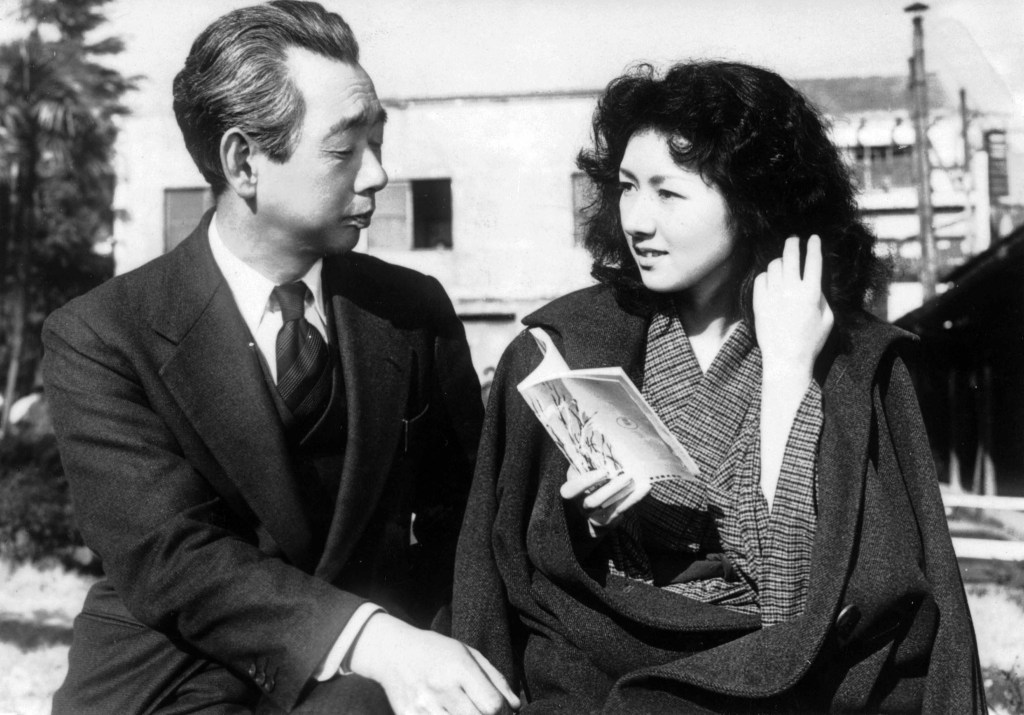
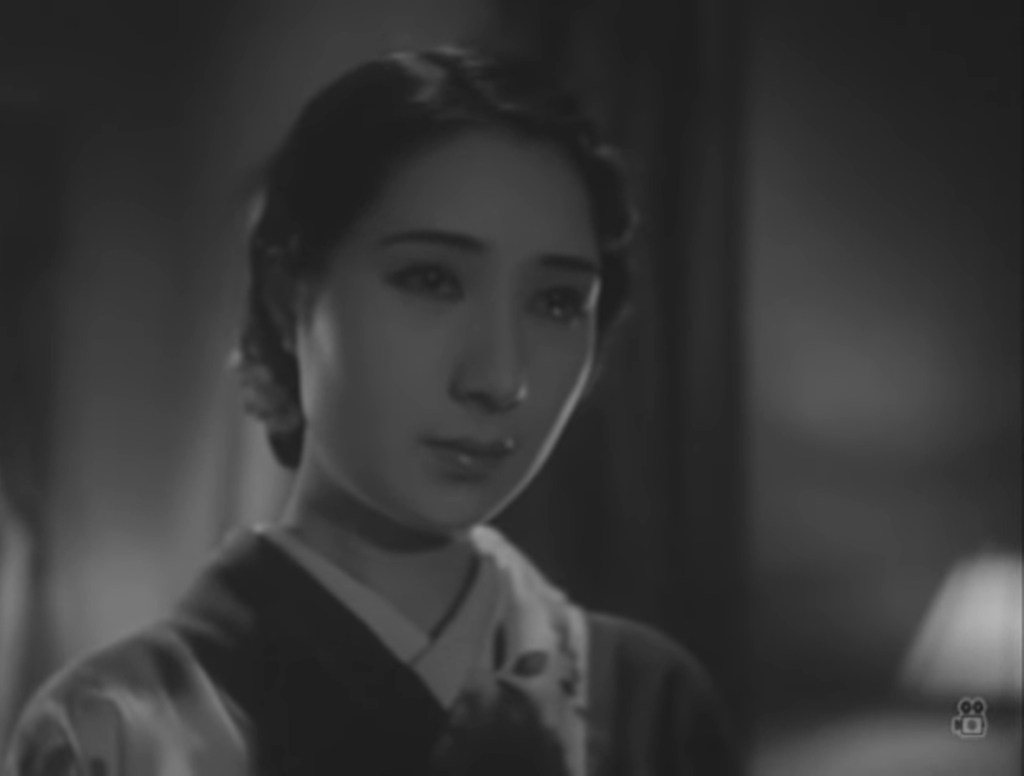
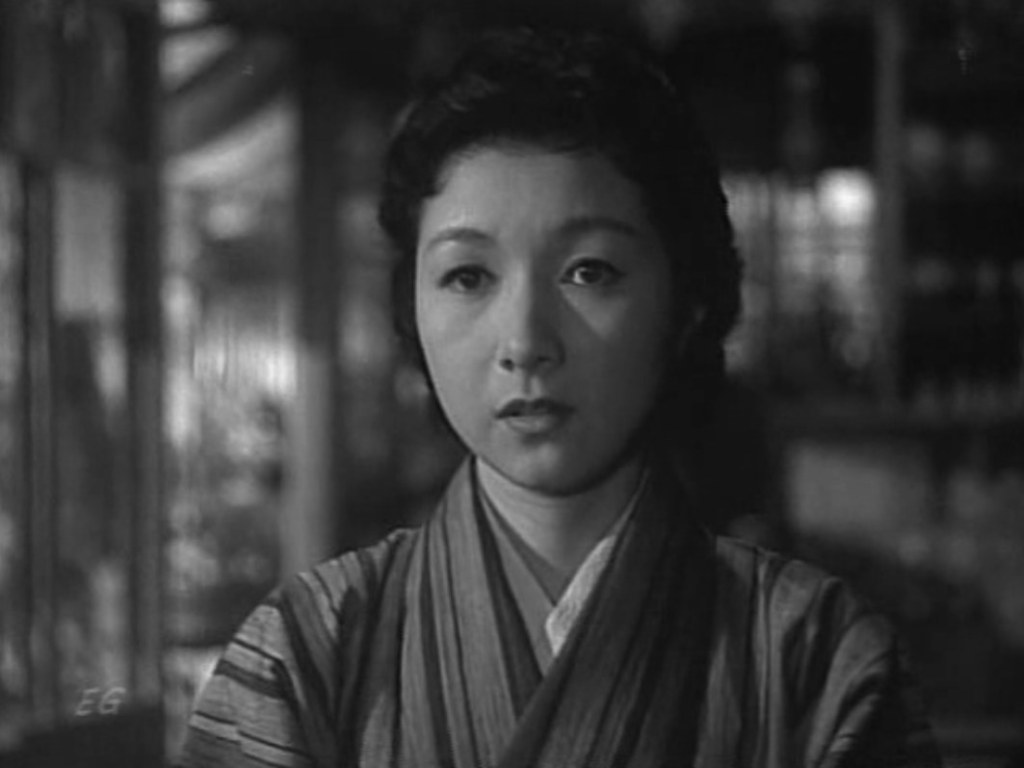
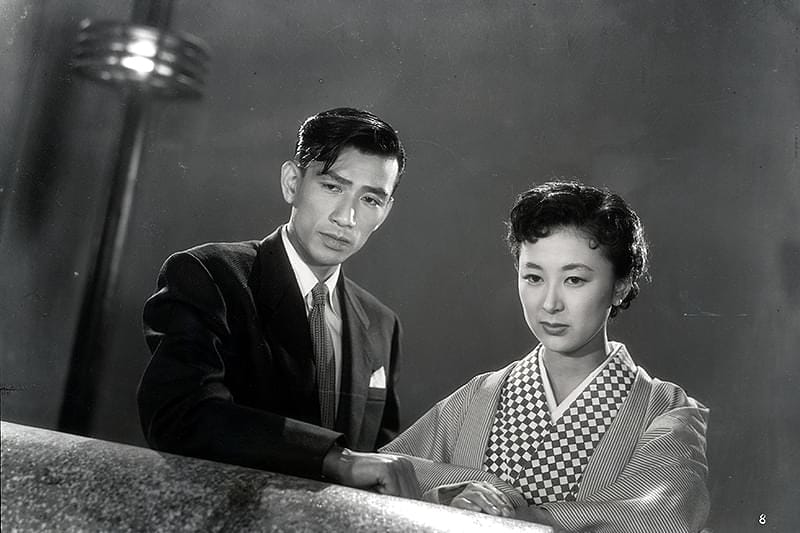
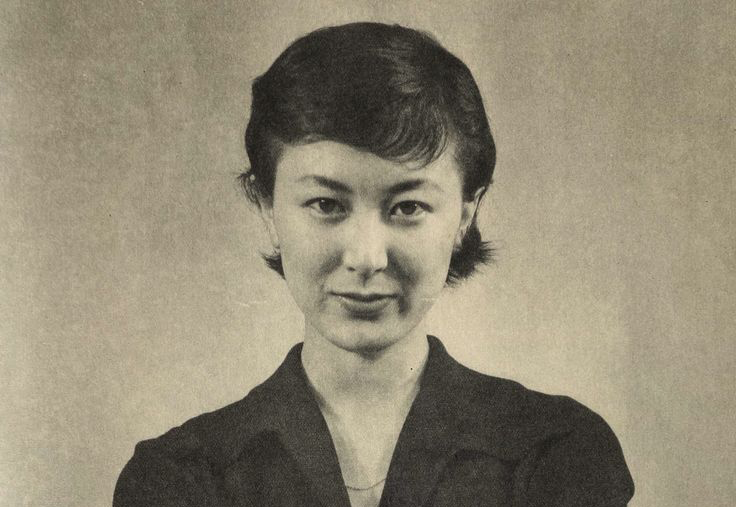
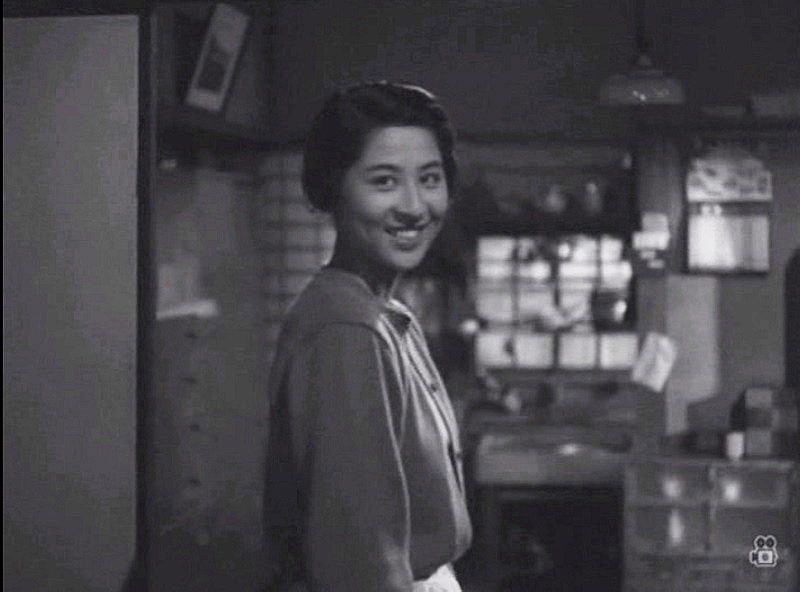
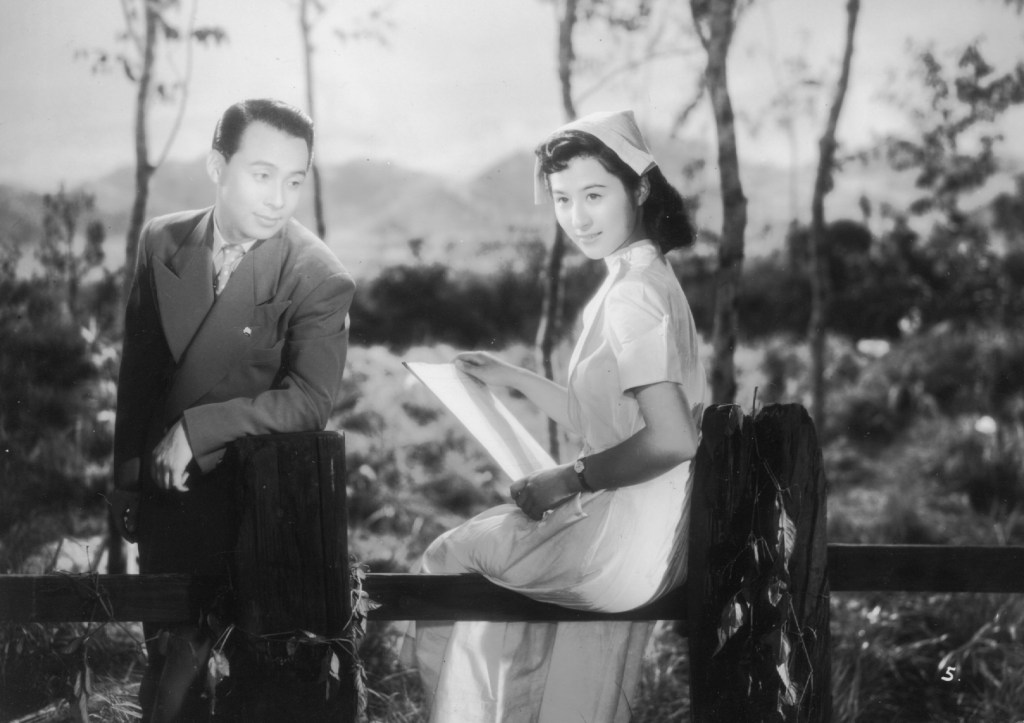
Disse di lui l’attrice Yoko Tsukasa, interprete di Hit and Run (1966, thriller sperimentale di suggestione hitchcockiana), e Scattered Clouds (1967, melodramma di raffinata stilizzazione): “Recitare nei suoi film era un onore per un’ attrice. Naruse comprendeva perfettamente la psicologia femminile.” (intervista per Shochiku 100). Regista di donne, acuto osservatore dei loro pensieri e desideri, ma anche sensibile narratore della condizione umana osservata senza giudizio, Naruse mise in scena la spontanea pulsione verso una felicità mai raggiunta; le sue protagoniste non sono creature rassegnate, bensì spiriti moderni e inquieti, vittime di una tensione tra ribellione e aderenza alla tradizione. In particolare, Naruse sapeva far parlare i volti: i suoi primi piani sono paesaggi su cui, in pochi secondi, scorre veloce la più intensa gamma di sentimenti umani. (foto 1, 2, 3).


Poesia moderna
Se è vero che Naruse è uno dei grandi registi del cinema giapponese “classico” e quindi la sua opera nasce all’interno di tradizioni profonde e di un’industria dalle caratteristiche specifiche, è altrettanto vero che il regista possedeva un istinto cinematografico naturale, attratto dai movimenti in atto nelle cinematografie internazionali e proteso alla trasformazione. I suoi film esprimono una filosofia costante, che Naruse arrivò a perfezionare anno dopo anno “come un pittore che dipinge sempre la stessa rosa, cercando nuovi colori” (parafrasando Ozu); ma i modi, le tecniche, i linguaggi, seppur contenuti in un’apparente discrezione, si rinnovarono all’insegna della necessità del lavoro del cinema. Con l’eleganza che lo contraddistinse, Naruse si adattò all’industria accettandone i dettami e soffrendoli come un ingiusto limite creativo – in particolare nel lungo periodo di controllo propagandistico compreso tra la Seconda Guerra Mondiale e l’occupazione; ma dagli anni ’50 in poi la lunga tribolazione artistica si sciolse in un cinema limpido, incessante, un’onda di sotterranea potenza. L’esperienza si fece stile luminoso e sicuro; la sua visione trovò nella scrittura della poetessa Fumiko Hayashi (e in un secondo momento del sensibile Matsuyama Zenzō) una “casa” più bella della prosa, dove le inevitabili sofferenze umane, in particolar modo femminili, venivano trasfigurate da una riflessione poetica sulla vita, sul desiderio e sulle contraddizioni tremule dei sentimenti, così simili ai fenomeni naturali. Naruse guardava al mondo ponendo un’attenzione estrema ai gesti, alle emozioni, ai riflessi del vivere sulle persone; e con un montaggio invisibile cuciva momenti intimi e collettivi, dialoghi amorosi, salti temporali, prese di coscienza.
Il riflesso del mondo sull’io
Naruse è interessato al sentire, al tempo interiore, alla percezione soggettiva delle sue protagoniste: il suo cinema sfrutta le possibilità poetiche e drammatiche dell’ellissi e compie un editing “emotivo” concentrando anni in passaggi di pochi secondi. Talvolta, per dare accesso all’interiorità dei suoi personaggi, ricorre a soluzioni audaci e molto belle: in Avalanche un filtro fotografico scuro cala come una tendina a velare il volto “che pensa”.
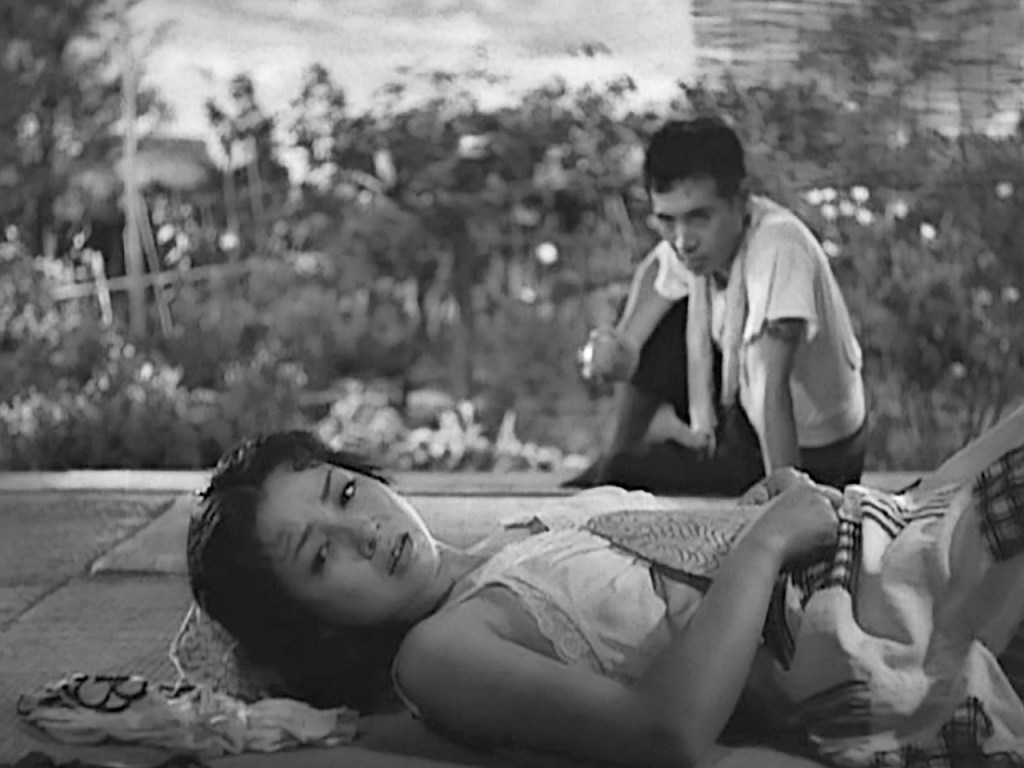
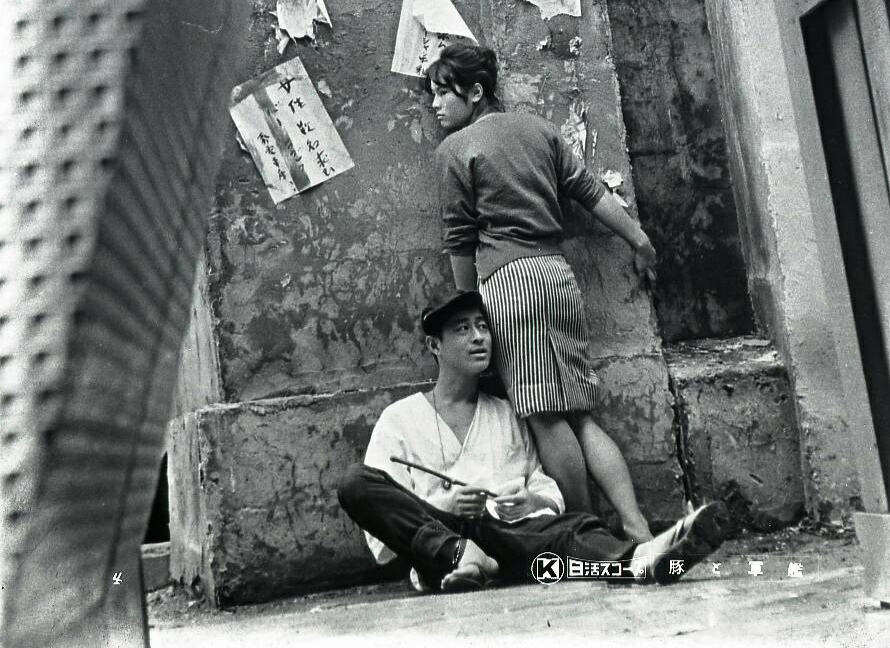
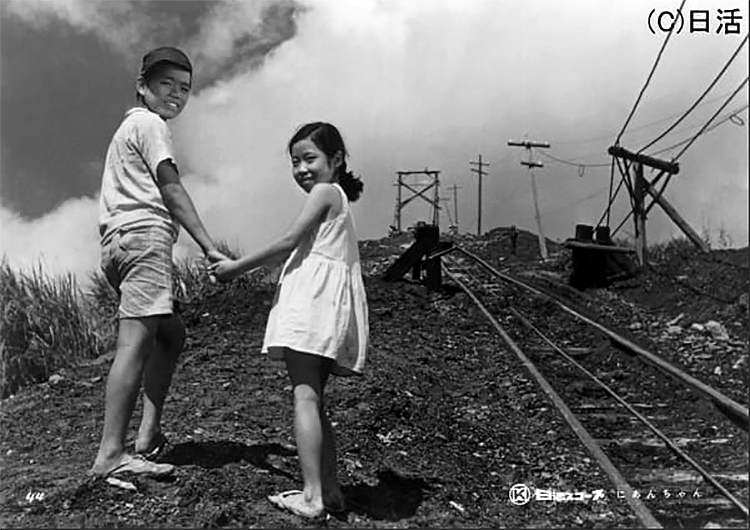
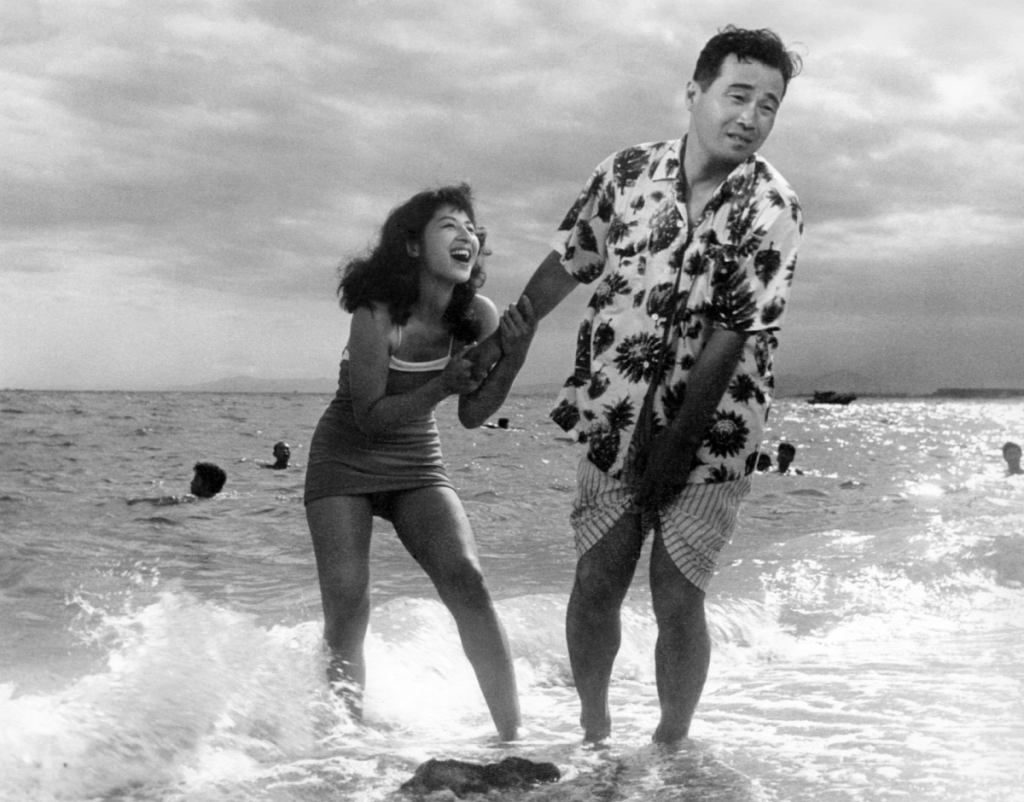
Particolarmente attento ad un uso espressivo della dissolvenza incrociata (soprattutto nella sua produzione degli anni ’30), Naruse ne fa uno strumento poetico e psicanalitico, manifestando un’attenzione particolare nei confronti del tempo. Per il regista, la dimensione temporale è soggettiva e viene attraversata, surrealisticamente, avanti e indietro (per esempio in Nubi Fluttuanti, 1955, o Morning Tree-Lined Street, 1936). Ciò imprime ai suoi film un carattere ipnotico e incantatorio – tutti i film di Naruse sono profondamente musicali – ma anche una densità inconscia. Come tutti i grandi artisti del ‘900, Naruse impregna le proprie opere di una dualità io-mondo; i contesti storici e sociali, che tanta parte hanno nel suo cinema, lo interessano come componente di un vissuto interiore. Ecco allora che le macerie del Giappone sconfitto di Nubi Fluttuanti diventano pioggia spirituale, che trasforma gli amanti in fantasmi rarefatti (foto 4). Oppure, in Older Brother, Younger Sister (1953), gli aridi paesaggi rurali, scarnificati dal sole battente e dalla povertà, si riflettono nell’animo di personaggi pulsionali, agitati come insetti, in grado di esprimersi solo brutalmente con calci e morsi, per quanto intimamente bisognosi di tenerezza: la “desertificazione” del dopoguerra lascia sentimenti indicibili e violenti, come ombre lunghe sotto un cielo di fuoco (foto 5).

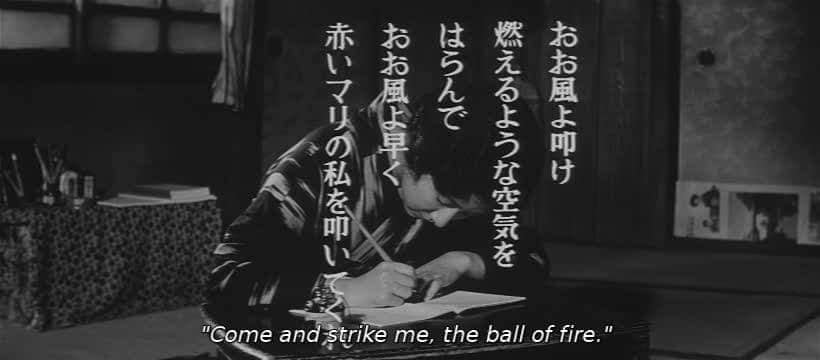
In A Wanderer’s Notebook (1962), il film dedicato a Fumiko Hayashi, poetessa “errante”, Naruse affronta il difficile compito di dover visualizzare “l’immaginazione poetica” della protagonista, il cui rapporto col mondo trova nella scrittura il legame più profondo. Il regista sceglie di sovraimprimere direttamente i versi sull’inquadratura (foto 6): la parola si fa immagine grafica del pensiero, pronunciato verbalmente da un voice over. Si tratta di una soluzione apparentemente semplice ma di grande modernità, che dà allo spettatore accesso immediato ai pensieri di Fumiko. Tutto ciò non è dissimile dalla visione di Emily Dickinson che considerava la poesia, una volta stampata, “corporea illustrazione”. Il regista Jim Jarmusch adotterà un procedimento simile nel film Paterson (2016).
Spesso il mondo esterno si riflette come una minaccia sul tradizionalismo interiorizzato dai personaggi. Nel complesso e sottile Repast (1951), Michiyo si scontra con l’emancipazione di Tokyo. Passeggiando in kimono per la città, dove era fuggita per trovare lavoro e rendersi indipendente dal dispotico marito, Michiyo osserva i suoi abitanti; la vista di una donna lavoratrice in abiti maschili, con il figlio “parcheggiato” sulla staccionata, la sconvolge. In tre inquadrature (foto 7, 8 e 9), Naruse ci fa capire che Michiyo non è pronta a lasciare la sicurezza del suo status matrimoniale né la mentalità di cui lei stessa è vittima. Se Setsuko Hara è magnifica interprete del turbamento, la bravura del regista sta nel cogliere lo scarto interiore che la rende irrisolta persino a se stessa. Il desiderio di libertà, o d’amore, sembra trascinarla come una corrente; ma allo stesso tempo gli archetipi culturali che la abitano ne sopprimono l’immediatezza pulsionale.

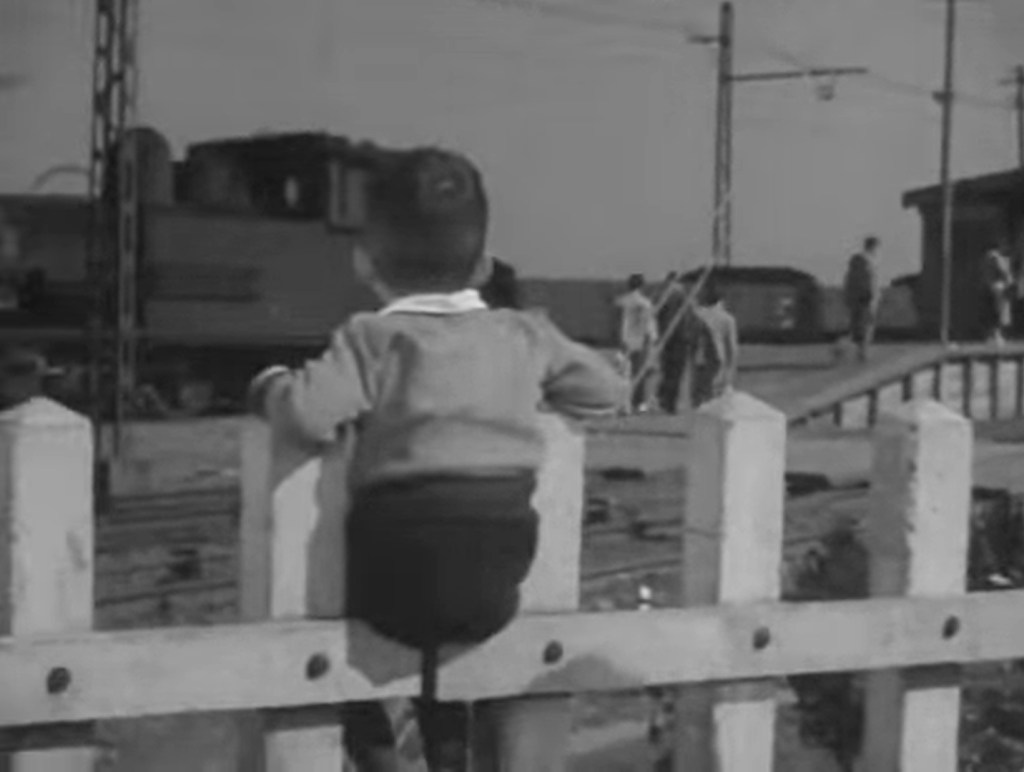

Molte delle protagoniste di Naruse sono vittime di prigioni esterne (il giudizio della famiglia; il tradizionalismo della società; lo sguardo severo della comunità in cui vivono) ma altrettanto opprimenti possono essere le prigioni interiori, che le bloccano in lunghi periodi di stasi. In realtà, l’immobilità afasica è teatro di un logorante conflitto interiore che talora sfocia in tragedia (la morte dell’amante in Yearning, 1964) altre volte in finali aperti (lo sguardo sull’orizzonte di Yumiko in Scattered Clouds) più di rado in conclusioni luminose di speranza (la passeggiata riconciliatoria madre-figlia in Lightning, 1952).
In cerca di rifugi: bar e clubs
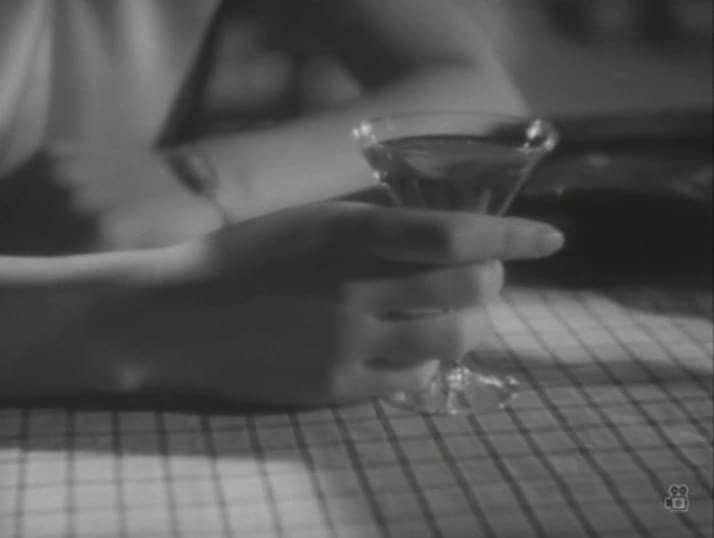
Un cinema “del quotidiano” come quello di Naruse non rinuncia però a un suo immaginario onirico, a momentanee fughe in spazi di deriva emotiva. Ricorrenti nel suo cinema come “luoghi dell’anima”, troviamo i bar e locali notturni: è nel dolce abbraccio dell’alcol che gli esseri umani riescono a confessare i propri intimi segreti, abbandonando pudori e la rigida formalità socialmente imposta.
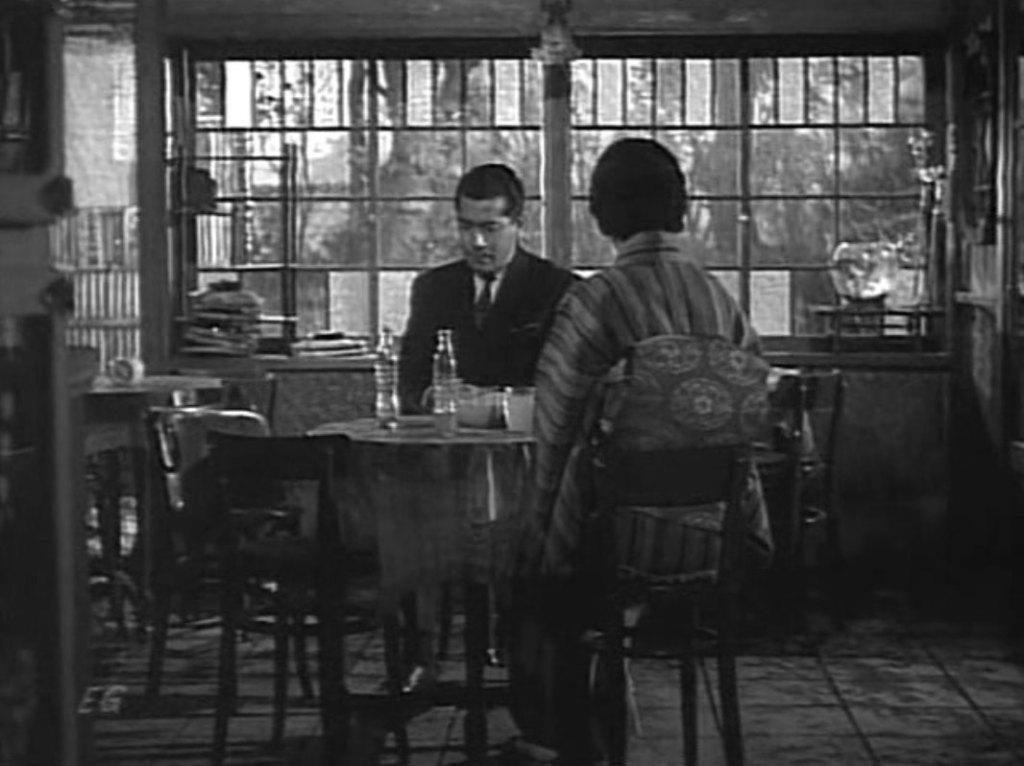
In When a woman ascends the stairs (1960), Keiko, intrattenitrice in un club dalla clientela maschile, si illude che il distinto Mr.Fujisaki possa sottrarla a quella vita. Seduti al bancone del bar, nell’intimità della penombra, i due sono assorti in una conversazione urbana ed elegante. Purtroppo, nelle scene successive, “l’elegante” Fujisaki costringerà Keiko a un rapporto sessuale per poi abbandonarla, lasciandole un umiliante ed esiguo risarcimento economico.
Memorabile anche la scena nel bar/ristorante di quartiere del thriller Hit and Run, dove una giovane madre annega le lacrime per la perdita del proprio figlio tra bottiglie di sake, compagnie sguaiate, amore e rabbia, fino a cadere a terra scoppiando in un pianto disperato. Naruse filma la scena inclinando la macchina da presa (creando delle inquadrature oblique o “olandesi”) come se la donna si trovasse in una barca su un mare agitato (foto 10 e 11). Tanta è la perdita di contatto con la realtà che la circonda, da porla in uno stato di perenne sfasatura, di ebbrezza emotiva più che alcolica.
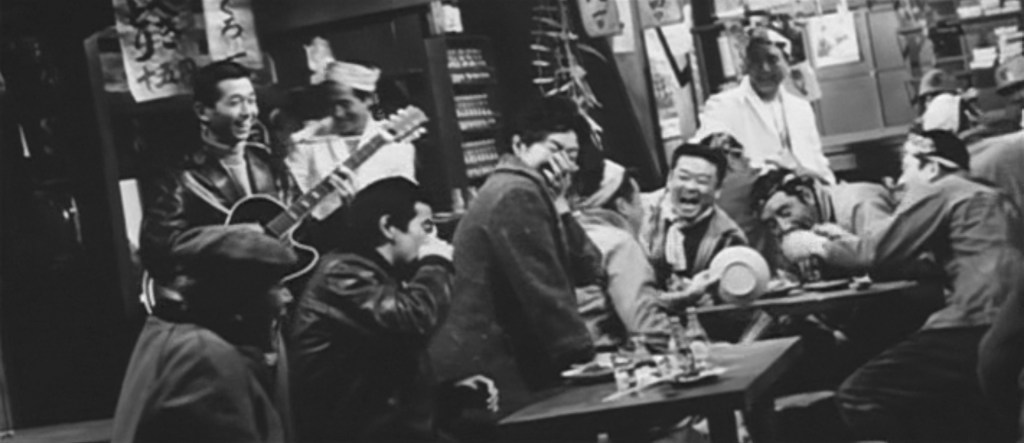

In The Angry Street (1950) il club è una sala da ballo all’americana, dove il giovane Sudo può esprimere tutta la sua rabbia in una dissoluta voracità sessuale e sfruttamento economico delle amanti. In questo caso, il locale è figura retorica di un paese stravolto dall’occupazione americana. I corpi ballano lo swing, ma l’amore, il romanticismo sono sostituiti da mera sopravvivenza e percezione di alienazione. I chiaroscuri guardano allo stile dei noir hollywoodiani; le ragazze sono vestite all’occidentale, i rapidi e invisibili cuts sui personaggi ambigui delineano un racconto morale all’interno dei codici di genere: il regista denuncia l’incrinatura, ma anche la colonizzazione dell’immaginario provocata dalla presenza americana.
In un club, infine, si svolge una delle scene più romantiche dell’intera filmografia di Naruse, all’interno del dramma familiare Daughters, Wives and a Mother (1960): nei panni di Sanae, vedova quarantenne, Setsuko Hara decide di chiudere con il suo giovane innamorato Shingo (Tatsuya Nakadai) proprio per via della differenza d’età. L’addio viene confessato durante un ballo malinconico (foto 12 e 13). Le altre coppie in sala sono sagome scure immerse nell’ombra; le luci creano un’atmosfera fiabesca ma anche mestamente elegiaca. Stretta a Shingo, Sanae sussurra “mio marito non mi aveva mai portato a ballare”. I suoi occhi sono colmi di gratitudine per questo amore breve ma impossibile e lo spazio sembra cullarla dolcemente fino alla fine del sogno. Tutto danza – i corpi, la luce, i riflessi su muri e tendaggi; tutto pronuncia l’addio.


I fenomeni naturali
Sono tanti gli elementi inconfondibili del cinema di Naruse che meriterebbero un approfondimento: le strade percorse senza meta in eterne passeggiate; i treni, teatro di fughe, riflessioni o improvvisi avvicinamenti amorosi tra i rassicuranti sedili di uno scompartimento; il gusto per i motori e la velocità; l’attaccamento a riti tradizionali (danze, processioni, rappresentazioni teatrali, fino al rito per eccellenza – il funerale). Ma non possiamo non soffermarci sullo specifico della visione e della filosofia del regista, ovvero i fenomeni naturali.
Per Naruse, la pioggia è rappresentazione visiva di un pensiero e la luce di un lampo è una presa di coscienza. Tutti i suoi film si svolgono in completa comunione con il mondo naturale, che del cuore umano rappresenta lo specchio, la mappa emotiva, ma anche presenza spirituale e consolatoria. Già i titoli, da soli, sono espressione dei temporali del vivere: Floating Clouds (Nubi Fluttuanti), Sudden Rain (Pioggia Improvvisa), Scattered Clouds (Nubi Sparse), Summer clouds (Nubi estive). La natura viene incontro alle protagoniste in crisi, le scuote, le bagna di tempesta affinché tra le membra umide possano finalmente percepire il proprio nucleo di verità.


In Lightning (Inazuma) i “lampi” del titolo sono i profondi turbamenti che scuotono la ventitreenne Kiyoko di fronte al disfacimento morale della famiglia: le emozioni della ragazza diventano nostre senza filtri, se non quello invisibile della mano del regista. Ad ogni balenìo, Kiyoko pensa, soffre, cerca nuove possibilità (foto 14 e 15); senza sensazionalismi, ma assorto, discreto, concentrato fino a cogliere ogni sfumatura, Naruse realizza un ritratto d’una bellezza simile a quella dei film di Ophuls: e sarà forse un caso, ma a un certo punto Kiyoko scrive una lettera e si invaghisce di un pianista…
In A Wife’s Heart, il temporale è d’amore: l’infelicemente sposata Kiyoko (Takamine) è attratta dal confidente Kenichi (un gentile Mifune), ma il suo status le impone di respingerlo. Mentre fuori infuria la tempesta, Kiyoko trasalisce alla confessione dell’uomo, spalanca gli occhi, diventa ella stessa luce per pochi istanti, fino a ripiegarsi in un rifiuto socialmente obbligato (foto 16, 17 e 18). Naruse restrige sui volti, poi si allontana abbandonando il primo piano, esattamente come Kiyoko rinuncia all’amore nell’aria greve di pioggia.

Talvolta, attraverso la natura, Naruse ci dà indizi sul tipo di sentimento rappresentato e ci offre anche una dimostrazione del suo inequivocabile, quanto spesso frainteso, senso dell’umorismo. Troppo spesso il regista viene schematizzato come metteur en scène di tristi melodrammi, mentre in realtà il suo tocco leggero vive di sfumature anche nei toni, che non di rado celano sottigliezze ironiche, scherzi o clownerie. In Untamed (1957), film anomalo e straordinario nella sua costruzione di un personaggio femminile “non soccombente”, l’umiliata e offesa Shima (Takamine) si rialza cento volte, impara a tener testa a uomini deboli e indegni (dando vita a impagabili scene comiche, come quando innaffia con l’idrante il marito traditore). In una sequenza molto bella, tutta incentrata sulla disillusione, Shima viene baciata dal fascinoso proprietario dell’albergo dove lavora (Masayuki Mori, sempre perfetto nel ruolo di vigliacco), e un grosso mucchio di neve cade dal tetto con un tonfo sordo (foto 19 e 20). Naruse sta dicendo agli spettatori – e alla protagonista – che non si tratta di un bacio romantico, e che quel mucchio di neve caduto a peso morto è il preludio ad una serie di viltà inflitte dall’uomo alla ragazza.

Cinema nel cinema
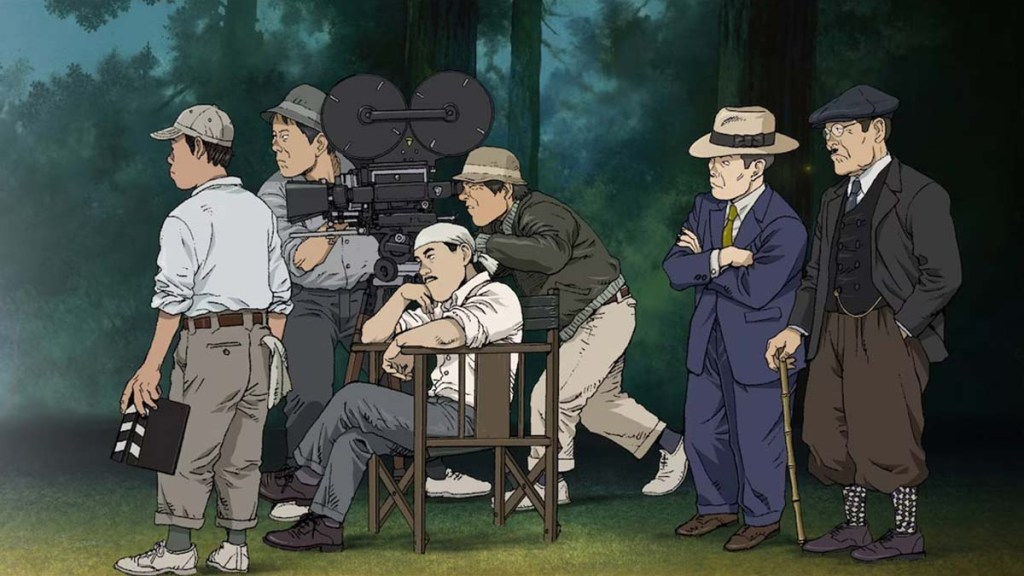
Naruse fu un uomo-cinema, totalmente devoto alla sua arte e in movimento assieme ad essa. Come ben nota Ryūsuke Hamaguchi compilando la sua Top Ten per la Criterion: “Il suo stile, vibrante e dinamico negli anni ’30 (…) si fa più intenso e sottile nei capolavori dei ’50 e ’60”. Insieme a Koji Fukada e Hirokazu Kore-eda, Hamaguchi è tra i registi che si collocano sul suo tracciato stilistico e tematico, perseguendo un cinema di sentimenti che si rivelano inaspettatamente “estremi”. I personaggi di Naruse sono “pazzi” – si pensi a Yukiko che insegue Tomioka fino alla fine del mondo, o a tutti i personaggi che si cercano, si spiano, desiderano la presenza dell’altro a tal punto da rischiare la vita. Naruse cercò sempre la forma migliore per rappresentare tutto questo, limando il suo stile e sfruttando le possibilità offerte dal colore e dal formato. Il cinema stesso era il soggetto implicito di ogni suo film: a ricordarcelo troviamo anche elementi del racconto e linee di dialogo (“Ci vediamo al cinema?” “Non andrai mica di nuovo al cinema?”). Naruse non di rado “scherza” con lo spettatore, lo coinvolge nell’ossessione della rappresentazione, lo confonde e lo incanta, abbattendo le distanze.
In Madre (Okaasan, 1952), dopo circa 60 minuti di film chiusi da una dissolvenza ingannatrice, ecco che ci viene servito un “The End” con tanto di colonna sonora tipicamente conclusiva (foto 21). È finito? Di già? In realtà Naruse ci prende “ellitticamente” in giro: il titolo di coda appartiene al film che le due protagoniste Toshiko e Noriko hanno appena terminato di vedere al cinema. “È stato bello, ho pianto un sacco!”(foto 22).


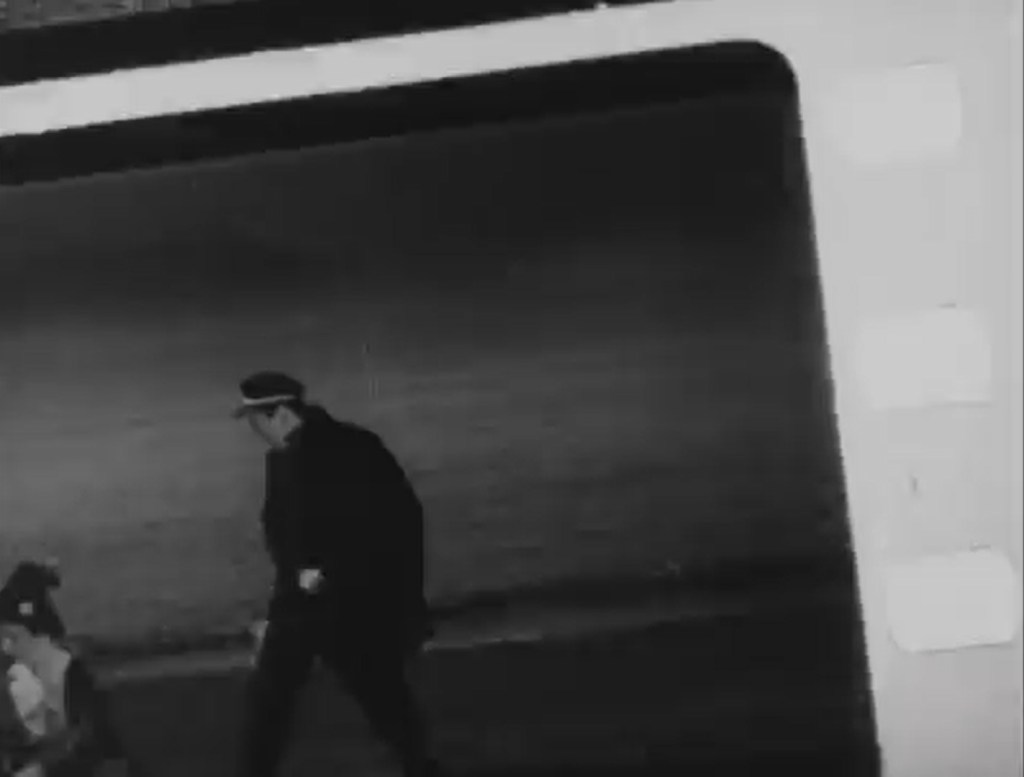
In Untamed, Naruse gioca di nuovo con la proiezione: in una sala cinematografica scorre un film raccontato da un benshi (narratore) e attraverso una soggettiva dei protagonisti (foto 23) vediamo la scena sullo schermo (in cui Naruse non perde occasione per ridicolizzare l’enfasi melodrammatica del vecchio cinema giapponese). Improvvisamente, l’immagine si accartoccia a causa dell’inceppamento della pellicola, lasciando il nulla (foto 24). E in questa “pagina bianca” (foto 25) che è la vertigine del cinema, Naruse trascina i suoi spettatori, confonde il piano del reale e quello della finzione, ci fa sedere in sala assieme ai suoi personaggi, non smentendo la sua natura di autore strettamente connesso alle emozioni umane, al miracolo della percezione. Vedere i film di Naruse vuol dire capire di più su se stessi, sugli altri e sul mistero del vivere: le sue immagini sono i nostri lampi interiori.
QUI TUTTI GLI ARTICOLI DI NUBI FLUTTUANTI DEDICATI A MIKIO NARUSE
Tutti gli articoli sono protetti da copyright: © Marcella Leonardi. Tutti i diritti riservati.


English Version
R. W. Fassbinder once wrote of Douglas Sirk: “I have seen too few of his films; I would like to see all thirty-nine. Perhaps then I would have understood more about myself, my life and my friends. But I have seen only six films, and they were the most beautiful films in the world.” I feel much the same about Naruse’s cinema: I wish I could have seen all eighty-nine of his films, but I have seen only forty; and a few pages could never do justice to the complexity of his cinema — a cinema that is also simple and true, among the most beautiful in the world.
Actress Yōko Tsukasa, who appeared in Hit and Run (1966, an experimental thriller with Hitchcockian overtones) and Scattered Clouds (1967, a melodrama of refined stylisation), once said of him: “Acting in his films was an honour for an actress. Naruse understood female psychology perfectly.” A director of women, an acute observer of their thoughts and desires, but also a sensitive chronicler of the human condition, which he regarded without judgement, Naruse portrayed our instinctive longing for a happiness that is never quite attained. His female protagonists are not resigned creatures, but restless modern spirits, caught in the tension between rebellion and adherence to tradition. Above all, Naruse knew how to make faces speak: his close-ups are landscapes across which, in a matter of seconds, the most intense range of human emotions swiftly passes. (photos 1, 2, 3)
Modern Poetry
If Naruse is unquestionably one of the great directors of “classical” Japanese cinema, whose work therefore emerged from deep-rooted traditions and an industry with very specific characteristics, it is equally true that he possessed an instinctive feeling for cinema, drawn towards the transformations taking place in international filmmaking and constantly reaching towards change. His films express a consistent philosophy, which Naruse refined year after year “like a painter who always paints the same rose, searching for new colours” — to paraphrase Ozu. Yet the forms, techniques and languages of his cinema, despite being contained within an apparent discretion, were continually renewed according to the necessity of filmmaking itself.
With his characteristic elegance, Naruse adapted to the industry, accepting its dictates while suffering them as an unjust restriction on his creativity — particularly during the long period of propagandistic control spanning the Second World War and the Occupation. From the 1950s onwards, however, this long artistic tribulation dissolved into a cinema of clarity and ceaseless movement, an undercurrent of tremendous power. Experience became a luminous, assured style; his vision found in the writing of the poet Fumiko Hayashi — and later in the sensitive Zenzō Matsuyama — a “home” more beautiful than prose itself, where inevitable human suffering, especially female suffering, could be transfigured through a poetic reflection on life, desire and the trembling contradictions of feeling, so similar to natural phenomena.
Naruse looked at the world with an extraordinary attentiveness to gestures, emotions and the traces that living leaves upon people; and through invisible editing he stitched together intimate and collective moments, conversations between lovers, leaps in time and sudden moments of awareness.
The Reflection of the World Upon the Self
Naruse is interested in feeling, interior time and his protagonists’ subjective perception. His cinema exploits the poetic and dramatic possibilities of ellipsis and creates a kind of “emotional” editing, condensing years into transitions lasting only a few seconds. At times, in order to give us access to his characters’ inner lives, he resorts to daring and extraordinarily beautiful devices: in Avalanche, a dark photographic filter descends like a curtain across a face “lost in thought”.
Particularly attentive to the expressive use of the dissolve — especially in his films of the 1930s — Naruse turns it into both a poetic and psychoanalytic device, revealing a particular fascination with time. For him, temporality is subjective and may be traversed, almost surrealistically, backwards and forwards — as in Floating Clouds (1955) or Morning Tree-Lined Street (1936). This gives his films a hypnotic, incantatory quality — all Naruse’s films are profoundly musical — but also an unconscious density.
Like all the great artists of the twentieth century, Naruse imbues his work with a duality between self and world; the historical and social contexts that play such a significant role in his cinema interest him as components of inner experience. Thus the ruins of defeated Japan in Floating Clouds become a spiritual rain, transforming the lovers into rarefied ghosts (photo 4). Or, in Older Brother, Younger Sister (1953), the arid rural landscapes, stripped bare by relentless sun and poverty, are reflected in the souls of instinct-driven characters, restless as insects, capable of expressing themselves only through brutality, with kicks and bites, however desperately they may long for tenderness. The “desertification” of the post-war years leaves behind violent, unspeakable emotions, like long shadows beneath a burning sky (photo 5).
In A Wanderer’s Notebook (1962), the film devoted to Fumiko Hayashi, the “wandering” poet, Naruse faces the difficult task of visualising his protagonist’s “poetic imagination”, her deepest connection with the world being through writing. He chooses to superimpose the verses directly onto the image (photo 6): words become the graphic image of thought, while also being spoken aloud in voice-over. It is an apparently simple but strikingly modern device, giving the viewer immediate access to Fumiko’s thoughts. It is not unlike Emily Dickinson’s vision of poetry, once printed, as a “corporeal illustration”. Jim Jarmusch would adopt a similar device in Paterson (2016).
6. Poetry, a corporeal illustration
The outside world often impinges like a threat upon the traditionalism internalised by Naruse’s characters. In the complex and subtle Repast (1951), Michiyo comes face to face with the emancipation of Tokyo. Walking through the city in a kimono, having fled there in search of work and independence from her overbearing husband, she observes the people around her. The sight of a working woman dressed in masculine clothes, her child effectively “parked” on a fence, shocks her. In three shots (photos 7, 8 and 9), Naruse makes us understand that Michiyo is not ready to abandon either the security of her married status or the very mentality of which she is herself a victim. Setsuko Hara gives a magnificent performance of her unease, but Naruse’s brilliance lies in capturing the inner discrepancy that makes Michiyo unresolved even to herself. The desire for freedom, or for love, seems to sweep her along like a current; at the same time, the cultural archetypes inhabiting her suppress the immediacy of instinct.
Many of Naruse’s heroines are trapped in external prisons — the judgement of their families, the traditionalism of society, the stern gaze of the communities in which they live — yet their inner prisons can be equally oppressive, holding them in long periods of stasis. In fact, their mute immobility is the stage upon which an exhausting inner conflict is played out, sometimes ending in tragedy — the death of the lover in Yearning (1964) — elsewhere in open endings, such as Yumiko’s gaze towards the horizon in Scattered Clouds, and more rarely in conclusions touched by hope, like the reconciliatory walk between mother and daughter in Lightning (1952).
In Search of Refuge: Bars and Clubs
A cinema of “everyday life” such as Naruse’s nevertheless possesses its own dreamlike imagery, momentary escapes into spaces of emotional drift. Bars and nightclubs recur throughout his films as “places of the soul”: it is within the gentle embrace of alcohol that human beings manage to confess their most intimate secrets, shedding inhibitions and the rigid formality imposed upon them by society.
In When a Woman Ascends the Stairs (1960), Keiko, a hostess in a club catering to male customers, deludes herself into believing that the distinguished Mr Fujisaki may rescue her from that life. Sitting together at the bar in the intimacy of the half-light, they are absorbed in an elegant, urban conversation. In the scenes that follow, however, the “elegant” Fujisaki forces Keiko into sex and then abandons her, leaving behind a humiliatingly meagre sum of money.
Equally memorable is the scene set in a neighbourhood bar-restaurant in the thriller Hit and Run, where a young mother drowns her grief over the death of her child among bottles of sake, boisterous company, love and rage, until she collapses to the floor in desperate tears. Naruse films the sequence with a tilted camera, creating oblique or “Dutch” angles, as though the woman were aboard a boat on a stormy sea (photos 10 and 11). So complete is her loss of contact with the reality surrounding her that she seems permanently out of alignment, intoxicated emotionally rather than merely by alcohol.
In The Angry Street (1950), the club is an American-style dance hall, where the young Sudo can give free rein to his rage through voracious sexuality and the financial exploitation of his lovers. Here the club becomes a rhetorical figure for a country transformed by the American Occupation. Bodies dance to swing music, but love and romance have been replaced by mere survival and a sense of alienation. The chiaroscuro evokes Hollywood noir; the girls wear Western clothes, while swift, invisible cuts between ambiguous characters shape a moral tale within genre conventions. Naruse exposes the fracture, but also the colonisation of the imagination brought about by the American presence.
A club is also the setting for one of the most romantic scenes in Naruse’s entire filmography, in the family drama Daughters, Wives and a Mother (1960). As Sanae, a forty-year-old widow, Setsuko Hara decides to end her relationship with her younger lover Shingo (Tatsuya Nakadai) precisely because of their age difference. The farewell is confessed during a melancholy dance (photos 12 and 13). The other couples in the room are dark silhouettes immersed in shadow; the lights create an atmosphere both fairytale-like and mournfully elegiac. Holding Shingo close, Sanae whispers: “My husband never took me dancing.” Her eyes are filled with gratitude for this brief but impossible love, and the space itself seems to cradle her gently until the dream comes to an end. Everything dances — bodies, light, reflections on walls and curtains; everything speaks the language of farewell.
Natural Phenomena
There are so many unmistakable elements of Naruse’s cinema that deserve closer examination: the streets wandered without destination on endless walks; trains as spaces of escape, reflection or sudden romantic intimacy amid the reassuring seats of a carriage; his fascination with engines and speed; his attachment to traditional rituals — dances, processions, theatrical performances, all the way to the ultimate ritual, the funeral. Yet we cannot avoid dwelling on what lies at the heart of Naruse’s vision and philosophy: natural phenomena.
For Naruse, rain is the visual representation of a thought, and a flash of lightning is a moment of awareness. All his films unfold in complete communion with the natural world, which becomes a mirror and an emotional map of the human heart, but also a spiritual and consoling presence. The titles alone express the storms of living: Floating Clouds, Sudden Rain, Scattered Clouds, Summer Clouds. Nature comes towards his troubled heroines, shakes them, drenches them in storms, so that through their rain-soaked bodies they may at last perceive their own core of truth.
In Lightning (Inazuma), the “flashes” of the title are the profound disturbances shaking twenty-three-year-old Kiyoko as she confronts the moral disintegration of her family. The young woman’s emotions become ours without mediation, except for the invisible hand of the director. With every flash, Kiyoko thinks, suffers, searches for new possibilities (photos 14 and 15). Without sensationalism, absorbed, discreet, intent on capturing every nuance, Naruse creates a portrait whose beauty recalls the films of Ophuls — and perhaps it is merely a coincidence, but at one point Kiyoko writes a letter and falls for a pianist…
In A Wife’s Heart, the storm is one of love. The unhappily married Kiyoko (Takamine) is attracted to her confidant Kenichi — played by an unusually gentle Mifune — but her status requires her to reject him. As the storm rages outside, Kiyoko starts at the man’s declaration, her eyes widening; for a few moments she becomes light itself, before retreating into the socially prescribed refusal (photos 16, 17 and 18). Naruse closes in on their faces, then draws back, abandoning the close-up just as Kiyoko relinquishes love in the heavy, rain-laden air.
At times, through nature, Naruse gives us clues about the kind of emotion being portrayed while also offering proof of his unmistakable — and frequently misunderstood — sense of humour. He is too often reduced to a metteur en scène of sorrowful melodramas, when in fact his lightness of touch extends to tonal nuance as well, frequently concealing irony, jokes or outright clownerie.
In Untamed (1957), an extraordinary and unusual film in its construction of a female character who refuses to succumb, the humiliated and mistreated Shima (Takamine) picks herself up a hundred times, learning to stand up to weak and unworthy men — and giving rise to priceless comic scenes, as when she turns a hose on her unfaithful husband. In one beautiful sequence built entirely around disillusionment, Shima is kissed by the handsome owner of the inn where she works — Masayuki Mori, as ever perfect in the role of a coward — and a huge mass of snow falls from the roof with a dull thud (photos 19 and 20). Naruse is telling both the audience and his protagonist that this is no romantic kiss, and that the dead weight of snow crashing to the ground is the prelude to a series of cowardly betrayals the man will inflict upon her.
Cinema Within Cinema
Naruse was a man of cinema, wholly devoted to his art and moving alongside it as it changed. As Ryūsuke Hamaguchi aptly observed when compiling his Top Ten for the Criterion Collection: “His style, vibrant and dynamic in the 1930s (…) becomes more intense and subtle in the masterpieces of the 1950s and ’60s.” Alongside Kōji Fukada and Hirokazu Kore-eda, Hamaguchi is among the filmmakers who follow Naruse’s stylistic and thematic path, pursuing a cinema in which feelings unexpectedly reveal themselves to be “extreme”.
Naruse’s characters are “mad” — think of Yukiko following Tomioka to the ends of the earth, or of all those characters who seek one another out, spy on one another, desire the other person’s presence so intensely that they risk their lives. Naruse was always searching for the best form in which to represent all this, refining his style and exploiting the possibilities offered by colour and format. Cinema itself was the implicit subject of every one of his films: reminders of this can be found in narrative details and fragments of dialogue — “Shall we meet at the cinema?” “You’re not going to the cinema again, are you?” Naruse often “plays” with the viewer, drawing us into the obsession with representation, confusing and enchanting us, dissolving distances.
In Mother (Okaasan, 1952), after roughly sixty minutes of film brought to an apparent close by a deceptive dissolve, we are presented with a “The End”, complete with conventionally conclusive music (photo 21). Is it over? Already? In fact Naruse is playing an “elliptical” joke on us: the end title belongs to the film that the two protagonists, Toshiko and Noriko, have just finished watching at the cinema. “It was wonderful — I cried so much!” (photo 22).
In Untamed, Naruse once again plays with projection. In a cinema, a film is being narrated by a benshi, and through the protagonists’ point of view (photo 23) we watch the scene on the screen — in which Naruse cannot resist mocking the melodramatic excesses of old Japanese cinema. Suddenly, the image crumples as the film jams, leaving nothing behind (photo 24). Into this “blank page” (photo 25) — the vertigo of cinema itself — Naruse pulls his audience, blurring the boundaries between reality and fiction and seating us in the theatre alongside his characters, remaining true to his nature as an artist intimately connected with human emotions and the miracle of perception.
To watch Naruse’s films is to understand more about ourselves, about others, and about the mystery of living: his images are our inner flashes of lightning.
HERE ARE ALL THE NUBI FLUTTUANTI ARTICLES DEDICATED TO MIKIO NARUSE.
All articles are protected by copyright: © Marcella Leonardi. All rights reserved.







Rispondi