
Imamura 100 (1926-2006)
[English version below]
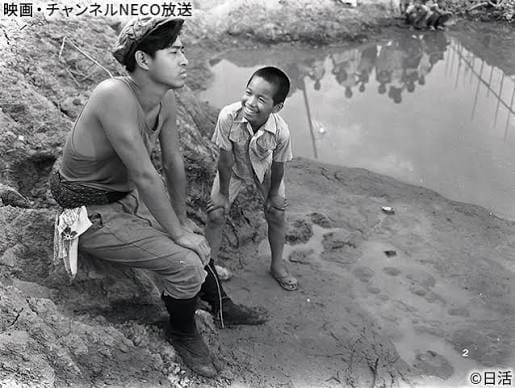
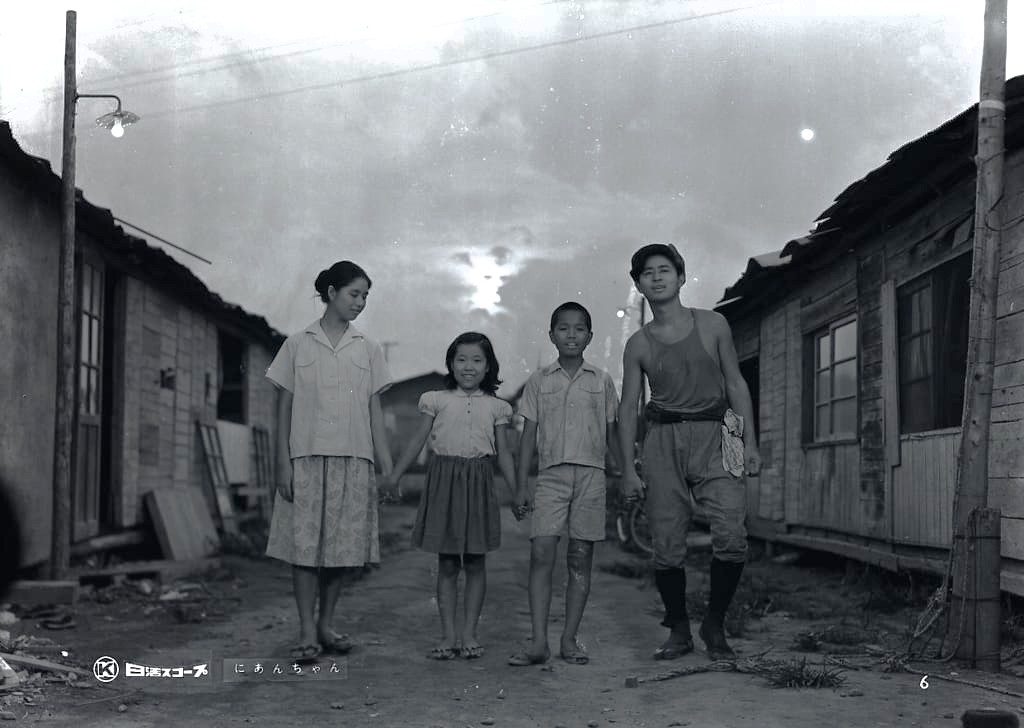
Siamo nel 1953: in una povera provincia mineraria, quattro fratelli “zainichi” (coreani di seconda generazione) a cui è appena morto il padre si arrabattano per sopravvivere. Il licenziamento del fratello maggiore disgrega la famiglia: lui e la sorella maggiore cercano fortuna altrove, mentre i piccoli Kōichi e Sueko vengono prima affidati e poi sballottati qua e là, attraverso un Giappone adulto duro e inospitale.
Quarto film di Shōhei Imamura, My Second Brother (Nianchan) si basa sul diario di Sueko Yasumoto, una bambina zainichi (coreana-giapponese) di dieci anni, all’epoca un bestseller di grande successo popolare. Il film ebbe altrettanta fortuna e fu insignito del “Premio del Ministro dell’Istruzione”, ma il regista inizialmente non desiderava accettare il progetto (una commissione della Nikkatsu) e affermò di sentirsi quasi in imbarazzo per aver realizzato un film “così edificante”.
Eppure My Second Brother contiene già, sebbene addolcita, tutta l’aspra poetica che l’autore svilupperà radicalmente nei film successivi. È un film di grande fascino, un’opera di transizione che mantiene visibili i segni del passaggio dal classicismo al cinema inquieto e disarmonico degli anni ’60.
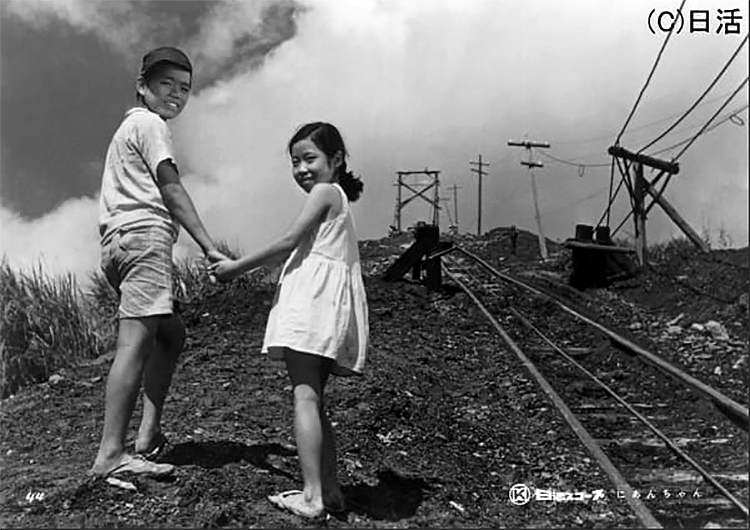
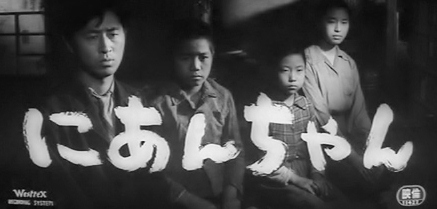
Ex assistente alla regia di Ozu, di cui rifiutò la compostezza, e discepolo di Yūzō Kawashima, il maestro di un nuovo realismo dissonante e contrastato, Imamura ritrae il povero villaggio di minatori con uno stile intensamente moderno, in cui documentario (la vita quotidiana degli abitanti dell’isola) e finzione (il racconto di formazione dei due bambini) si contaminano reciprocamente. Il dispositivo della rappresentazione viene rivelato in apertura, da una voce fuori campo e dall’inconsueta “posa fotografica” dei protagonisti, offerti reificati allo sguardo dello spettatore.
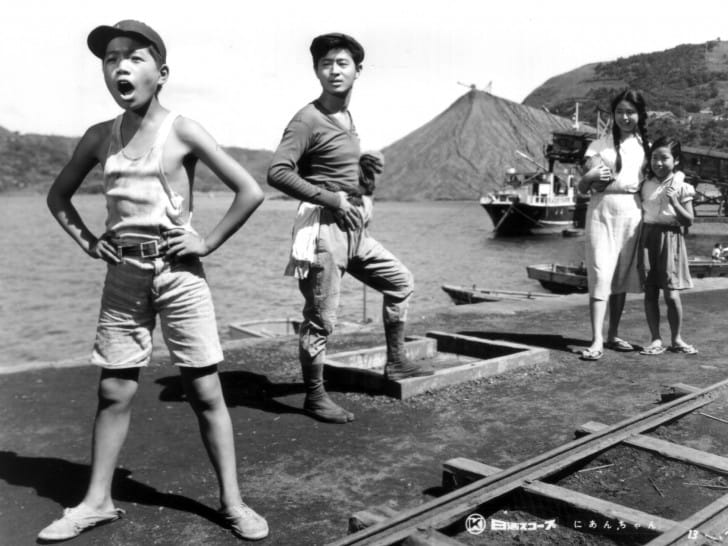
Per quanto dichiaratamente anti-classicista, Imamura tradisce il legame con la tradizione attraverso particolari elementi compositivi: ad esempio i pillow-shot sul paesaggio industriale fatto di vicoli, binari di teleferiche, cisterne, così memori dell’Ozu degli anni ’30, del suo cinema delle baracche e dei balordi di buon cuore. Un microcosmo selvatico che muta profondamente nel dopoguerra, e che Ozu decide consapevolmente di accantonare per ritrovare una “nuova armonia” nelle immagini di ceti benestanti.
Ed è Imamura a raccogliere questo filo spezzato, riposizionando la macchina da presa tra le comunità più misere, nei bassifondi della società. My Second Brother filma un’umanità pulsionale che vive di istinti primari (si vedano le sequenze dedicate ai pasti, consumati in modo animalesco), continua a riprodursi senza avere mezzi di sostentamento (i neonati sono trattati come oggetti incidentali, pesi da tenere sulle spalle) e il cui senso di unità familiare è del tutto disgregato.
Il regista coglie questo presente scarnificato frammentando gli interni con stacchi a 180° e prospettive anomale; apre varchi, scopre pareti sgretolate, inquadra i gruppi familiari, o ciò che ne resta, con plongée, come se un destino superiore ne osservasse freddamente l’agitarsi. Fa inoltre ricorso a focali corte che creano distorsioni prospettiche, alterando l’equilibrio essere umano/mondo. Conserva un nerissimo sense of humor, ad esempio nella sequenza iniziale del funerale: la processione appare come una soggettiva del defunto, che dal feretro osserva ciò che resta dopo la sua morte.
Ma il racconto si intesse anche di rapidi riverberi di un passato che agisce quasi inconsciamente: come nelle frequenti inquadrature di panni stesi, in cui riconosciamo quei “film di bambini” di Ozu, su tutti il dolente Record of a Tenement Gentleman (Nagaya shinshiroku, 1947), resoconto della vita degli orfani di guerra. Imamura si accosta a quel cinema per strapparne la “misura”, la quieta discrezione, calandosi nella realtà quotidiana come in un budello infernale – e del resto il regista dichiarò spesso di voler fare un cinema “delle parti basse”, che mettesse in relazione la parte inferiore del corpo umano e la parte inferiore della struttura sociale.
My Second Brother mostra senza pudori la lotta per la sopravvivenza degli isolani e ne registra le sofferenze senza sentimentalismi. I due bambini protagonisti si confrontano spesso con una società dalle regole incomprensibili, regredita all’emozione rozza, alla smorfia primitiva contratta sul volto. Imamura sceglie una fotografia dai chiaroscuri netti e contrastati, evidenziando l’assenza di zone grigie e il dominio di leggi elementari (una soluzione formale a cui similmente ricorre, nel suo esordio A Town of Love and Hope, Nagisa Ōshima). Appaiono, come lontane visioni, anche momenti nostalgici, ad esempio le bellissime feste popolari, i riti in cui si avverte ancora l’incanto di un Giappone trascorso.
Dall’interno di un neorealismo tagliente e soggetto a grotteschi deragliamenti (la figura della terribile vecchia tirchia, o la baracca nel bosco uscita da una favola dei fratelli Grimm), My Second Brother tradisce, suo malgrado, un’imprevista ma palpabile pietà. Le soluzioni compositive brutali, i bellissimi carrelli dall’alto, la fotografia raggelata non cancellano del tutto l’affetto, quel “tono edificante” di cui lo stesso regista, ironicamente, ammetteva di vergognarsi.
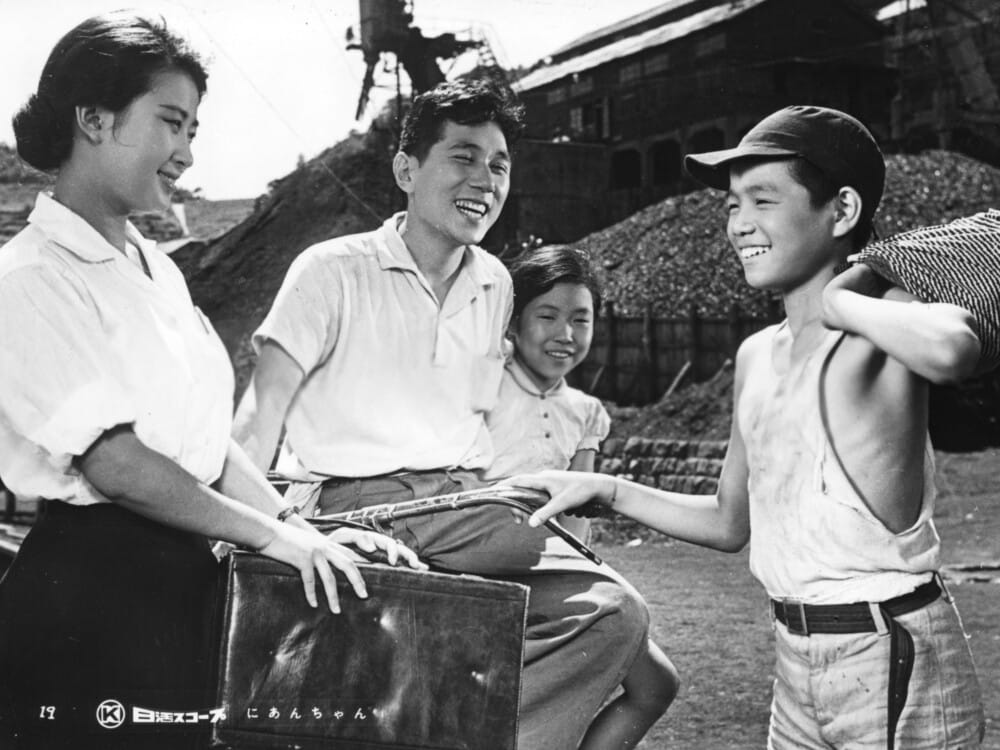
Merito, in particolare, della bravura dei due piccoli interpreti, la cui semplice presenza innocente vira il racconto da documentario entomologico a fiaba dalle atmosfere arcane e magiche. La fuga disperata dei fratellini, le peripezie, il loro sostare sul limitare della notte, smarriti di fronte al mistero delle cose, ricordano il viaggio onirico dei due protagonisti di The Night of the Hunter (La morte corre sul fiume, 1955). Vi è una misericordia nel mondo naturale, un “pianto di stelle” che li accompagna poeticamente pur nel loro destino spietato.
Tutti gli articoli sono protetti da copyright: © Marcella Leonardi. Tutti i diritti riservati.
English version
The year is 1953: in a poor mining region, four “zainichi” siblings (Korean residents in Japan) whose father has just died struggle to survive. The dismissal of the eldest brother breaks the family apart: he and the eldest sister go to seek their fortune elsewhere, while little Kōichi and Sueko are first taken in by others and then tossed from place to place across a harsh, inhospitable adult Japan.
Shōhei Imamura’s fourth film, My Second Brother (Nianchan), is based on the diary of Sueko Yasumoto, a ten-year-old zainichi (Korean-Japanese) girl, which was a hugely popular bestseller at the time. The film met with equal success and was awarded the “Minister of Education Prize,” but the director was initially reluctant to accept the project (a Nikkatsu commission) and said he felt almost embarrassed to have made such an “edifying” film.
And yet My Second Brother already contains, albeit softened, all the harsh poetics that the director would develop so radically in his later films. It is a film of great fascination, a transitional work that still bears the marks of the passage from classicism to the restless, disharmonious cinema of the 1960s.
A former assistant director to Ozu, whose composure he rejected, and a disciple of Yūzō Kawashima, the master of a new, dissonant and contrasted realism, Imamura portrays the poor mining village in an intensely modern style, in which documentary (the islanders’ daily life) and fiction (the two children’s coming-of-age story) contaminate each other. The apparatus of representation is revealed at the outset, by an off-screen voice and by the unusual “photographic pose” of the protagonists, offered up, reified, to the spectator’s gaze.
Although avowedly anti-classicist, Imamura betrays his link to tradition through certain compositional elements: for example, the pillow shots of an industrial landscape of alleys, cableway tracks and tanks, so reminiscent of the Ozu of the 1930s, with his shacks and good-hearted layabouts. A wild microcosm that changes profoundly in the postwar period, and that Ozu knowingly chooses to set aside in order to find a “new harmony” in images of the well-to-do classes. And it is Imamura who picks up this broken thread, repositioning the camera among the poorest communities, in the underbelly of society. My Second Brother films an instinct-driven humanity that lives on primary urges (see the sequences devoted to meals, eaten in an animalistic manner), keeps reproducing without any means of support (newborns are treated as incidental objects, weights to be carried on one’s shoulders), and whose sense of family unity has entirely disintegrated.
The director captures this stripped-to-the-bone present by fragmenting interiors with 180° cuts and unusual angles; he opens up gaps, exposes crumbling walls, and frames family groups, or what remains of them, in high-angle shots, as if some higher power were coldly watching their restless movements. He also resorts to wide-angle lenses that create perspective distortions, upsetting the balance between human beings and the world. He retains a pitch-black sense of humor, for example in the opening funeral sequence: the procession appears as a point-of-view shot of the deceased, who from the coffin observes what remains after his death.
But the story is also woven with fleeting echoes of a past that acts almost unconsciously, as in the frequent shots of hanging laundry, in which we recognize Ozu’s “children’s films,” above all the sorrowful Record of a Tenement Gentleman (Nagaya shinshiroku, 1947), a chronicle of the lives of war orphans. Imamura approaches that cinema in order to tear away its “restraint,” its quiet discretion, plunging into everyday reality as if into the bowels of hell — and indeed the director often declared that he wanted to make a cinema “of the lower body,” one that would link the lower part of the human body to the lower stratum of the social structure.
My Second Brother shows without reserve the islanders’ struggle for survival and records its sufferings without sentimentality. The two child protagonists often come up against a society whose rules they cannot understand, regressed to crude emotion, to the primitive grimaces etched across their faces. Imamura chooses cinematography with stark, high-contrast chiaroscuro, underscoring the absence of gray areas and the rule of elementary laws (a formal solution to which Nagisa Ōshima similarly resorts in his debut, A Town of Love and Hope). Nostalgic moments also appear, like distant visions, such as the beautiful village festivals, rites in which one can still sense the enchantment of a bygone Japan.
From within a cutting neorealism prone to grotesque derailments (the figure of the terrible, miserly old woman, or the shack in the woods straight out of a Brothers Grimm fairy tale), My Second Brother betrays, in spite of itself, an unexpected but palpable compassion. The brutal compositional solutions, the beautiful overhead tracking shots and the icy cinematography do not entirely erase the affection, that “edifying tone” which the director himself, ironically, admitted to being ashamed of.
This is due, in particular, to the skill of the two young performers, whose mere innocent presence turns the tale from an entomological documentary into a fairy tale with arcane, magical atmospheres. The little ones’ desperate flight, their misadventures, their pausing at the edge of night, lost before the mystery of things, recall the dreamlike journey of the two protagonists of The Night of the Hunter (1955). There is a mercy in the natural world, a “weeping of stars” that accompanies them poetically even in their ruthless fate.
All articles are protected by copyright: © Marcella Leonardi. All rights reserved.




 Nubi Fluttuanti
Lascia un commento