

[English version below]
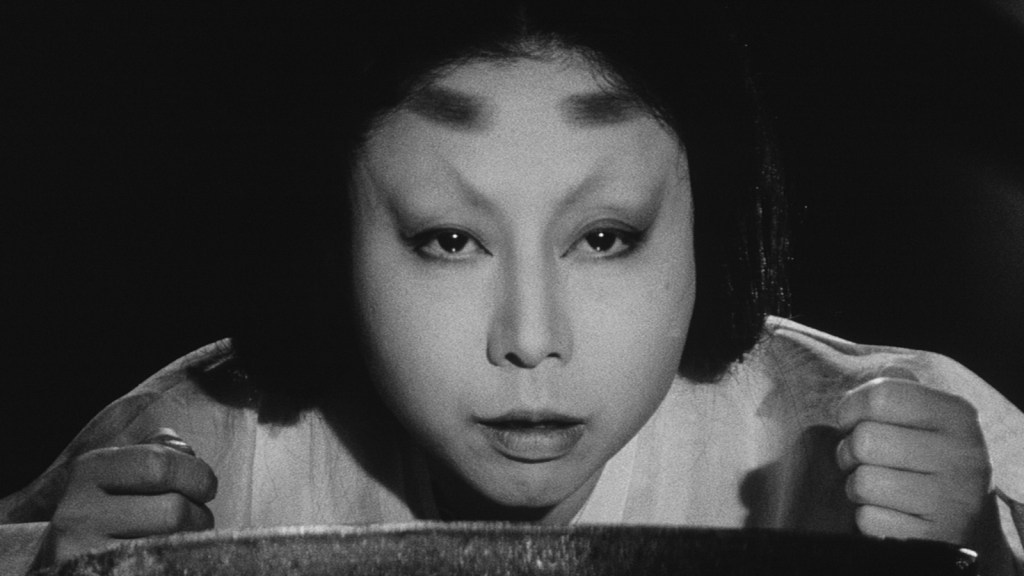
Ambientato nel Giappone del sedicesimo secolo, il film è ispirato ai due racconti La casa fra gli sterpi e La lubricità del serpente di Ueda Akinari (facenti parte della raccolta Racconti di pioggia e di luna). I contadini Genjuro e Tobei vendono i loro vasi di terracotta a un gruppo di soldati di un villaggio vicino, cercando di ricavare profitto dallo stato di guerra. L’ambizione di Genjuro e l’attrazione nei confronti della misteriosa dama Wakasa, così come il desiderio di Tobei di diventare un samurai, rischiano di distruggere sia loro stessi che le loro mogli, Miyagi e Ohama.
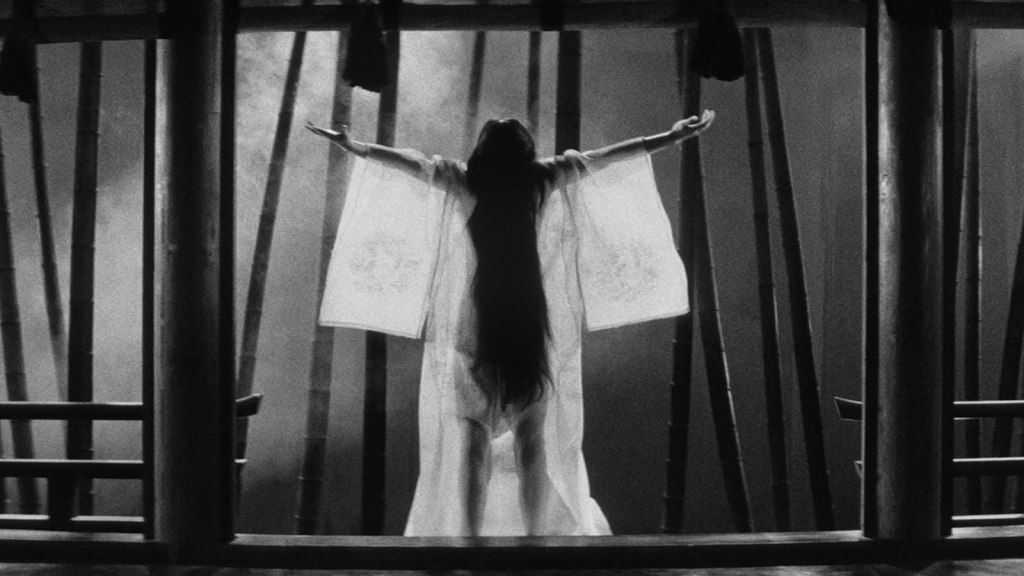
Con le sue brume, le visioni oniriche in giardini trascendentali, le apparizioni nitide di figure e icone senza tempo, fino al martirio dei semplici tra le spighe (così bene ripresi da Scorsese in Silence), il film ci porta a domandarci come mai non venga più praticato il cinema di fantasmi. Si è perso il colloquio tra i vivi e i morti, la fede in una presenza, quasi un amore dei fantasmi per i vivi.
Ugetsu crea turbamento in virtù della sua spiritualità e allo stesso tempo dei suoi elementi più vividi e realistici: l’impressione è quella di assistere a qualcosa di magico, inafferrabile.
Al realismo della dura vita contadina si sovrappone un velo fantasmatico di nebbie, spiriti che non trovano pace, esseri umani vili e pulsionali, desideri che scarnificano, sogni, malinconia. Si prova molta pena per questi fantasmi assetati d’amore e di emozioni, per la loro giovinezza perduta; e altrettanta compassione nasce dalla visione del destino umano, fatto di lacrime e brutalità, infanzia violata e grazia calpestata. Kinuyo Tanaka è, ancora una volta, una figura che si libra leggera sulle violenze di questa terra. Il suo perdono avvolge tutte le cose, è denso e spirituale come le nebbie che inghiottono le sciagure umane. La macchina da presa di Mizoguchi si muove senza peso, in continuità con lo scorrere delle acque e il soffiare del vento. Le statue osservano, le tombe mormorano.


English Version
Set in sixteenth-century Japan, the film draws on two stories by Ueda Akinari, The House Amid the Thickets and The Lust of the White Serpent, from his collection Tales of Moonlight and Rain. Two peasants, Genjuro and Tobei, sell their earthenware pots to soldiers in a neighbouring village, hoping to profit from the war. Genjuro’s ambition and attraction to the mysterious Lady Wakasa, along with Tobei’s desire to become a samurai, threaten to destroy both the men themselves and their wives, Miyagi and Ohama.
With its mists, its dreamlike visions in otherworldly gardens, its sharply defined apparitions of timeless figures and icons, and the martyrdom of ordinary people among the stalks of grain—so beautifully echoed by Scorsese in Silence—the film makes us wonder why this cinema of ghosts is no longer practised. We have lost the dialogue between the living and the dead, the faith in a presence, almost a love that ghosts feel for the living.
Ugetsu unsettles us through its spirituality and, at the same time, its most vivid and realistic elements: we feel we are witnessing something magical, elusive.
Over the realism of harsh peasant life falls a spectral veil of mist, restless spirits, craven human beings driven by instinct, desires that strip away the flesh, dreams and melancholy. We feel profound sorrow for these ghosts thirsting for love and emotion, for their lost youth; and equal compassion arises from the vision of the human lot, with its tears and brutality, its violated childhood and trampled grace. Kinuyo Tanaka is, once again, a figure who floats lightly above the violence of this earth. Her forgiveness envelops all things, as dense and spiritual as the mists that swallow human calamities. Mizoguchi’s camera moves weightlessly, at one with the flow of water and the blowing wind. The statues watch, the graves murmur.




Rispondi