

[English version below]
“Battle Royale è il film che avrei voluto fare.” – Quentin Tarantino
Nel documentario The making of Battle Royale , reperibile su Youtube, il regista Kinji Fukasaku appare consapevole dell’aura epocale di quello che si rivelerà essere il suo ultimo film: l’archetipo del battle royale genre, in cui un gruppo di persone è costretto a uccidersi l’un l’altro fino all’ultimo sopravvissuto trionfante. Il regista dà corpo a una cultura fino a quel momento percepita come stato d’animo e vissuta come nevrosi. Colpisce il furore creativo di Fukasaku, la limpidezza della sua visione: il caos irrazionale è meticolosamente allestito, la funzione di ogni personaggio è limpida, la sua ridefinizione dei codici – in una deflagrazione che coinvolge il corpo e lo spirito del tempo – nasce da una pulsione estetica ed etica lungamente meditata e disciplinata.

Ispirato dal romanzo omonimo del 1999, Battle Royale vibra di tensioni opposte, lega col sangue passato e futuro. Fukasaku, settantenne pieno di energia (come sottolinea Kitano nel making of), “torna” al passato per superarlo, a partire dal celebre intro Toei con l’oceano che si infrange sugli scogli. Il regista non solo infonde un senso trascendentale di apocalisse abbinando all’intro classico la potenza musicale del Dies Irae di Verdi, ma riprende più volte nel corso del film, da prospettive leggermente decentrate, la medesima immagine degli scogli. Un’allusione al mestiere del cinema, alla finzione che gli ha permesso, attraverso il tempo, di esprimere le variazioni del proprio immaginario: fino all’esplosione postmoderna di Battle Royale.
Sin dalle prime scene del film, i giovani in divisa scolastica stabiliscono un ponte col passato, con quel genere gakusei-mono popolare nel periodo classico e praticato anche da Ozu: ma gli scherzi agli insegnanti di Sono stato bocciato, ma… (1930), girati in stile slapstick, qui diventano la brutale coltellata inferta a Kitano. Le problematiche tra adulti e giovani sono al giro di vite: tensioni nate nel dopoguerra – si pensi a tutti i “giovani ribelli” cinematografici dai ’50 in poi, la cui opposizione alle regole della tradizione assume forme sempre più radicali e violente – culminano in una frattura insanabile. Dalla voglia di indipendenza delle protagoniste di Ozu, alle famiglie disfunzionali dei film di Naruse, passando per i giovani nichilisti della new wave (Nūberu bāgu), arriviamo a film come Battle Royale o Suicide Club (2001) di Sono Sion. L’inasprimento dell’irrazionalità della violenza adulta genera una giovinezza lacerata dalla pulsione di morte.

Fukasaku racconta l’episodio alla radice del film: “Avevo quindici anni nel 1945, quando la mia classe fu arruolata in una fabbrica di munizioni. A un mese dalla fine della guerra, gli americani aprirono il fuoco su di noi. Era impossibile fuggire o nascondersi, credevo di impazzire… Dopo l’attacco, i superiori ci ordinarono di sbarazzarci dei cadaveri dei nostri compagni. Mentre sollevavo le braccia e le gambe mozzate, ho avuto un risveglio fondamentale… Non ci si poteva fidare degli adulti. Le emozioni che ho provato allora, l’ostilità velenosa verso gli adulti, sono state il punto di partenza di tutto.”¹
Il regista giunge alla fine del ‘900 con un carico psicologico, culturale ed estetico esplosivo. Non solo ha attraversato attivamente mezzo secolo di cinema e storia, ma è incredibilmente ricettivo nei confronti dei canoni del nuovo millennio, al punto da anticiparli: coglie, in particolar modo, la regressione infantile di una società adulta pronta alla competizione con l’oggetto del suo desiderio, ovvero una prolungata adolescenza. Il video introduttivo della gara, con il suo grottesco connotato ludico e una grafica da videogame, è emblematico della puerilità che tutt’ora caratterizza mass media e strumenti del comunicare in Giappone.
Come “racconto di formazione” Battle Royale ha molto da condividere con altri elementi della cultura del tempo. Si veda la scena iniziale, con i ragazzi che scherzano serenamente nel bus, convinti di partecipare a una banale gita scolastica: a un certo punto il gruppo attraversa una galleria lunga e nera. Lo stesso accade a Chihiro nelle sequenze iniziali de La città incantata (2001) di Miyazaki, come metafora dell’avventura interiore e di crescita che attende la protagonista. Fukasaku e Miyazaki introducono i propri giovani nello stesso passaggio nero, ma in Battle Royale tutto precipita nell’orrore. In entrambi i casi, gli adulti (l’insegnante assassino nel film di Fukasaku, i genitori ingordi mutati in maiali in La città incantata) si dimostrano inaffidabili.
Vero e proprio laboratorio in fieri di generi, Battle Royale sconvolge per la mutazione continua che avviene dinanzi ai nostri occhi: dinamiche classiche degli anime quanto dei fumetti – i legami d’amore e amicizia, gli struggimenti, la purezza dei sentimenti, l’esperienza del Male – vengono immersi nel sangue. L’emblema stesso dell’innocenza – la ragazzina in divisa e calze bianche, con una bambola in mano – appare corrotto sin dalle prime inquadrature, vittima della società adulta e oggetto dell’invadenza dei media: l’infanzia è esposta e sfruttata, ridotta a materiale spettacolare (come avverrà, qualche anno dopo, nel j-horror Noroi-The Curse, 2005, Shiraishi Kōji).
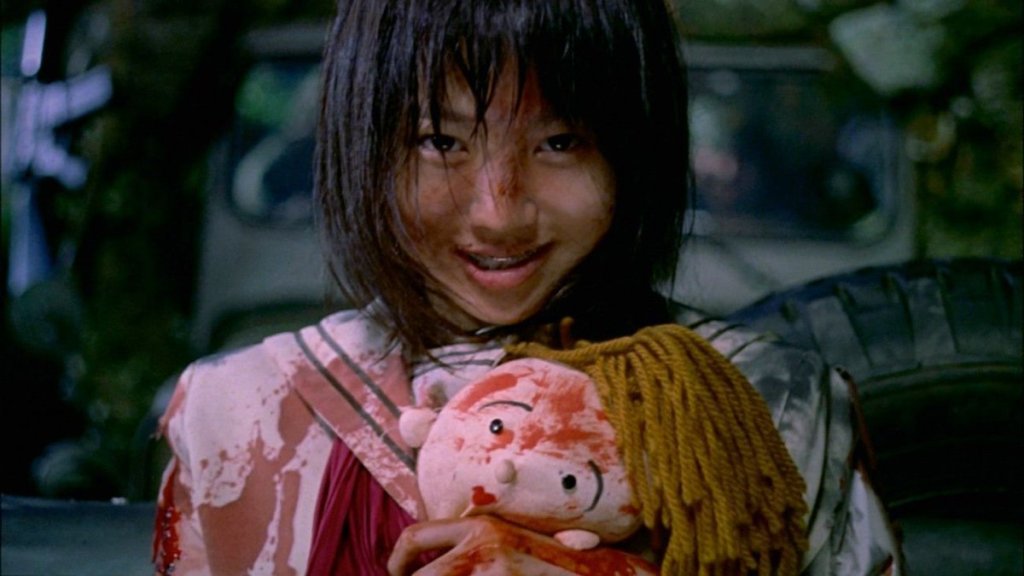
Fukasaku crea una dimensione in cui l’“onda che si infrange sul mare” è anche il movimento tra passato e futuro. Nello scorrere dei tre giorni di “gioco”, il regista ripropone, nella sua prospettiva deragliata, tanti elementi del racconto tradizionale (cinematografico, mitico): in particolare, i suicidi dei giovani innamorati (secondo la tragica usanza dello shinjū).
Ma anche il Giappone come società storicamente patriarcale finisce nei fendenti del regista: eloquente, a tal proposito la scena che vede il ragazzo n.16, Niida, tentare lo stupro ai danni di Chigusa, ragazza n.13: ma Chigusa si ribella (“ti combatterò con ogni parte del mio corpo!”), vendicando così tante protagoniste del passato stuprate (si pensi ai classici ambientati nel Giappone feudale) e uccidendo Niida a colpi di coltello inferti soprattutto nel pene, in una versione ancor più gore de L’impero dei sensi (1976) di Ōshima.
Fukasaku è un uomo-cinema, conosce epoche e stili e li cavalca con furore inarrestabile: è così che persino un litigio tra ragazze kawaii diventa un’epica battaglia di violenta astrazione alla Peckinpah, tra coreografie di corpi trivellati, fiori di sangue di pura bellezza sul candore delle camicie e lacrime di malinconico e grafico lirismo. La scena sul faro, immediatamente successiva, dispiega colori da grande melodramma: uno sturm un drang di vero romanticismo, accentuato dalla regia di Fukasaku che amplifica la solitudine del ragazzo n.15, Nanahara Shūya, attraverso un rapido carrello all’indietro. Shūya è smarrito nella grandezza del paesaggio – e del suo dolore.
La sequenza finale, che vede i sopravvissuti Noriko e Shūya finalmente ritrovare lo spazio urbano, stilisticamente appare modernissima, quasi un fantasma di tanti drama televisivi futuri: una intuizione di un futuro in cui, placati i furori, le Battle Royale sono ormai domate dal filtro puritano e mainstream di Hunger Games (2012) o reimmaginate dalla Corea del Sud del colorato Squid Game (2021). Ma intanto, nella propria dimensione separata, la schiuma sugli scogli dell’isola di Battle Royale continua a infrangersi; e passeggiando, un insegnante e una ragazzina cercano invano di ricucire un dialogo perduto:
“cosa dovrebbe dire a questo punto l’adulto alla ragazzina?”

© Riproduzione riservata
English Version
“Battle Royale is the film I wish I had made.” — Quentin Tarantino
In the documentary The Making of Battle Royale, available on YouTube, director Kinji Fukasaku seems aware of the epoch-defining aura surrounding what would prove to be his final film: the archetype of the battle royale genre, in which a group of people are forced to kill one another until a single triumphant survivor remains. The director gives tangible form to a culture that, until then, had been sensed as a mood and experienced as a neurosis. What strikes us is Fukasaku’s creative fervour, the clarity of his vision: irrational chaos is meticulously staged, each character’s function is precisely defined, and his reworking of cinematic codes—in a detonation that engulfs both the body and the spirit of the age—springs from a long-contemplated, rigorously disciplined aesthetic and ethical impulse.
Adapted from the 1999 novel of the same name, Battle Royale vibrates with opposing tensions, binding past and future in blood. Fukasaku, a seventy-year-old brimming with energy (as Kitano remarks in the documentary), “returns” to the past in order to move beyond it, beginning with the famous Toei opening logo, with its ocean waves crashing against the rocks. The director not only imbues this classic opening with a transcendent sense of apocalypse by pairing it with the musical force of Verdi’s Dies Irae, but also returns repeatedly throughout the film to the same image of the rocks, seen from slightly off-centre perspectives. It is an allusion to the craft of cinema, to the artifice that has allowed him, over the years, to express the shifting forms of his imagination: all the way to the postmodern explosion of Battle Royale.
From the very first scenes, the young people in school uniforms establish a bridge to the past, to the gakusei-mono genre popular in the classical period and practised by Ozu, among others. Yet the pranks played on teachers in I Flunked, But… (1930), filmed in a slapstick style, here become the brutal stabbing of Kitano. Relations between adults and the young have reached a new level of crisis: tensions born in the postwar years—think of cinema’s “young rebels” from the 1950s onwards, whose opposition to traditional rules takes increasingly radical and violent forms—culminate in an irreparable rupture. From the longing for independence of Ozu’s heroines to the dysfunctional families of Naruse’s films, by way of the nihilistic youth of the Japanese New Wave (Nūberu bāgu), we arrive at films such as Battle Royale and Sion Sono’s Suicide Club (2001). The increasingly irrational violence of adults produces a younger generation torn apart by the death drive.
Fukasaku recounts the experience at the root of the film: *“I was fifteen in 1945, when my class was conscripted to work in a munitions factory. A month before the war ended, the Americans opened fire on us. There was nowhere to run or hide; I thought I would lose my mind… After the attack, our superiors ordered us to dispose of our classmates’ bodies. As I picked up severed arms and legs, I experienced a fundamental awakening… Adults could not be trusted. The emotions I felt then, that poisonous hostility towards adults, were the starting point for everything.”*¹
The director reaches the end of the twentieth century carrying an explosive psychological, cultural and aesthetic charge. Not only has he actively lived through half a century of cinema and history, but he is also extraordinarily receptive to the conventions of the new millennium, to the point of anticipating them. In particular, he grasps the infantile regression of an adult society ready to compete with the very object of its desire: a prolonged adolescence. The video introducing the contest, with its grotesque playfulness and video-game graphics, epitomises the childishness that continues to characterise Japan’s mass media and means of communication.
As a coming-of-age narrative, Battle Royale has much in common with other cultural works of its time. Consider the opening scene, with the students joking happily on the bus, convinced that they are on an ordinary school trip: at one point, they pass through a long, dark tunnel. The same happens to Chihiro in the opening sequences of Miyazaki’s Spirited Away (2001), as a metaphor for the inner journey and process of growth awaiting its heroine. Fukasaku and Miyazaki lead their young characters into the same dark passage, but in Battle Royale, everything plunges into horror. In both films, the adults—the murderous teacher in Fukasaku’s film, the gluttonous parents transformed into pigs in Spirited Away—prove untrustworthy.
A veritable laboratory of genres in the making, Battle Royale unsettles us through the ceaseless transformations unfolding before our eyes: dynamics familiar from anime and comics alike—the bonds of love and friendship, the heartache, the purity of feeling, the encounter with Evil—are steeped in blood. The very emblem of innocence—a little girl in uniform and white socks, holding a doll—appears corrupted from the opening shots, a victim of adult society and a target of media intrusion. Childhood is exposed and exploited, reduced to material for spectacle, as it would be a few years later in Kōji Shiraishi’s J-horror film Noroi: The Curse (2005).
Fukasaku creates a dimension in which the breaking wave also embodies the movement between past and future. Over the three days of the “game”, the director revisits, through his own radically skewed perspective, numerous elements of traditional storytelling, both cinematic and mythical: most notably, the suicides of young lovers, following the tragic tradition of shinjū.
Japan’s historically patriarchal society also comes under the director’s blade. Particularly telling is the scene in which Boy No. 16, Niida, attempts to rape Girl No. 13, Chigusa. But Chigusa fights back—“I’ll fight you with every part of my body!”—avenging so many heroines raped in films of the past (think of the classics set in feudal Japan) by stabbing Niida to death, directing her blows chiefly at his penis, in an even gorier version of Ōshima’s In the Realm of the Senses (1976).
Fukasaku is a man who embodies cinema: he knows its eras and styles and rides them with unstoppable fury. Thus even an argument between kawaii girls becomes an epic battle of Peckinpah-like violent abstraction, with choreographies of bullet-riddled bodies, flowers of blood blossoming in pure beauty against the white of their shirts, and tears of melancholy, graphic lyricism. The scene at the lighthouse immediately afterwards unfolds in the colours of grand melodrama: a Sturm und Drang of true Romanticism, heightened by Fukasaku’s direction as a rapid backward tracking shot amplifies the loneliness of Boy No. 15, Shūya Nanahara. Shūya is lost in the immensity of the landscape—and of his grief.
The final sequence, in which the survivors Noriko and Shūya at last return to an urban setting, feels strikingly modern in style, almost a ghost of the many television dramas yet to come: an intimation of a future in which, once the fury has subsided, the battles royale are tamed by the puritanical, mainstream filter of The Hunger Games (2012), or reimagined by South Korea in the colourful Squid Game (2021). Meanwhile, in its own separate realm, the surf keeps breaking against the rocks of Battle Royale’s island; and, as they walk together, a teacher and a young girl try in vain to mend a broken dialogue:
“What should the adult say to the girl at this point?”
Note
(1) Dichiarazione del regista, Internet Archive. Archiviata dall’originale “battleroyalethemovie.com” il 5 dicembre 2002.




Rispondi