
[English version below]
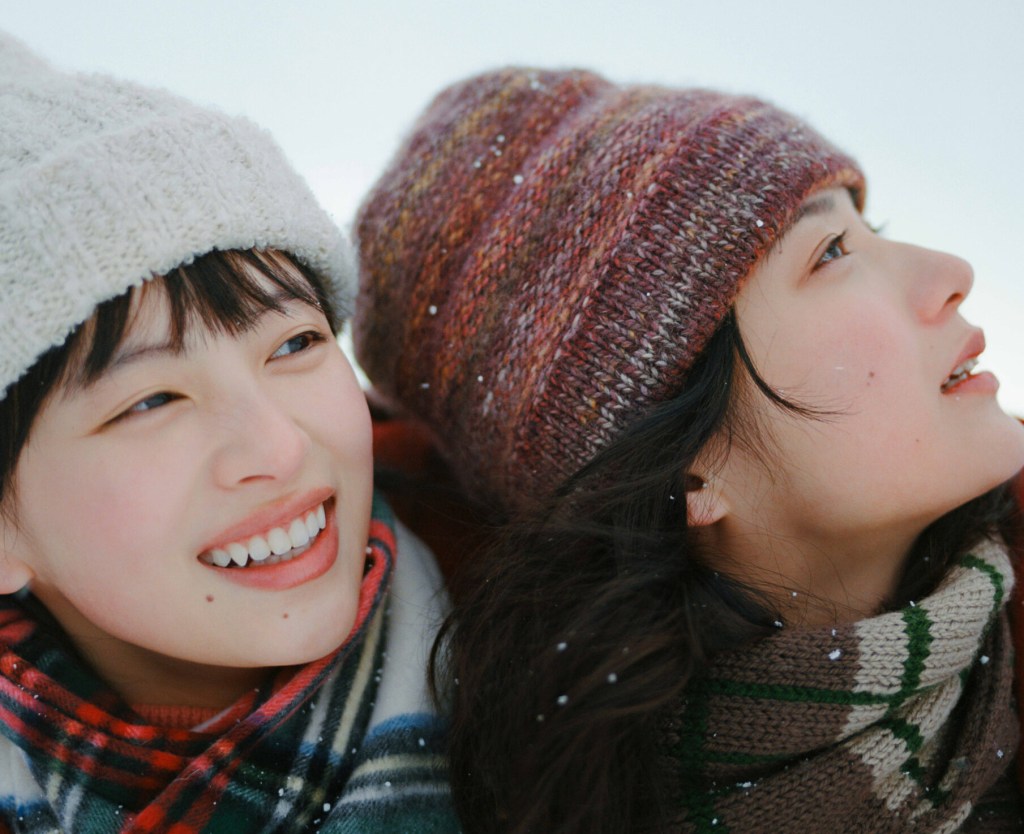
Fujino e Kyomoto sono due ragazze dalla personalità differente, unite dalla passione per il disegno. Dal loro incontro nasce un’amicizia profonda e un sodalizio artistico, destinati a segnare le loro vite.
È curioso che un breve manga del 2021, autoconclusivo, sia oggetto nell’arco di pochi anni di due differenti adattamenti: l’anime di Kiyotaka Oshiyama e il recente live-action girato da Koreeda. Colpisce anche che l’autore del fumetto, Tatsuki Fujimoto, dopo aver costruito la propria carriera su serie action, abbia conosciuto una nuova popolarità proprio con questo lavoro piccolo e intimista, in cui l’azione parossistica è sostituita da composizione minuziosa e intrinseca forza emotiva.
Nella sua brevità e apparente semplicità, Look Back di Fujimoto dispiega tavole stupefacenti, in cui le vignette vanno a creare un’architettura non-lineare, fatta di durate, lunghe pause frontali, transizioni temporali impercettibili o vertiginose, sequenze di movimenti o blocchi statici; una struttura la cui anima umanissima è data dalle due protagoniste Fujino e Kyomoto, di cui il mangaka in pochi tratti e scarni dialoghi coglie la differenza speculare. Look Back parla del Giappone nel suo hic et nunc, dei suoi giovani smarriti e afasici in una società rigidamente gerarchica, produttiva e competitiva; ma anche della sua forza immaginaria, e di un’innocenza percepita come tensione ideale, uno stato originario da ritrovare nel freddo della neve.
Koreeda, in alcune interviste, ha dichiarato di essersi innamorato del manga di Fujimoto nel periodo del lockdown, e di avervi trovato l’ispirazione e la commozione necessari per riprendere a lavorare. Il “suo” Look Back è un omaggio e un ringraziamento, non privi però di un riconoscibile segno autoriale. Se, come Oshiyama, anche Koreeda ha scelto l’aderenza quasi filologica ai disegni di Fujimoto, la sua mano è riconoscibile in un racconto più enigmatico e sfumato, in cui le due protagoniste diventano ancor più simili, quasi scolorassero l’una nell’altra. La sua Fujino è più discreta e pensierosa, meno irruente; e analogamente Kyomoto appare più “viva”, meno astratta e sfuggente rispetto all’opera originale. Anche le ellissi diventano ancor più misteriose, lasciando allo spettatore il compito di colmare i vuoti narrativi e di ricostruire la graduale attrazione tra le due ragazze, che in pochi stacchi diventano “una cosa sola” nello spazio dell’inquadratura. Koreeda rispetta le successioni di vignette in cui la stasi si trasforma via via per l’accumulo di sottili dettagli; ma spesso rompe la frontalità con immagini diagonali, che danno l’impressione di un’amicizia che attraversa letteralmente il paesaggio, la città, la strada, facendosi largo tra la gente.
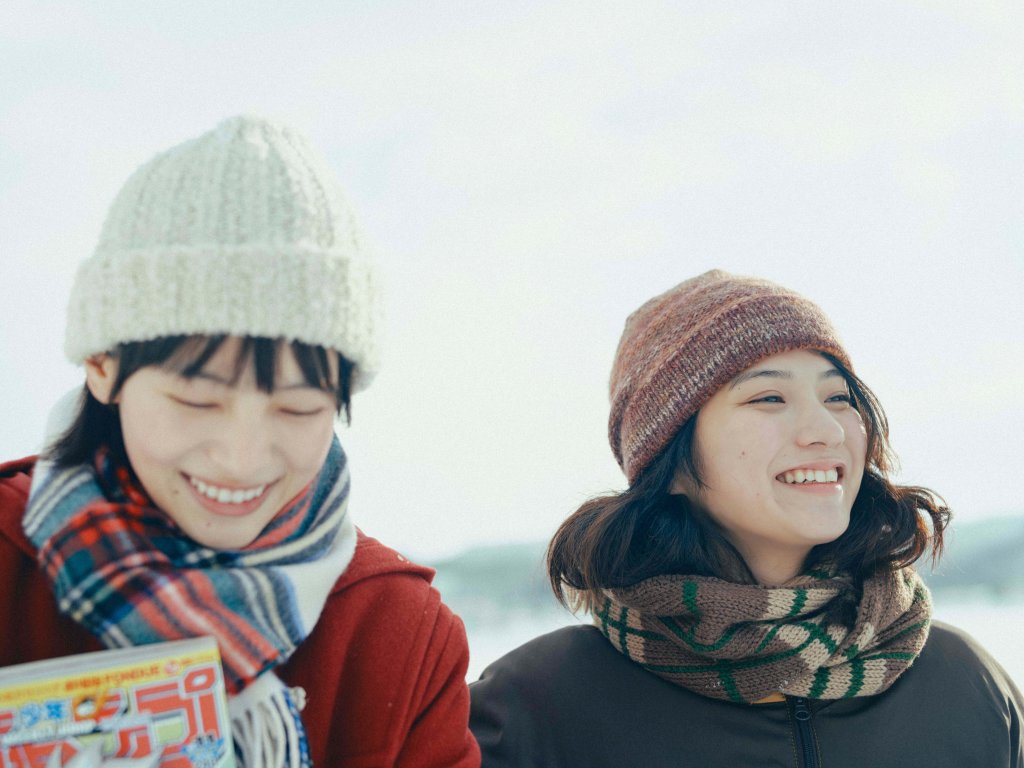
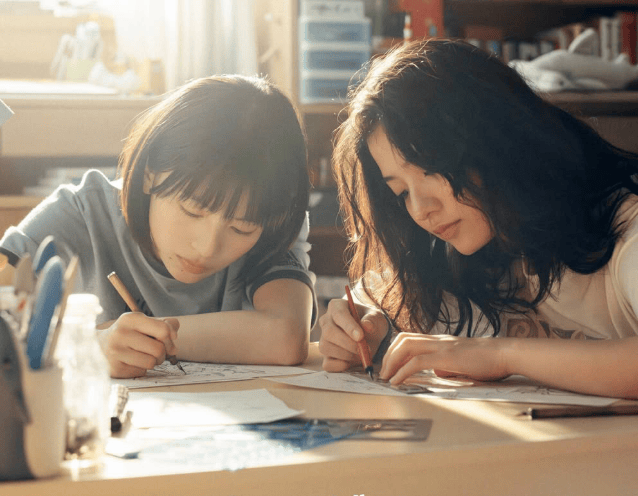
Come Oshiyama nel suo bellissimo anime, anche Koreeda si ritrova a “dar colore” al bianco e nero dei disegni, e un suono al silenzio delle pagine. Se l’animazione prediligeva i toni dell’oro e i raggi impalpabili della luce per illuminare le sue protagoniste, nel suo Look Back in live-action il regista sceglie i rossi accesi, i blu malinconici, e una palette che infonde intensità emotiva al realismo delle immagini.
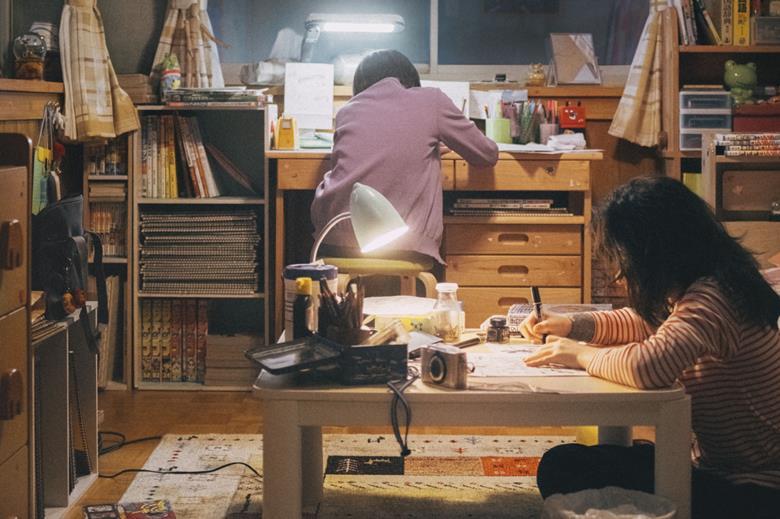
Il film di Koreeda ha una forte qualità sensoriale data dal rumore della matita sulla carta, dalla pelle diafana delle sue protagoniste, dal peso del corpo che si incurva sulla sedia: il regista ci lascia percepire il dolore della schiena immobile per ore, o l’aria della provincia di Akita nella bellezza delle sue stagioni.
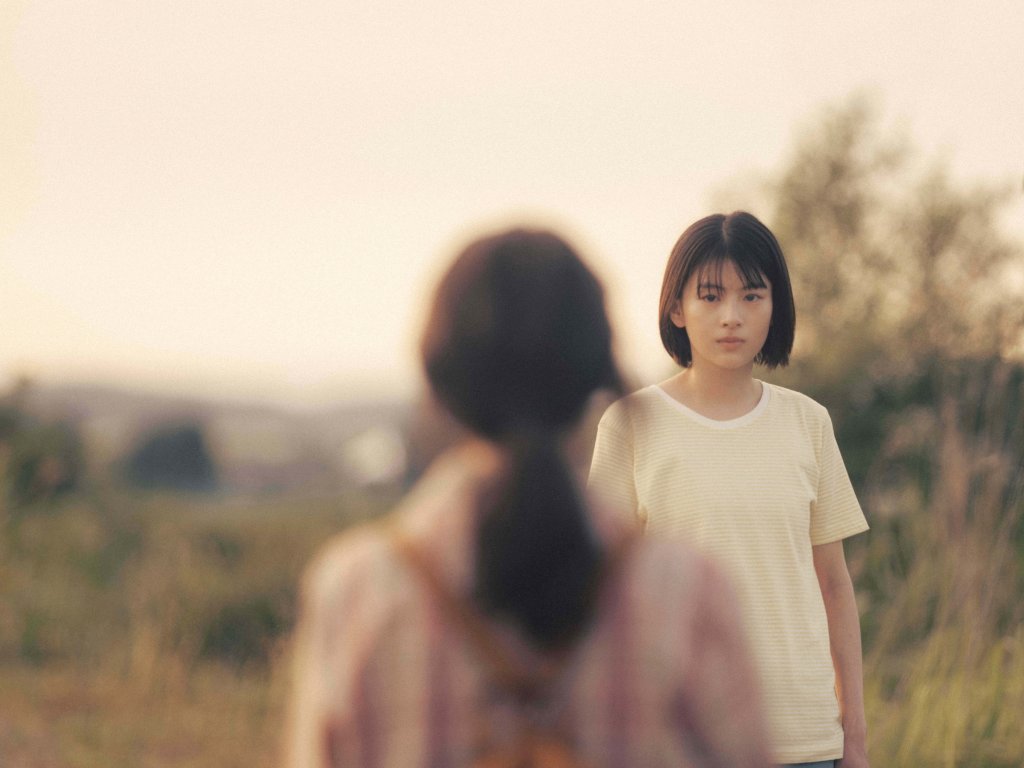
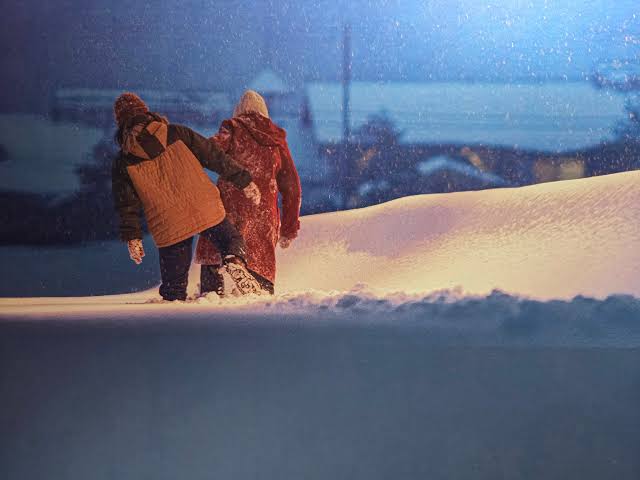
La luce si posa su Fujino e Kyomoto, osservate in lontananza in panoramiche sulla spiaggia o nei campi ventosi, o sotto i raggi artificiali di un lampione, immerse nella neve.
Il lutto irrompe come una casualità priva di senso, ma l’arte offre una possibilità, mescolando le carte del tempo, la percezione e la memoria. Koreeda, da sempre innamorato della giovinezza, e così sensibile verso le sue protagoniste femminili, entra “attraverso lo specchio” per dare a Fujino e Kyomoto una vita migliore, non-finita, in cui gli errori della realtà sono trasformati in avventura nuova.
“Il cinema è meglio della vita” (1), e nel finale il regista sceglie un’animazione in rotoscope che si posa sui corpi colorandoli dell’unico conforto possibile: quello del sogno, di una reversibilità che sottragga l’esistenza alla triste caducità del reale. Cinema come ritorno, mutazione, ipotesi di dialogo con l’eternità, secondo la visione di Borges:
“Serena e splendente come fausto ricordo trascelto,
mi offrirai quella sponda della tua vita che tu stessa non possiedi.”
Tutti gli articoli sono protetti da copyright: © Marcella Leonardi. Tutti i diritti riservati.
- La Nuit américaine, François Truffaut, 1973
- Amoroso auspicio, Jorge Luis Borges, 1925
Articolo collegato: LOOK BACK di Kiyotaka Oshiyama
Note:
- La Nuit américaine, François Truffaut, 1973
- Amoroso auspicio, Jorge Luis Borges, 1925
English version
Fujino and Kyomoto are two girls with different personalities, united by their passion for drawing. Their encounter gives rise to a deep friendship and an artistic partnership, both destined to shape their lives.
It is curious that a short, self-contained manga from 2021 should have been adapted twice within just a few years: Kiyotaka Oshiyama’s anime and the recent live-action film directed by Koreeda. It is also striking that Tatsuki Fujimoto, the manga’s author, having built his career on action series, should have found renewed popularity with this small, intimate work, in which frenetic action gives way to meticulous composition and an inherent emotional force.
Despite its brevity and apparent simplicity, Fujimoto’s Look Back unfolds through astonishing pages, in which the panels create a non-linear architecture of durations, long frontal pauses, imperceptible or vertiginous temporal transitions, sequences of movement and static compositions; a structure whose deeply human soul lies in its two protagonists, Fujino and Kyomoto, whose differences and mirrored qualities the mangaka captures in just a few strokes and sparse dialogue. Look Back speaks of Japan in its hic et nunc, of its young people, lost and almost voiceless, in a rigidly hierarchical society driven by productivity and competition; but also of its imaginative power, and of an innocence perceived as an ideal to strive towards, an original state to be rediscovered in the cold of the snow.
In several interviews, Koreeda has said that he fell in love with Fujimoto’s manga during the lockdown and found in it the inspiration and emotional impetus he needed to return to work. His Look Back is a tribute and an expression of gratitude, yet one that bears a recognisable authorial signature. Although, like Oshiyama, Koreeda remains almost philologically faithful to Fujimoto’s drawings, his touch is evident in a more enigmatic and nuanced narrative, in which the two protagonists become even more alike, almost as though they were fading into one another. His Fujino is more reserved and thoughtful, less impetuous; similarly, Kyomoto appears more “alive”, less abstract and elusive than in the original work. The ellipses, too, become even more mysterious, leaving viewers to fill in the narrative gaps and reconstruct the gradual attraction between the two girls, who, with just a few cuts, become “one” within the space of the frame. Koreeda preserves the sequences of panels in which stillness is gradually transformed through the accumulation of subtle details; yet he often breaks with frontality through diagonal compositions that give the impression of a friendship literally crossing the landscape, the city, the street, making its way through the crowds.
Like Oshiyama in his beautiful anime, Koreeda, too, finds himself giving colour to the black-and-white drawings and sound to the silence of the pages. While the animated film favoured golden hues and the impalpable rays of light illuminating its protagonists, in his live-action Look Back the director chooses vivid reds, melancholic blues, and a palette that lends emotional intensity to the realism of the images.
Koreeda’s film has a powerful sensory dimension, conveyed through the sound of a pencil on paper, the translucent skin of its protagonists, the weight of a body hunched over a chair: the director allows us to feel the ache of a back held motionless for hours, or the air of Akita Prefecture in the beauty of its seasons.
Light falls upon Fujino and Kyomoto, observed from afar in panoramic shots on the beach or in windswept fields, or beneath the artificial light of a streetlamp, surrounded by snow.
Grief erupts as a senseless stroke of chance, but art offers a possibility, reshuffling the cards of time, perception and memory. Koreeda, who has always been in love with youth and is so sensitive to his female protagonists, steps “through the looking-glass” to give Fujino and Kyomoto a better, unfinished life, in which the mistakes of reality are transformed into a new adventure. “Cinema is better than life” (1), and in the finale, the director chooses rotoscope animation that settles upon their bodies, colouring them with the only possible solace: that of dreams, of a reversibility that might rescue existence from the sorrowful transience of reality. Cinema as return, transformation, the possibility of a dialogue with eternity, in the vision of Borges:
“Quiet and luminous like some happy thing recovered by memory,
you will give me that shore of your life that you yourself do not own.”
All articles are protected by copyright: © Marcella Leonardi. All rights reserved.
- La Nuit américaine (Day for Night), François Truffaut, 1973
- Amorosa anticipación, Jorge Luis Borges, 1925







Rispondi