

[English versione below]
Séance viene commissionato a Kiyoshi Kurosawa dalla rete televisiva Kansai: si trattava di adattare in forma di tv drama il romanzo di Mark McShane “Séance on a Wet Afternoon”. Il regista è immediatamente attratto dal soggetto: un uomo e una donna “normali” si trasformano in assassini mentre la loro vita deraglia tra le spire di un paranormale che tutto avvolge e trasforma. Il regista lo gira su pellicola, senza cambiare il suo stile: “L’unica cosa era che non potevo usare scene scioccanti. Doveva essere più quieto. Non ci sono molte persone che muoiono, perché non è permesso [in televisione]”.
Junko, una casalinga con poteri medianici, e Kōji, tecnico audio per un’azienda che produce effetti sonori, conducono un’esistenza monotona e rassegnata. Un giorno, una bambina sfuggita a un rapimento si nasconde dentro un baule per l’apparecchiatura di Kōji. La coppia scopre il corpo ancora vivo, ma Junko decide di non informare la polizia e di trattenere la piccola per trarre vantaggio dalla situazione, fingendo di poterla rintracciare grazie al proprio dono di sensitiva. La situazione precipita quando Kōji uccide accidentalmente la bambina.
Sin dalla sequenza iniziale, che vede un professore e uno studente di psicologia dibattere sulla natura dei fantasmi, Kurosawa allestisce un microcosmo agghiacciante, stretto in un formato 4:3 nel quale i personaggi entrano ed escono, rendendo percepibile l’ambiguità del vuoto (1). Le geometrie degli spazi non riescono a “razionalizzare” la materia della discussione, che concerne gli spiriti e la loro rivelazione (attraverso interferenze sonore o una materializzazione corporea) e la presenza di un doppio (doppelgänger) quale presagio di morte.

Stanze semplici e familiari, simmetricamente inquadrate, sono gli ambienti che Kurosawa colora d’angoscia: ciò che interessa il regista è innervare di inquietudini la normalità, lasciar emergere il perturbante che permea l’esperienza quotidiana. Lo stesso concetto di doppelgänger, esplicitato nel breve preludio al film – la scena si può considerare come un’introduzione, in senso iniziatico, rivolta allo spettatore – è alla base di tutto il cinema di Kurosawa, in cui il visibile non è che il limite in cui ci ostiniamo a costringere la realtà; ma il regista apre crepe sulla superficie dell’immagine, moltiplica le percezioni visive tramite specchi, profondità di campo, porte socchiuse; inquadra geometrie perfette per irradiarle di luce anomala, ombre e chiaroscuri tra cui si può intravedere una presenza fuggevole.
Il cinema di Kurosawa è esso stesso doppio e riflettente: una seconda dimensione poggia, lieve come un respiro, sulla banale evidenza delle cose. La luce, in particolare, diviene manifestazione del sovrannaturale e interagisce con i personaggi: severa, li illumina di taglio per punirli con un’intensità che ferisce; oppure esprime la sua angoscia tramite lampi rabbiosi, che illuminano violenti gli spazi, per poi scolorare nella tristezza di un blu (2).

Sono rancorosi, i fantasmi di Kurosawa, ma più di ogni altra cosa sono tristi. Junko li intravede, seduti accanto agli umani: la sofferenza ne ha offuscato i lineamenti, i corpi curvi esprimono desiderio e mancanza, le mani sono tese verso un contatto. Gli spiriti hanno assunto forma corporea, ma il loro viso sembra dissolto dalle lacrime.
C’è una gentilezza nel dolore dei morti che contrasta con la mostruosità morale dei vivi, anch’essi sede di una doppiezza che li rende aberranti e lascivi. Con la sua straordinaria performance, Yakusho Kōji esprime perfettamente l’opacità del suo essere, diviso tra paura ed egoismo, preda dell’impulsività più brutale, ricettacolo di pulsioni inconsce illeggibili nel suo sguardo assente. A proposito della sua interpretazione, Kurosawa dichiarò: “È un grande attore, può interpretare qualsiasi tipo di personaggio. Può essere una persona normale, ma può anche diventare un mostro, qualcuno di cui non riesci a decifrare il pensiero.”
L’incontro di Kōji con il suo doppelgänger (3), che gli rivolge uno sguardo di riprovazione, è sottolineato da una colonna sonora folk e ipnotica, che accentua la dimensione rituale del confronto tra morte e vita (come già accadeva in Charisma) e vivifica la scena di una strana allegria.

La natura appare partecipe della sofferenza dei morti e presta loro voce, in forma di vento sibilante tra gli alberi, fruscii, segnali sonori fuori norma. Kōji, che lavora come tecnico del suono, percepisce le anomalie e tenta inutimente di ignorarle: ma la sua vita, come quella di Junko, è segnata da un aldilà che vuole essere vendicato.
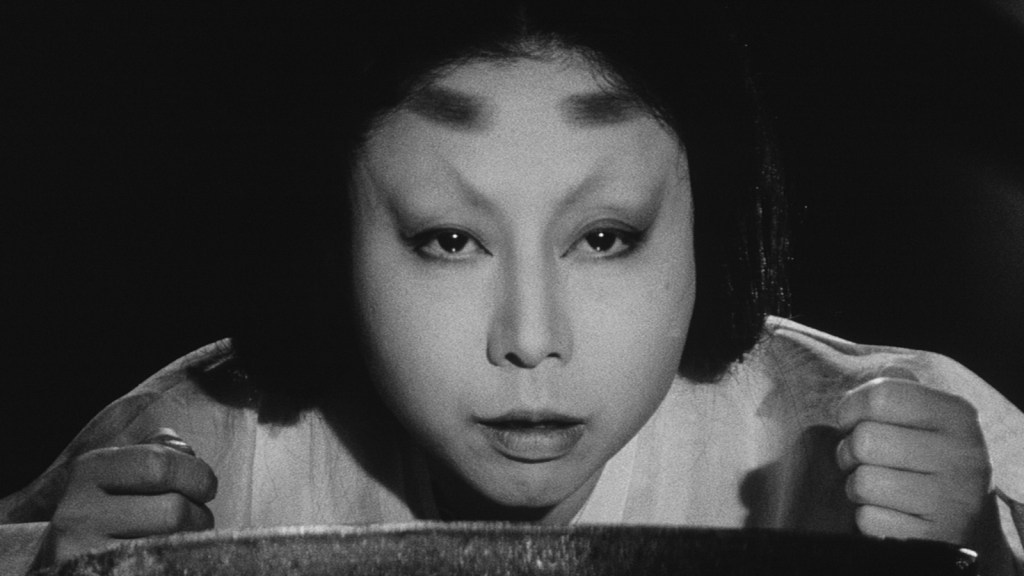
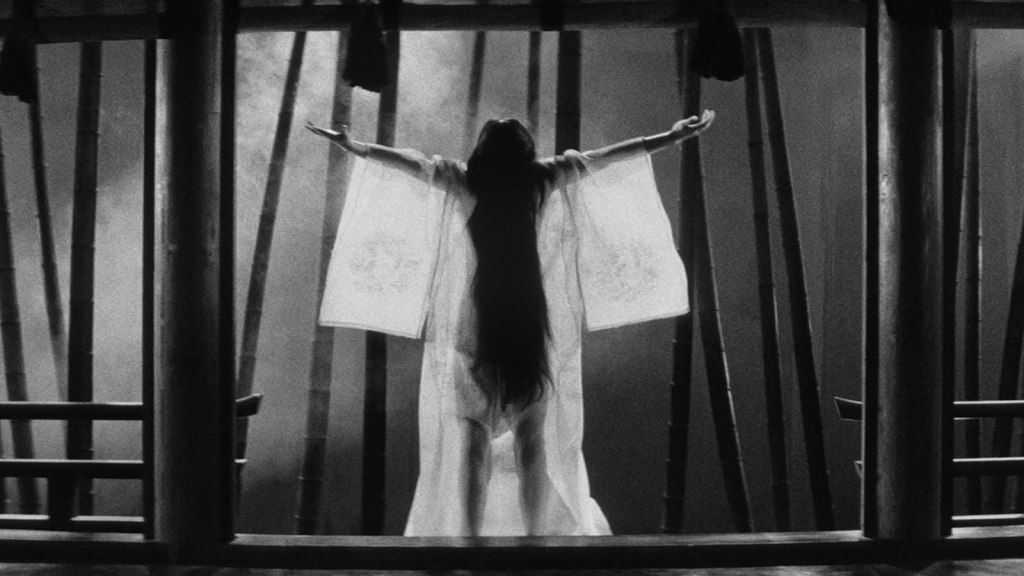
Kurosawa omaggia apertamente il cinema classico: gli effetti sono tanto semplici quanto suggestivi (come bianche tende drammaticamente agitate dal vento) e gli spettri si annidano ovunque, negli angoli, nelle zone d’ombra, tra abiti ammucchiati. Soprattutto, Séance condivide con gli archetipi dell’horror giapponese (ad esempio lo Yotsuya Kaidan di Misumi Kenji, 1959) i tratti dolenti dei fantasmi, la loro muta malinconia (4).

La personalità di Junko, pur nell’apparente remissività, possiede una disumana freddezza calcolatrice e si illude di poter estendere il proprio controllo al ribollente mondo dei morti. Non ci stupisce, allora, che proprio i fantasmi appaiano più emotivi e pietosi dei viventi, e si manifestino con delicatezza, attraverso gesti che esprimono una fondamentale innocenza. C’è una purezza che accomuna i fantasmi di Kurosawa a quelli dello scrittore Jorge Luis Borges, pervasi da stupore, increduli della crudeltà riservata loro dagli umani. Della bambina, vittima dell’irresponsabilità della coppia, vediamo le mani infantili sugli abiti di Kōji, ancora sporche del fango della sua frettolosa sepoltura (5). Un’altra scena ce la mostra come una bambola di pezza (6), su cui Kōji si accanisce con un bastone: e questo voler abbattere ciò che è già morto, ciò di cui non rimane che un simulacro, crea un cortocircuito emotivo difficile da dimenticare. Forse i fantasmi non sono altro che bambini, come già notava Henry James.


English Version
Séance was commissioned from Kiyoshi Kurosawa by the television network Kansai as a television adaptation of Mark McShane’s novel Séance on a Wet Afternoon. The director was immediately drawn to the premise: an “ordinary” man and woman become killers as their lives go off the rails, caught in the coils of a paranormal force that envelops and transforms everything. He shot it on film, without changing his style: “The only thing was that I couldn’t use shocking scenes. It had to be quieter. Not many people die, because that isn’t allowed [on television].”
Junko, a housewife with psychic abilities, and Kōji, a sound technician for a company that produces sound effects, lead monotonous lives of quiet resignation. One day, a little girl who has escaped from a kidnapper hides inside one of Kōji’s equipment cases. The couple discover her, still alive, but Junko decides against informing the police. Instead, she keeps the child hidden to exploit the situation, pretending that her psychic gift will allow her to locate the missing girl. Events spiral out of control when Kōji accidentally kills her.
From the opening sequence, in which a professor and a psychology student discuss the nature of ghosts, Kurosawa constructs a chilling microcosm, confined within a 4:3 frame that characters enter and leave, making the ambiguity of empty space palpable (1). The geometry of these spaces cannot “rationalise” the subject under discussion: spirits and the ways they reveal themselves—through sonic interference or bodily materialisation—and the appearance of a double, a doppelgänger, as an omen of death.
Simple, familiar rooms, symmetrically framed, are the settings Kurosawa imbues with dread. His concern is to thread unease through ordinary life, allowing the uncanny that permeates everyday experience to emerge. The very concept of the doppelgänger, articulated in the film’s brief prelude—a scene that can be understood as an introduction in the sense of an initiation for the viewer—underpins Kurosawa’s entire cinema. In his films, the visible is merely the boundary within which we insist on confining reality. Yet the director opens cracks in the surface of the image, multiplies visual perceptions through mirrors, depth of field and half-open doors; he frames perfect geometries, only to suffuse them with anomalous light, shadows and chiaroscuro, through which a fleeting presence may be glimpsed.
Kurosawa’s cinema is itself doubled and reflective: a second dimension rests, light as a breath, upon the banal self-evidence of things. Light, in particular, becomes a manifestation of the supernatural and interacts with the characters. Sternly, it strikes them from the side, punishing them with an intensity that wounds; or it expresses its anguish through angry flashes that violently illuminate the spaces before fading into the sadness of blue (2).
Kurosawa’s ghosts are resentful, but above all they are sad. Junko glimpses them sitting beside the living: suffering has blurred their features, their hunched bodies express longing and absence, their hands reach out for contact. The spirits have taken corporeal form, yet their faces seem dissolved by tears.
There is a gentleness in the sorrow of the dead that contrasts with the moral monstrosity of the living, who also harbour a duality that makes them aberrant and lascivious. In his extraordinary performance, Kōji Yakusho perfectly conveys his character’s inner opacity: torn between fear and selfishness, prey to the most brutal impulses, a vessel for unconscious drives that remain unreadable in his vacant gaze. Of his performance, Kurosawa remarked: “He is a great actor; he can play any kind of character. He can be an ordinary person, but he can also become a monster, someone whose thoughts you cannot decipher.”
Kōji’s encounter with his doppelgänger (3), who regards him reproachfully, is underscored by hypnotic folk music. It heightens the ritual dimension of this confrontation between death and life—as in Charisma—and enlivens the scene with a strange gaiety.
Nature seems to share in the suffering of the dead and lends them a voice: wind whistling through the trees, rustling sounds, uncanny sonic signals. Kōji, whose work is in sound recording, detects these anomalies and tries in vain to ignore them. But his life, like Junko’s, is marked by an afterlife demanding vengeance.
Kurosawa openly pays homage to classical cinema: the effects are as simple as they are evocative—white curtains dramatically stirred by the wind, for instance—and spectres lurk everywhere, in corners, in shadowy recesses, among heaps of clothing. Above all, Séance shares with the archetypes of Japanese horror—such as Kenji Misumi’s Yotsuya Kaidan (1959)—the sorrowful features of its ghosts, their mute melancholy (4).
For all her apparent meekness, Junko possesses an inhumanly cold, calculating nature and deludes herself that she can extend her control to the seething world of the dead. It comes as no surprise, then, that the ghosts themselves should seem more feeling and compassionate than the living, manifesting themselves gently, through gestures that express a fundamental innocence. A purity links Kurosawa’s ghosts to those of Jorge Luis Borges: filled with wonder, unable to comprehend the cruelty humans inflict upon them. We see the little hands of the girl, a victim of the couple’s irresponsibility, resting on Kōji’s clothes, still soiled with mud from her hasty burial (5). Another scene shows her as a rag doll (6), which Kōji savagely beats with a stick. This desire to strike down what is already dead, what remains only as a simulacrum, creates an emotional short circuit that is difficult to forget. Perhaps ghosts are nothing more than children, as Henry James once observed.




Rispondi