

[Please scroll down for the English version]
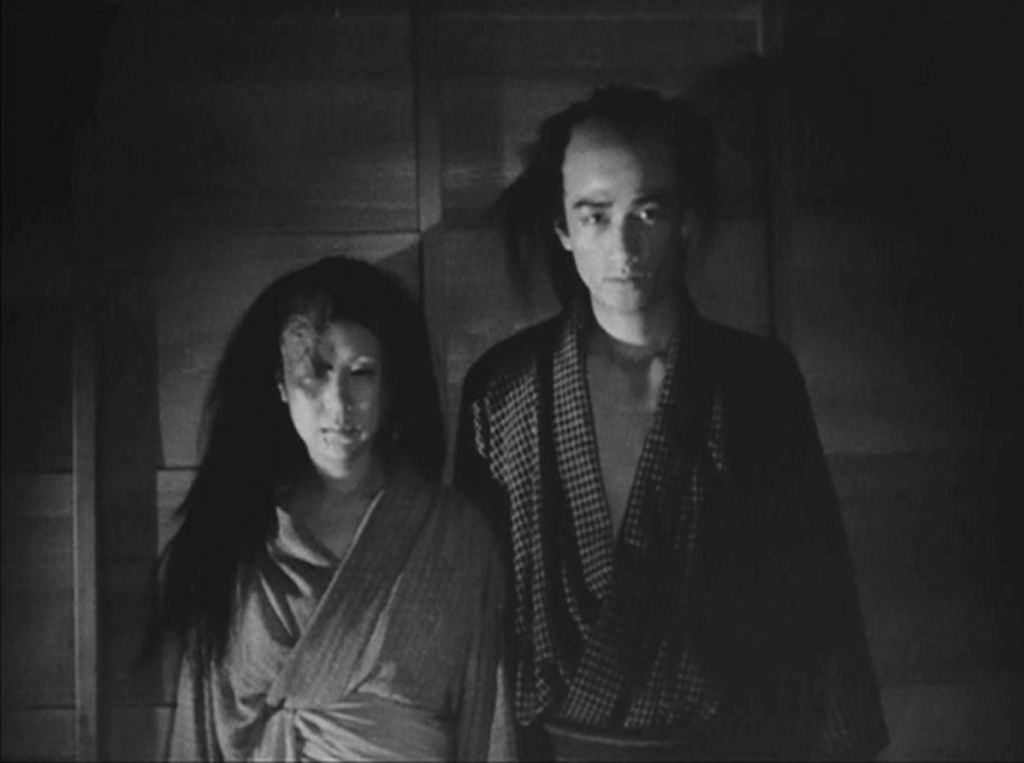
Il samurai decaduto Iemon vive in condizioni di povertà con la bella e devota moglie Oiwa. Consigliato dal perfido Naosuke, Iemon decide di avvelenare la moglie per sposare la ricca Oume. Oiwa muore tra atroci sofferenze e orribilmente sfigurata dal veleno, e assieme a lei viene ucciso anche Kohei, un giovane innamorato di lei. Consumato dal rimorso, Iemon impazzisce tormentato da ricordi, allucinazioni e sinistre apparizioni.
Scritta nel 1825 dal drammaturgo kabuki classico Tsuruya Nanboku IV, Yotsuya Kaidan è probabilmente la più famosa storia di fantasmi giapponese di tutti i tempi; una vicenda di tradimento, omicidio e vendetta che ebbe un successo immediato. Il pubblico rispose con entusiasmo al personaggio di Oiwa, allusivo della condizione femminile nella società patriarcale giapponese, ma anche spettro delle paure, da sempre presenti nell’immaginario nipponico, di un femminile vendicativo e incontrollabile. Oiwa appartiene al regno delle donne-spirito (yūrei), creature di ombrosa malinconia, vittime di morte violenta e trattenute nel mondo terreno da impulsi di vendetta; è una figura liminale, una creatura mortale schiacciata dalla sua stessa devozione all’universo maschile e trasformata in fantasma dolente e rancoroso.
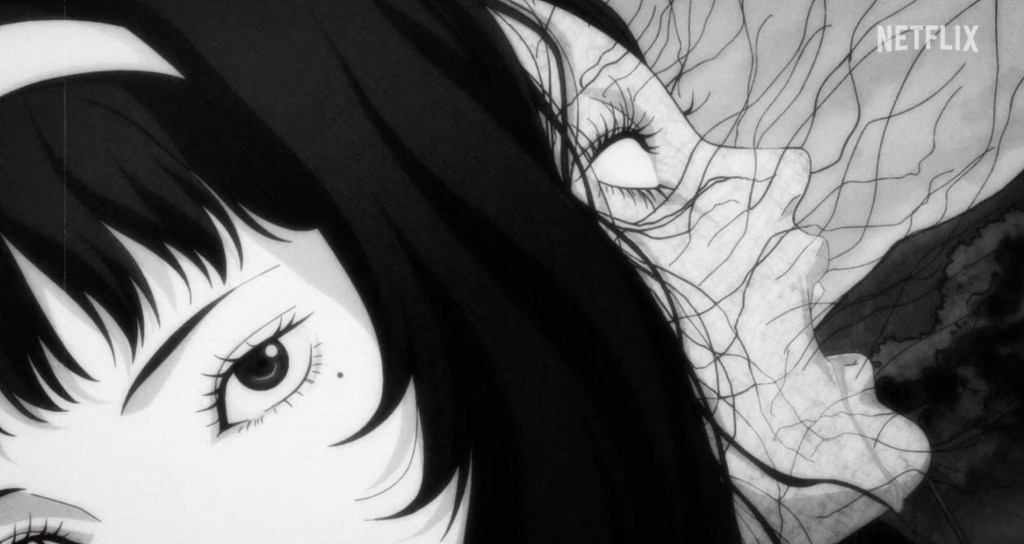
Sin dalle prime rappresentazioni teatrali, Yotsuya Kaidan esercitò un immenso fascino sugli spettatori, partecipi del dramma di Oiwa e della sua trasfigurazione. Archetipi orrorifici come la deformazione del volto, ma soprattutto la caduta dei capelli a ciocche copiose (un’immagine sovversiva nei confronti dell’immaginario erotico sulla capigliatura femminile) venivano messi in scena mediante spettacolari effetti speciali tipici del kabuki. A partire dagli anni ’10 il cinema trasferì sullo schermo, esaltandola, la natura perturbante e allucinatoria del dramma declinandolo in più di 30 adattamenti (tra cui quelli di Kenji Misumi e Nobuo Nagakawa, entrambe 1959, e di Shirō Toyoda, 1965); e persino il terrificante fantasma di Sadako in Ringu (Hideo Nakata, 1998) con il suo spaventoso occhio cadente, deve molto all’iconografia di Oiwa.
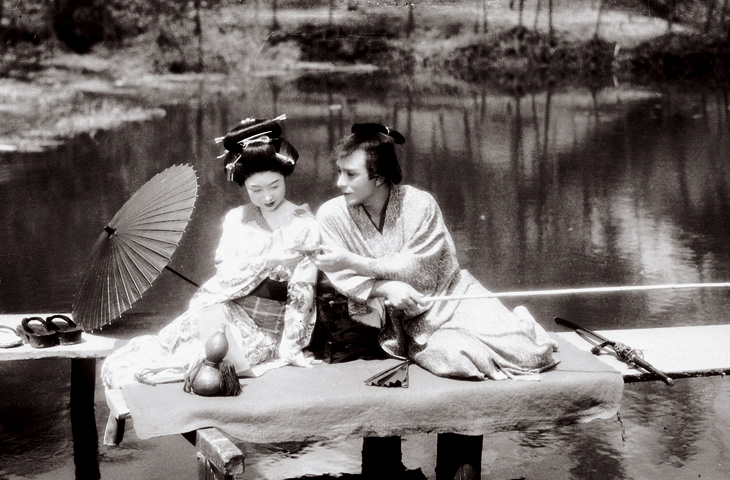
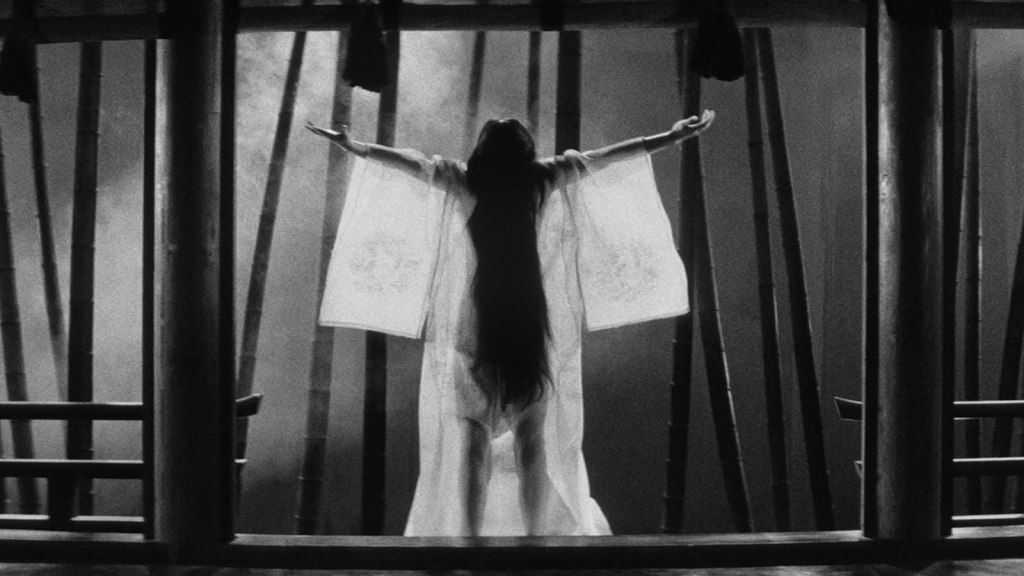
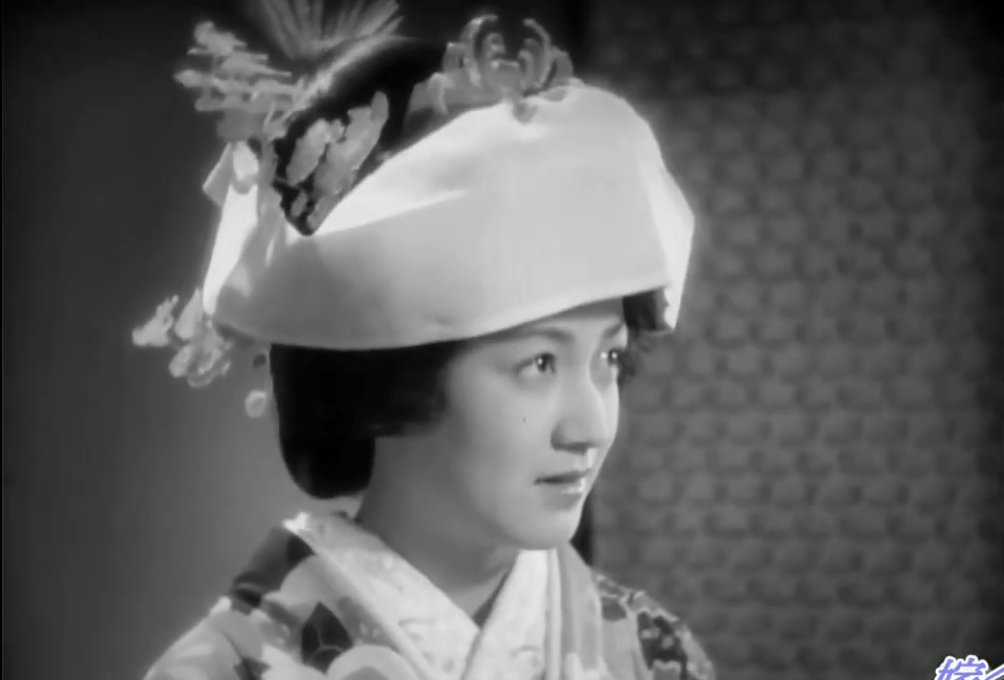
La versione del ’49 di Kinoshita esplicita sin dai titoli di testa il proprio debito alla tradizione classica ricorrendo a una sequenza di celebri dipinti ukiyo-e (come Il Fantasma di Oiwa di Hokusai, 1831); il regista inoltre mantiene la divisione in due parti, così come previsto dalla versione teatrale originale. Ma allo stesso tempo il film diventa un’occasione per allestire un puro dramma “alla Kinoshita”, colmo di quell’inventiva elegante e di un gusto per il “falso” di origine teatrale che l’autore andò affinando nel corso della sua carriera. La storia di fantasmi, inoltre, diviene un veicolo per l’espressione di sentimenti contemporanei e per una messa in scena dei rapporti uomo/donna all’interno di schiaccianti meccanismi sociali. Il regista sceglie con attenzione le sue star: Kinuyo Tanaka, diva dalle mille sfaccettature, tra le predilette dal regista, nei panni di una Oiwa fragile ed evanescente (ma con un doppio carismatico e volitivo); mentre il soave Ken Uehara diventa uno Iemon debole e codardo, vero emblema del “nimaime” (il seduttore vile ed inerte della tradizione kabuki), destinato a condannare le donne all’infelicità. Uehara contrappone all’innocenza dell’interpretazione di Tanaka una sensibilità complessa e pensosa, rendendo il suo Iemon estremamente moderno e psicologicamente irrisolto, metafora della crisi maschile nel XX secolo.
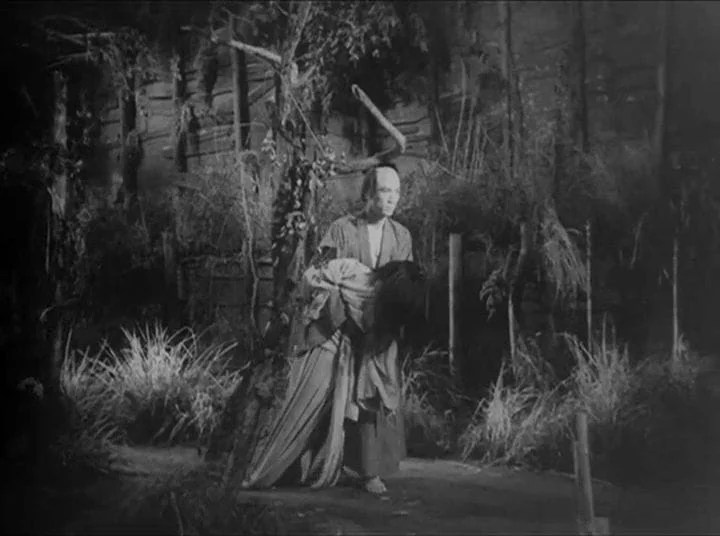
L’opera inizia in medias res con una scena d’evasione in un’unica carrellata. Kinoshita esibisce subito il suo talento per il movimento – mediante l’uso di elaborati quanto naturalissimi piani sequenza – e per composizioni stratificate in un’espressiva profondità di campo. Il regista sfrutta tutte le possibilità della messa a fuoco e la disposizione delle figure umane in avampiano e sullo sfondo per creare immagini come microcosmi emotivi, sentimentali e d’azione. Uomini in fuga vengono inchiodati dentro architetture come prigioni; scene notturne acquistano una qualità fantastica attraverso elementi grafici e luministici che trasfigurano il reale in un dato astratto ed esoterico. Kinoshita stilizza la realtà, la trasforma in tela narrativa, palcoscenico o visione onirica. Assai ricorrenti le composizioni diagonali e le inquadrature dall’alto, che offrono una scomposizione moderna e cubista di un mondo passato.
Stupendo il montaggio che espone, con rapide ellissi temporali, il breve incanto dell’innamoramento tra Iemon e Oiwa: Kinoshita ci mostra “le stagioni dell’amore” – dalla silenziosa passeggiata in un paesaggio innevato, a una fremente giornata estiva osservata da una mdp che sembra cogliere il fremito dell’aria e dei sensi degli amanti, fino alla chiusura su una scena in interni, nascosta da una tenda nera. In pochi secondi e mediante impercettibili transizioni, il regista ripercorre ascesa e fine di una parabola amorosa, in un’alternanza di vero e falso, di messinscena teatrale e ricerca di una tremula realtà. Kinoshita prova un profondo rispetto, ma anche affetto nei confronti della tradizione (si pensi al costante movimento orizzontale della macchina da presa, quasi nel voler riprodurre la narrazione di un antico emakimono), ma allo stesso tempo vuole infondere nel suo esplicito falso una verità, un sentimento popolare riconoscibile e contemporaneo. Pochi registi, come lui, hanno creato un cinema autenticamente popolare ma anche linguisticamente colto e consapevole, attratto da molteplici stili e tendenze.
Basterebbe l’affascinante apparizione di Tanaka nei panni di Osode (la scaltra ed emancipata sorella di Oiwa) per darci prova del piacere di Kinoshita nella creazione di un cinema divistico, a tratti Hollywoodiano; ma questo piacere non esclude una sensibilità squisitamente giapponese espressa in immagini reticenti ed ellittiche, nutrite di ombre, di riflessi in cui si annulla qualsiasi univocità. Yotsuya Kaidan è una storia di fantasmi in senso classico – e la scena della trasformazione di Oiwa è filologicamente aderente alle origini – ma è anche l’esplorazione di spettri inconsci, di abissi psicologici, figure del doppio e alienazione interiore.
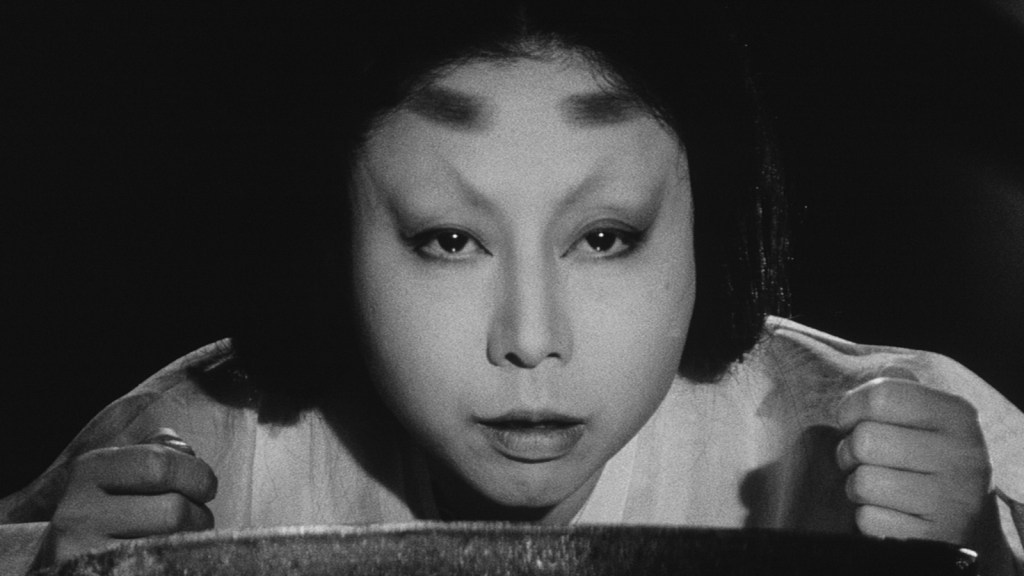
Kinoshita ricorre ad ogni mezzo per turbarci: dai primissimi piani moderni e alienanti (in particolare su Iemon), a mascherini profilmici che “isolano” il terrore, fino a un montaggio serrato che alterna realtà e allucinazione. Ma il suo strumento prevalente è il pianto: ossessivo, stridente e continuo di Oiwa, ma anche il pianto misto a rabbiosa follia di Iemon, o di una terrorizzata Oume di fronte al marito.
Kinoshita, considerato dalla critica “il regista delle lacrime” in senso dispregiativo (per la sua propensione al melodramma) fa del pianto un reticolo sonoro innaturale e destabilizzante; e questa trasformazione di un elemento ‘umanista’ tipico del suo cinema — la lacrima — in un meccanismo orrorifico diventa un vero colpo di scena spettacolare, condotto (forse) con spirito ludico verso i suoi detrattori.
© Riproduzione riservata
English Version
The impoverished samurai Iemon lives with his beautiful and devoted wife Oiwa. At the urging of the malicious Naosuke, he decides to poison her so that he can marry the wealthy Oume. Horribly disfigured by the poison, Oiwa dies in agony; Kohei, a young man in love with her, is also murdered. Consumed by remorse, Iemon descends into madness, tormented by memories, hallucinations and sinister apparitions.
Written in 1825 by the kabuki playwright Tsuruya Nanboku IV, Yotsuya Kaidan is probably the most famous Japanese ghost story of all time; a tale of betrayal, murder and revenge that enjoyed immediate success. Audiences responded enthusiastically to Oiwa, a character who evoked the plight of women in Japan’s patriarchal society, while also embodying longstanding fears in the Japanese imagination of a vengeful, uncontrollable femininity. Oiwa belongs to the realm of female ghosts (yūrei), creatures of shadowy melancholy who have suffered violent deaths and remain bound to the earthly world by their desire for revenge; she is a liminal figure, a mortal woman crushed by her own devotion to a male-dominated world and transformed into a grieving, resentful ghost.
From its earliest theatrical performances, Yotsuya Kaidan held an immense fascination for audiences, who were drawn into Oiwa’s tragedy and transformation. Archetypal images of horror, such as facial disfigurement and, above all, hair falling out in great clumps (an image that subverts the erotic associations of women’s hair), were brought to the stage through the spectacular special effects of kabuki. From the 1910s onwards, cinema brought the play to the screen, heightening its unsettling, hallucinatory qualities in more than thirty adaptations (including those by Kenji Misumi and Nobuo Nakagawa, both from 1959, and Shirō Toyoda’s 1965 version); even the terrifying ghost of Sadako in Ringu (Hideo Nakata, 1998), with her horrifying drooping eye, owes much to Oiwa’s iconography.
Kinoshita’s 1949 version acknowledges its debt to classical tradition from the opening credits, with a sequence of celebrated ukiyo-e images (including Hokusai’s The Ghost of Oiwa, 1831); the director also preserves the division into two parts found in the original theatrical version. At the same time, however, the film becomes an opportunity to stage a quintessentially Kinoshita drama, full of the elegant inventiveness and delight in theatrical artifice that he refined throughout his career. The ghost story also becomes a vehicle for expressing contemporary feelings and depicting relationships between men and women caught within oppressive social structures. The director chooses his stars carefully: Kinuyo Tanaka, an actress of extraordinary range and one of his favourites, plays a fragile, ethereal Oiwa (with a charismatic, strong-willed double), while the gentle Ken Uehara becomes a weak, cowardly Iemon, the very embodiment of the nimaime, here a craven, passive seducer in the kabuki tradition, destined to condemn women to unhappiness. Uehara counters the innocence of Tanaka’s performance with a complex, introspective sensitivity, making his Iemon strikingly modern, a man of unresolved inner conflicts who embodies the crisis of masculinity in the twentieth century.
The film opens in medias res with an escape filmed in a single tracking shot. Kinoshita immediately displays his gift for movement, through elaborate yet seemingly effortless long takes, and for layered compositions that make expressive use of depth of field. He explores the full potential of focus and the placement of human figures in the foreground and background, creating images that become microcosms of emotion, feeling and action. Men on the run are hemmed in by prison-like architectural spaces; nocturnal scenes acquire a fantastical quality through graphic elements and lighting that transform reality into something abstract and esoteric. Kinoshita stylises reality, turning it into a narrative canvas, a stage or a dream vision. Diagonal compositions and high-angle shots recur throughout, offering a modern, cubist fragmentation of a world belonging to the past.
The editing is exquisite as it reveals, through swift temporal ellipses, the brief enchantment of Iemon and Oiwa falling in love: Kinoshita shows us the “seasons of love”, from a silent walk through a snowy landscape to a tremulous summer day, observed by a camera that seems to capture the quivering of the air and the stirring of the lovers’ senses, before ending on an interior scene concealed by a black curtain. In a few seconds, through imperceptible transitions, the director traces the rise and fall of a love affair, moving between reality and artifice, theatrical staging and the search for a fragile, quivering reality. Kinoshita feels deep respect, but also affection, for tradition (consider the camera’s constant horizontal movement, as though seeking to recreate the unfolding narrative of an ancient emakimono), yet he also wants to imbue his overt artifice with truth, with feelings rooted in ordinary life and recognisable to contemporary audiences. Few filmmakers have created a cinema as genuinely popular as his, yet so sophisticated and self-aware in its film language, receptive to a multitude of styles and tendencies.
Tanaka’s captivating appearance as Osode (Oiwa’s shrewd, emancipated sister) would alone be enough to reveal Kinoshita’s pleasure in creating a cinema of stars, at times reminiscent of Hollywood; yet this pleasure does not exclude an exquisitely Japanese sensibility, expressed through reticent, elliptical images, nourished by shadows and reflections in which no single meaning holds. Yotsuya Kaidan is a ghost story in the classical sense, and the scene of Oiwa’s transformation is scrupulously faithful to its theatrical origins; but it is also an exploration of the ghosts of the unconscious, psychological abysses, doubles and inner alienation.
Kinoshita uses every means at his disposal to unsettle us: modern, alienating extreme close-ups (particularly of Iemon), foreground elements that mask parts of the frame and “isolate” terror, and rapid editing that alternates between reality and hallucination. Yet his principal instrument is weeping: Oiwa’s obsessive, piercing, incessant cries, but also Iemon’s tears of furious madness, or the sobbing of a terrified Oume confronted with her husband.
Dismissed by critics as “the director of tears” for his penchant for melodrama, Kinoshita turns weeping into an unnatural, destabilising web of sound; and this transformation of a typically humanist element of his cinema – the tear – into an instrument of horror becomes a spectacular twist, perhaps intended as a playful challenge to his detractors.




Rispondi