
[Please scroll down for the English version]
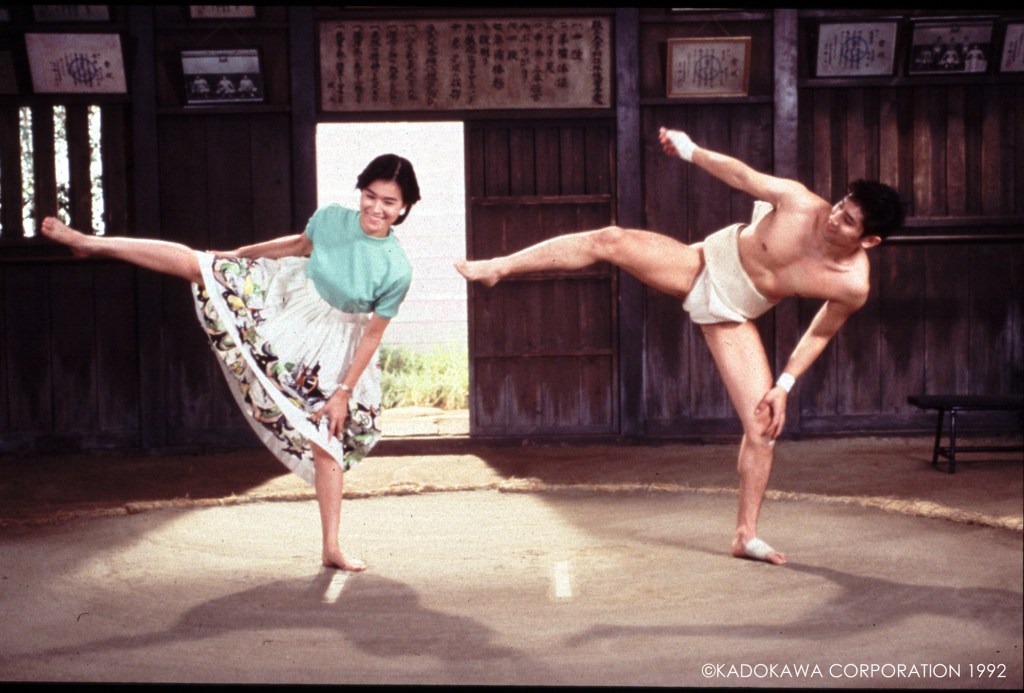
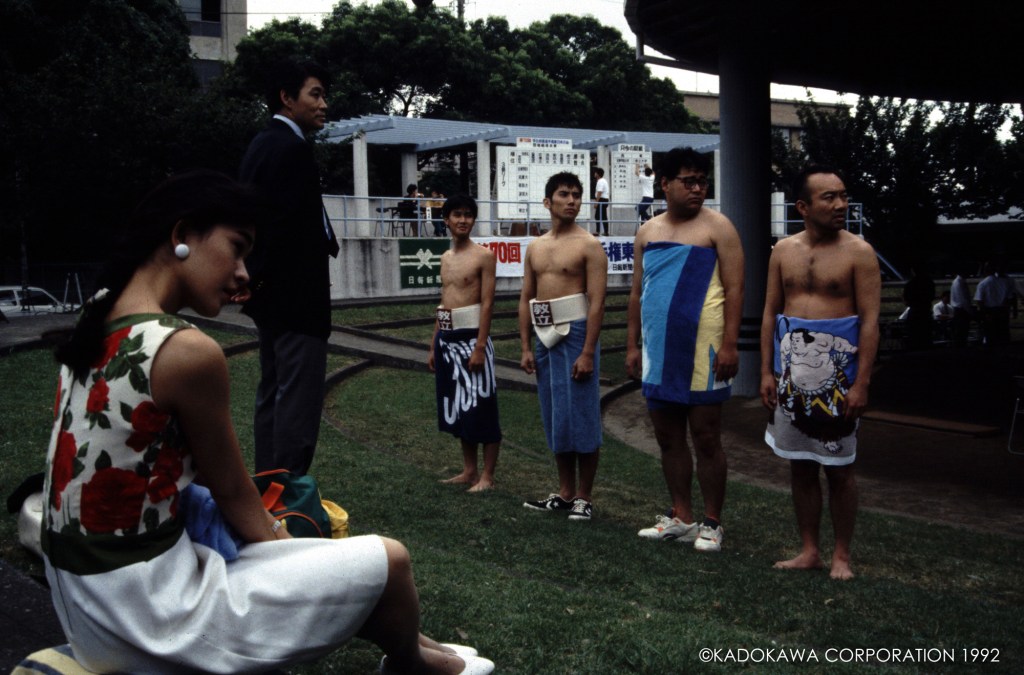
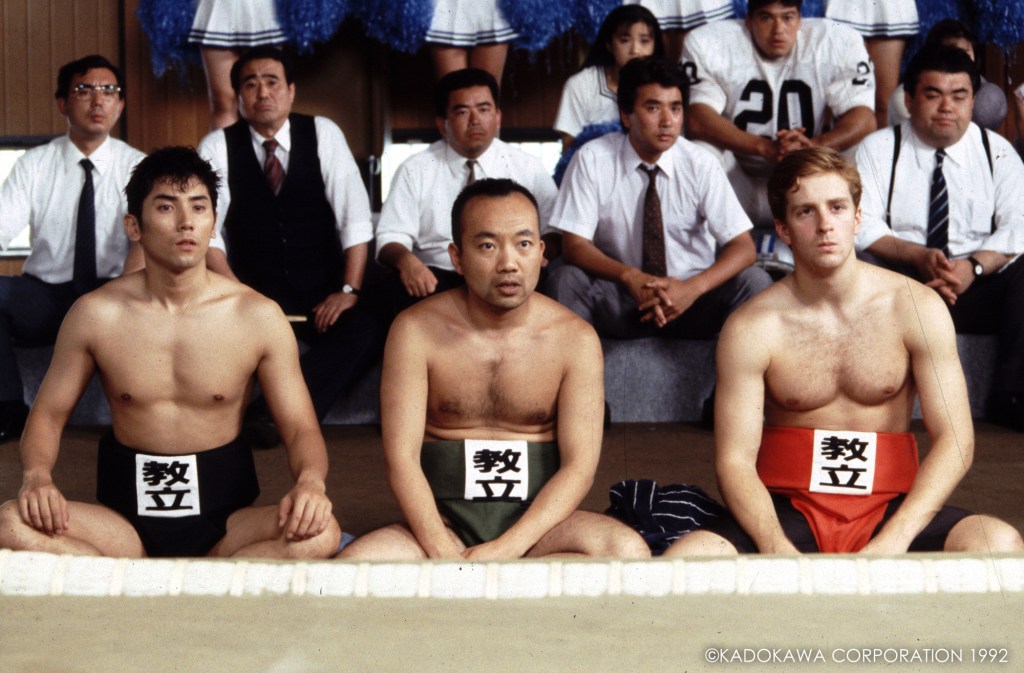
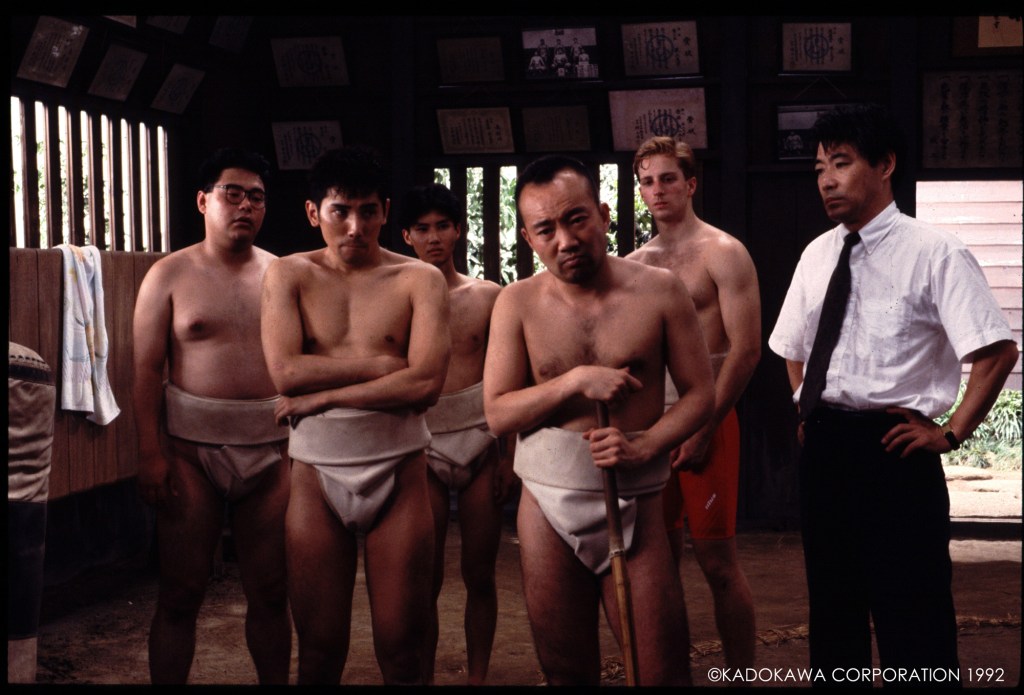
Uno studente dell’ultimo anno del college, Shuhei, viene ricattato da un professore affinché si unisca al moribondo club di sumo della scuola, in cambio di crediti per il diploma. A Shuhei si unisce un gruppo di disadattati (uno studente fuori corso, un nerd senza amici, una ragazza sovrappeso e un “gaijin” ex giocatore di rugby) in un’avventura che li porterà a sconfiggere i rivali, salvare la squadra e trovare la loro vera passione e autostima.
“I lottatori sono giganti rosa, come gli affreschi di una celebre cattedrale”. Con la delicata sensibilità che lo contraddistingue – anche quando affronta una commedia sportiva dai tratti slapstick come Sumo do, Sumo don’t – il regista Masayuki Suo apre il film con una citazione poetica: i versi che Jean Cocteau dedicò al sumo durante uno dei suoi viaggi in Giappone. Magneticamente attratto dalle anomalie di uno sport come il sumo, l’artista francese ne cantò la bizzarra sensualità e le contraddizioni, evidenziando l’innocenza dei corpi su cui si ergono volti da bambini.
Opera del 1992, che per struttura narrativa e dinamiche anticipa i formidabili equilibri di Shall we dance (1996), Sumo do, Sumo don’t si concentra proprio sull’innocenza cantata da Cocteau: la vulnerabilità dei corpi e la ricerca dell’equilibrio all’interno dell’anello di combattimento (dohyō), simbolo della vita. Il Sumo, messo in scena con amore particolare, non è solo il pretesto per una serie di irresistibili gag corporali, ma una lente d’ingrandimento per osservare meglio gli esseri umani e magnificare quell’umanesimo che è alla radice del cinema del regista. Le prove sportive diventano prove esistenziali, e gli incontri nel dohyō (che Suo accarezza con sinuosi movimenti di macchina, abbracciandone la forma circolare) si susseguono come tappe di un racconto di formazione collettivo.
Inetti o privi di fiducia in se stessi, i protagonisti hanno i tratti archetipici del genere “rivincita degli antieroi”, ma Suo evita di trasformarli in stereotipi con la sua naturale propensione all’osservazione psicologica di ogni minima variazione emotiva. Il regista ama i suoi personaggi e usa la macchina da presa per affiancarli nella lotta, tra cadute, impatti, sudore. Se in Shall we dance la regia “danzava” letteralmente, attraversando lo spazio con leggiadria e staccandosi da terra con la levità del ballo, in Sumo do, Sumo don’t l’azione procede attraverso urti e stacchi di montaggio netti. L’immagine sobbalza e ansima, registra l’impatto delle carni e si fa carico del loro peso come della loro gloria.
Un vero e proprio elogio del corpo – imperfetto, “sbagliato”, fuori posto: chi è troppo magro, chi troppo basso, chi divorato dall’emotività, fino allo scandalo di un corpo femminile su un ring tradizionalmente vietato alle donne. E sebbene Suo in questa commedia prediliga toni più “bassi” e una comicità fisica e gestuale (viene infatti del tutto a mancare quella vulnerabilità malinconica che Shall we dance consegnava al personaggio di Kōji Yakusho), la mano del regista è sempre rispettosa dei suoi fragili protagonisti. Regista di “tocchi” gentili, di dettagli che vanno ad arricchire il quadro composito di personalità in tumulto e trasformazione, Suo offre il suo sguardo affettuoso a un’umanità che si getta al di là del limite con tutta la goffaggine di un corpo inadeguato, ma colmo di desiderio. L’ultima, luminosa inquadratura del film è la risultante di questa tensione, con il sentimento amoroso (elusivo per tutto il film) finalmente pronto ad affacciarsi all’interno del dohyō.
Per il mese di giugno 2026 il film è visibile gratuitamente sul canale JFF THEATRE
Tutti gli articoli sono protetti da copyright: © 2026 Marcella Leonardi. Tutti i diritti riservati.
English Version
An elderly college student, Shuhei, is blackmailed by a professor into joining the school’s struggling sumo club in exchange for the credits he needs to graduate. Soon joined by a group of misfits—a perpetually enrolled student, a friendless nerd, an overweight young woman, and a foreign former rugby player—Shuhei embarks on a journey that will lead them to defeat their rivals, save the team, and discover both self-confidence and a genuine passion for life.
“The wrestlers are pink giants, like the frescoes of a famous cathedral.” With the gentle sensitivity that defines his work—even when tackling a slapstick sports comedy such as Sumo Do, Sumo Don’t—director Masayuki Suo opens the film with a poetic quotation: verses that Jean Cocteau dedicated to sumo during one of his journeys to Japan. Fascinated by the peculiarities of this sport, the French artist celebrated its strange sensuality and contradictions, emphasizing the innocence of bodies crowned with childlike faces.
Released in 1992 and already anticipating the remarkable narrative balance of Shall We Dance? (1996), Sumo Do, Sumo Don’t focuses precisely on the innocence evoked by Cocteau: the vulnerability of bodies and the search for balance within the dohyō, the sumo ring that becomes a symbol of life itself. Presented with genuine affection, sumo is not merely the pretext for a series of irresistible physical gags, but a magnifying lens through which Suo observes human beings and celebrates the humanism that lies at the heart of his cinema. Athletic challenges become existential trials, and each match within the dohyō—which Suo embraces through fluid camera movements that caress its circular form—marks another stage in a collective coming-of-age story.
Awkward, insecure, and lacking self-confidence, the protagonists embody the familiar archetypes of the “underdog triumph” genre. Yet Suo avoids turning them into stereotypes thanks to his natural gift for observing even the slightest emotional shift. He loves his characters, and his camera stands beside them in their struggle, through falls, collisions, and sweat. If in Shall We Dance? the direction seemed literally to dance, gliding through space with grace and lightness, in Sumo Do, Sumo Don’t the action advances through impacts and sharp cuts. The image jolts and gasps, recording the collision of bodies and carrying the weight of their flesh as well as their moments of glory.
The film becomes a genuine celebration of the body—imperfect, unconventional, out of place: bodies that are too thin, too short, overwhelmed by emotion, culminating in the provocative presence of a female body within a ring traditionally forbidden to women. And although Suo favors broader comic tones here, relying on physical and visual humor (lacking the melancholic vulnerability that Shall We Dance? entrusted to Koji Yakusho’s character), his touch remains consistently respectful toward these fragile protagonists. A director of gentle gestures and revealing details, enriching a complex mosaic of personalities in turmoil and transformation, Suo turns his affectionate gaze toward a humanity that throws itself beyond its limits with all the awkwardness of an inadequate body, yet one filled with desire. The film’s final luminous image emerges from precisely this tension, as romantic feeling—elusive throughout the story—is finally ready to reveal itself within the dohyō.






Rispondi