

[Please scroll down for the English version]
In ricordo di Yoshihiro Nishimura, scomparso il 25 maggio 2026 a soli 59 anni
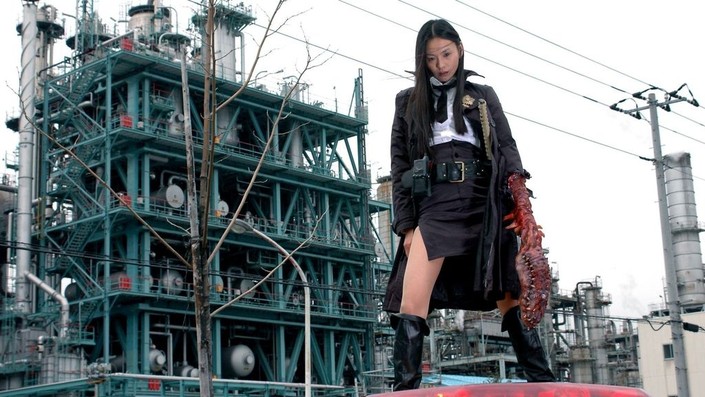
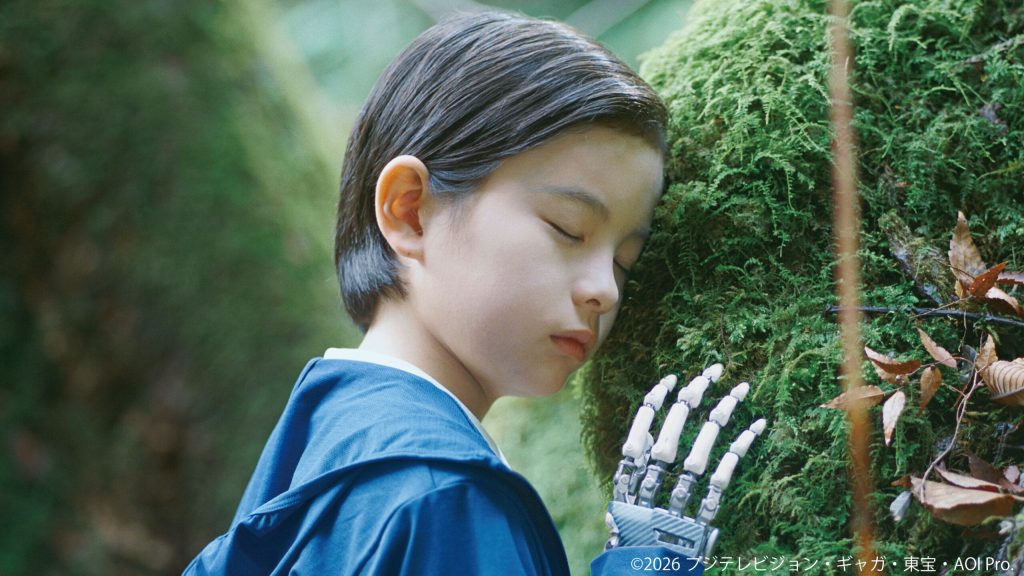
In una Tokyo distopica privatizzata e attraversata da una violenza fuori controllo, la giovane agente Ruka indaga su una serie di mutazioni mostruose che trasformano gli esseri umani in micidiali armi viventi.
È scomparso, a soli 59 anni, il regista e artista degli effetti speciali Yoshihiro Nishimura. Ed è triste constatare come, dopo Shozin Fukui, il cinema giapponese perda un’altra delle sue personalità più eccentriche, devota a un concetto totalizzante di libertà (“non amo le produzioni ad alto budget, troppo rigide e sottoposte a compartimentazione”) e al primato assoluto dell’immaginazione. Amico di Sion Sono e fautore di uno splatter artigianale sfrenato e saturo di colori, Nishimura lavorò instancabilmente, guidato da un’attività onirica intensa e singolare (“sogno tutte le notti cose folli e colorate”). Il suo senso del bizzarro nasce in seno all’estetica giapponese dell’ero guro e al suo piacere per il macabro, la violenza e le deformità; ma risente profondamente anche delle influenze del cinema consumato in giovinezza, da David Cronenberg a John Carpenter.
Innamorato, da ragazzino, del cinema di Ray Harryhausen, Yoshihiro Nishimura decide di applicare la sua passione per il make-up, gli effetti pratici e il prostetico a un fantastico oltraggioso. Dirige il suo primo film, Anatomia Extinction, nel 1995, e dopo aver lavorato come effettista sul set di Suicide Club (2002), Noriko’s Dinner Table (2005) e The Machine Girl (2007), firma la regia del suo primo film “commerciale”, Tokyo Gore Police, nel 2008. Vale la pena, per conoscere meglio il regista, soffermarsi proprio sul titolo che lo ha reso celebre.
Tokyo Gore Police sorprende sin dall’apertura, un intro sognante e infantile che viene immediatamente sgretolato per introdurci in un universo futuristico mutante e ultraviolento. Nishimura si affida a prospettive alterate e innaturali per precipitarci in uno stato di ebbrezza allucinatoria; ed è subito evidente la cinefilia del regista, che nei primi minuti cita di tutto, dalla fantascienza paranoica anni ’50, alla motosega di The Texas Chainsaw Massacre (1974) alle soggettive di Sam Raimi sino al finto snuff di Guinea Pig: Flower of Flesh and Blood (1985).
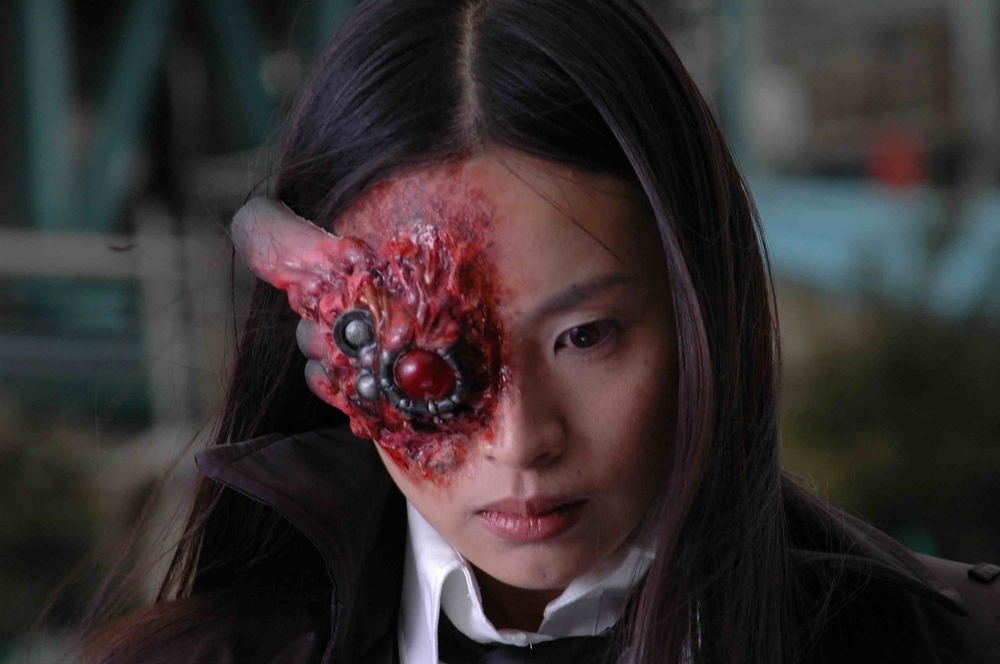
A dispetto del gore che scorre a fiumi, Nishimura dimostra di possedere anche un gusto visivo squisito, che si esprime nei dettagli carnali, nella composizione dell’inquadratura ma soprattutto nelle immagini che pongono al centro Eihi Shiina, già diva di Audition (1999) e qui eroina implacabile nella sua ricerca di vendetta. Disse di lei il regista: “Non solo ha compreso perfettamente la mia idea riguardo alla mimica e alla gestualità del personaggio, ma è anche l’unica attrice al mondo capace di apparire così bella in mezzo a un fiume di sangue.”
Con un volto apparentemente privo di emozioni, ma capace di rivelare una fragilità innocente, persino infantile, Shiina incarna Ruka con un’interpretazione in cui l’impassibilità della tradizione teatrale giapponese si sposa alle caratterizzazioni del manga.
E non si può non amare un film come Tokyo Gore Police, che in pieno 2008 si serve ancora di effetti pratici proprio per gusto della messa in scena, del falso, del teatro dell’eccesso e del grandguignol. Nishimura è legato indissolubilmente all’ horror avventuroso e degenerato del passato, a una visionarietà oltraggiosa e ludica, nello stile di Braindead (1992).
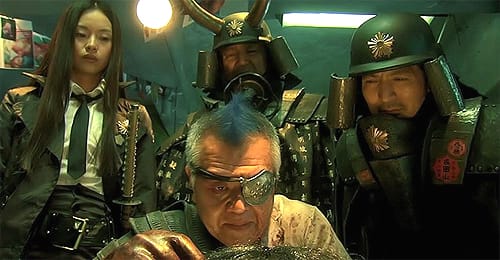
Con la sua scomparsa il cinema resta orfano di un regista che si divertiva immensamente, capace anche di “infangare” grottescamente l’immagine del samurai, fregandosene altamente di tutto. Nishimura non pone limiti alla sua feroce satira nei confronti del rigido autoritarismo giapponese e dell’etica del sacrificio.
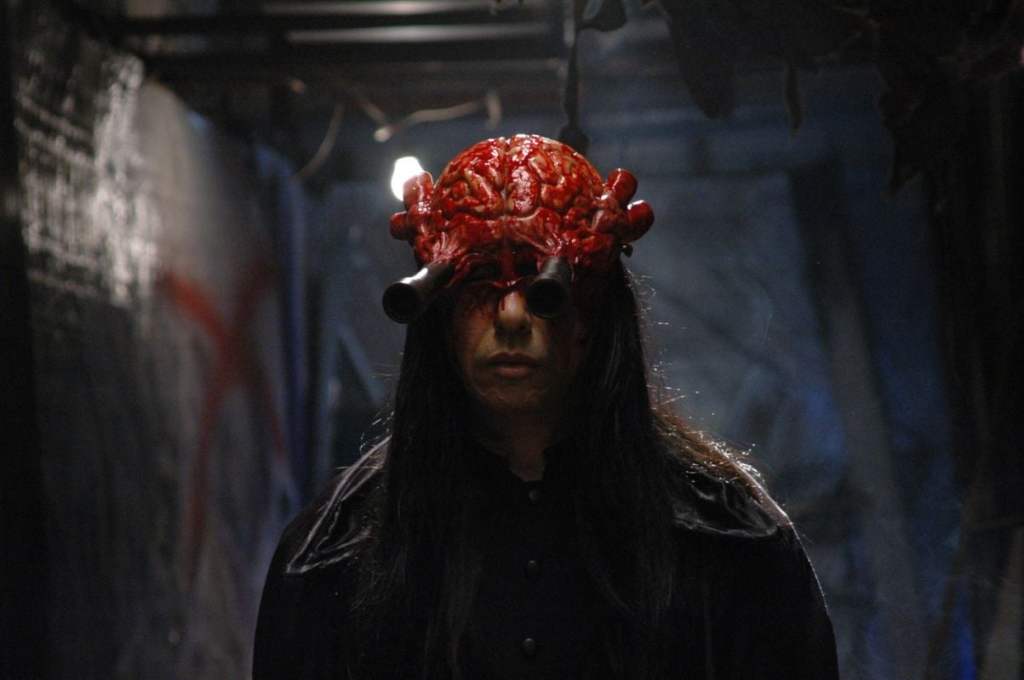
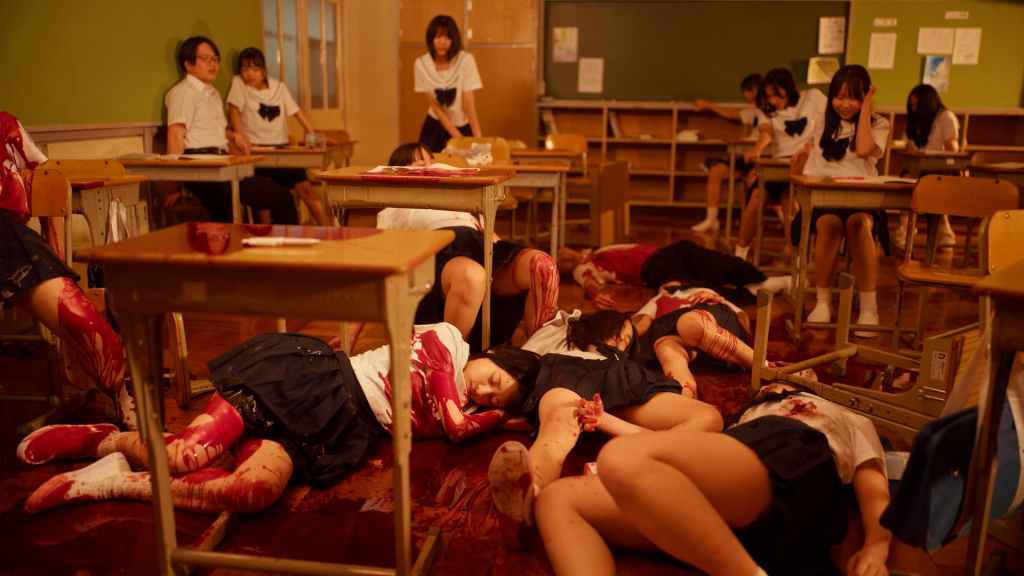
Il suo è un meraviglioso cinema sgangherato, arrampicato vertiginosamente su angoli olandesi, ebbro e bulimico, pronto a superarsi continuamente e a saturare lo schermo con carni squarciate, corpi mutanti, pistole al posto degli occhi, interiora riversate sul pavimento. L’horror di Nishimura si batte a difesa di una soggettività (“chi stabilisce quando è troppo”?) e crea cinema dal nulla, col semplice uso delle luci, del colore, di una valigia a terra o del convoglio di una metropolitana.
E basterebbe, da sola, la scena della ragazza-alligatore a consegnarlo all’empireo dei grandi cineasti, con un immaginario che si ascrive all’atavica paura giapponese del mostro femminile, della creatura metà umana metà animale pronta a distruggere gli uomini con una potenza divorante.
Tutti gli articoli sono protetti da copyright: © 2026 Marcella Leonardi. Tutti i diritti riservati.

English Version
In a privatized dystopian Tokyo plagued by uncontrolled violence, young officer Ruka investigates a series of monstrous mutations that transform human beings into deadly living weapons.
The filmmaker and special effects artist Yoshihiro Nishimura has passed away at the age of just 59. It is sad to realize that, after Shozin Fukui, Japanese independent cinema has lost another of its most eccentric personalities, devoted to a totalizing concept of freedom (“I don’t like big-budget productions; they are too rigid and compartmentalized”) and to the absolute primacy of imagination. A friend of Sion Sono and a champion of wildly inventive, vividly colorful practical splatter effects, Nishimura worked tirelessly, driven by an intense and singular dream life (“I dream crazy, colorful things every night”). His sense of the bizarre emerged from the Japanese ero guro aesthetic, with its fascination for the macabre, violence, and bodily deformation, but it was also deeply shaped by the films he devoured in his youth, from David Cronenberg to John Carpenter.
As a boy, captivated by the cinema of Ray Harryhausen, Yoshihiro Nishimura decided to channel his passion for make-up, practical effects, and prosthetics into an outrageous form of fantasy. He directed his first feature, Anatomia Extinction, in 1995 and, after working as a special effects artist on films such as Suicide Club (2002), Noriko’s Dinner Table (2005), and The Machine Girl (2007), made his first “commercial” feature as a director with Tokyo Gore Police in 2008.
To fully understand who Yoshihiro Nishimura was, it is worth taking a closer look at the film that made him famous.
The film astonishes from its opening moments: a dreamlike, childlike introduction is immediately shattered, plunging us into a futuristic, mutating, ultra-violent universe. Nishimura relies on distorted and unnatural perspectives to throw the viewer into a state of hallucinatory intoxication. His cinephilia is evident from the very first minutes, as he references everything from 1950s paranoid science fiction to the chainsaw of The Texas Chainsaw Massacre (1974), the subjective camera work of Sam Raimi, and even the faux-snuff aesthetics of Guinea Pig: Flower of Flesh and Blood (1985).
Despite the torrents of gore, Nishimura demonstrates a remarkably refined visual sensibility, expressed through fleshy details, meticulous compositions, and above all through the images centered on Eihi Shiina, already unforgettable in Audition (1999) and here cast as an implacable heroine driven by revenge. The director once said of her: “Not only did she perfectly understand my ideas regarding the character’s facial expressions and movements, she is also the only actress in the world capable of looking this beautiful while standing in a river of blood.”
With a face seemingly devoid of emotion, yet capable of revealing an innocent, almost childlike vulnerability, Shiina embodies Ruka in a performance where the impassivity of Japanese theatrical tradition merges seamlessly with manga characterization.
It is impossible not to love a film like Tokyo Gore Police, which, even in 2008, still embraced practical effects for the sheer pleasure of performance, artifice, theatricality, excess, and Grand Guignol spectacle. Nishimura remained deeply connected to the adventurous and degenerate horror cinema of the past, to a form of outrageous and playful imagination reminiscent of Braindead (1992).
With his passing, cinema loses a filmmaker who clearly took immense joy in creation, someone capable of grotesquely “defiling” the image of the samurai without caring in the slightest about convention. Nishimura places no limits on his ferocious satire of Japanese authoritarianism and the ethic of sacrifice.
His is a magnificent, ramshackle cinema, perched precariously on Dutch angles, drunk on its own excesses and endlessly eager to outdo itself, saturating the screen with torn flesh, mutant bodies, guns protruding from eye sockets, and entrails spilling across the floor. Nishimura’s horror defends the right to subjectivity (“Who decides when it’s too much?”) and creates cinema out of almost nothing, using only light, color, a suitcase lying on the ground, or the passing cars of a subway train.
And the alligator-girl sequence alone would be enough to secure his place among the great filmmakers: an image rooted in the ancient Japanese fear of the monstrous feminine, of the creature that is half woman, half beast, ready to destroy men with a devouring and unstoppable power.









Rispondi